
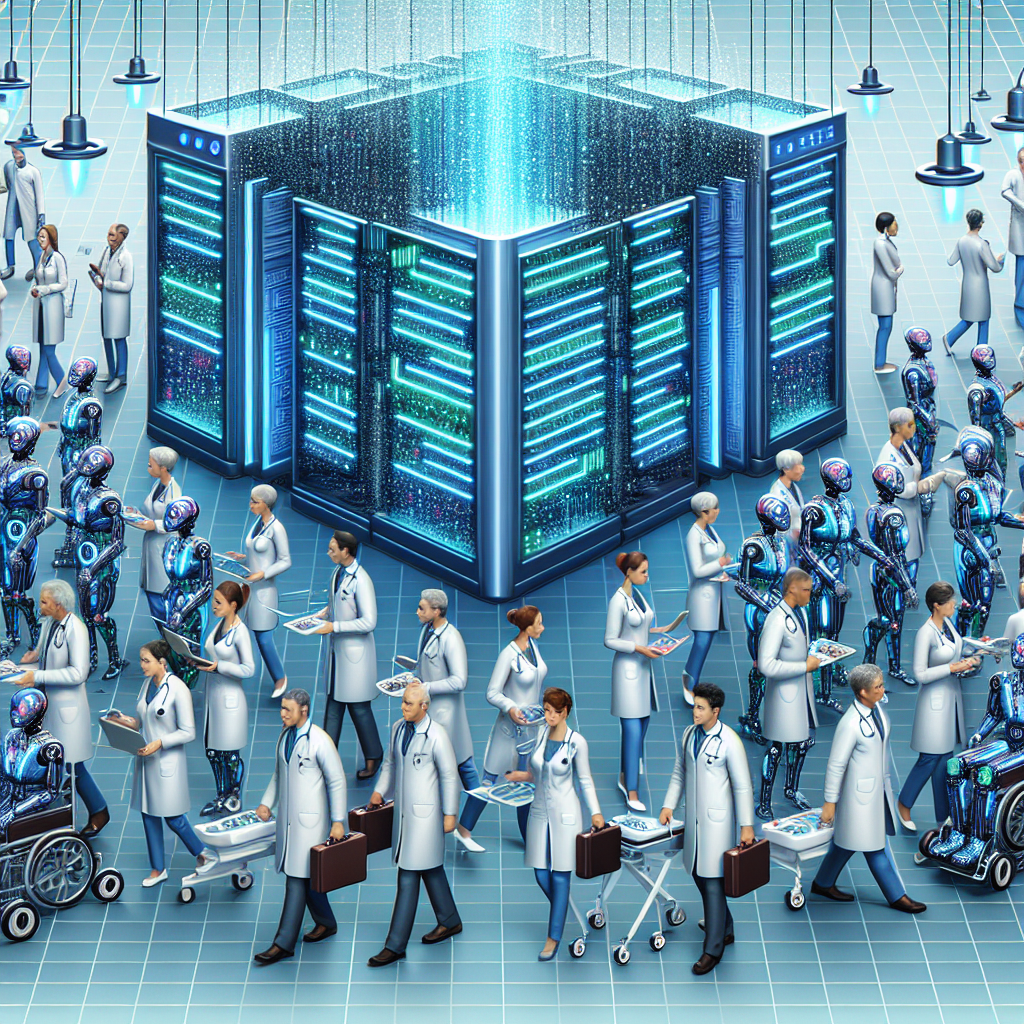
Generative artificial intelligence (AI) has been revolutionizing various industries, including healthcare. The ability of generative AI to create new and innovative solutions has had a significant impact on healthcare innovation, leading to improved patient outcomes, more efficient processes, and personalized treatment plans. In this article, we will explore the impact of generative AI on healthcare innovation and how it is transforming the industry.
Generative AI uses algorithms to generate new data or information based on patterns and trends in existing data. In healthcare, this technology can be used to analyze large amounts of patient data, medical records, and scientific literature to identify new treatment options, predict disease progression, and develop personalized therapies. By leveraging generative AI, healthcare providers can improve diagnosis accuracy, treatment effectiveness, and overall patient care.
One of the key areas where generative AI is making a significant impact in healthcare is drug discovery and development. Traditional drug discovery processes are time-consuming and costly, often taking years to develop a new drug. Generative AI can accelerate this process by analyzing vast amounts of data to identify potential drug candidates more quickly. By generating new molecules and predicting their properties, generative AI can help researchers identify promising drug candidates that may have been overlooked using traditional methods.
Furthermore, generative AI can also be used to optimize clinical trials by predicting patient responses to treatments and identifying the most effective dosages. This can help researchers design more efficient and successful clinical trials, leading to faster drug approvals and improved patient outcomes.
Another area where generative AI is transforming healthcare innovation is in medical imaging. By analyzing medical images such as X-rays, CT scans, and MRIs, generative AI can help radiologists detect and diagnose diseases more accurately and quickly. This technology can also be used to generate 3D models of organs and tissues, allowing surgeons to visualize complex anatomical structures before performing procedures. By improving the accuracy and efficiency of medical imaging, generative AI is helping healthcare providers deliver better care to patients.
In addition to drug discovery and medical imaging, generative AI is also being used to develop personalized treatment plans for patients. By analyzing genetic data, medical history, and lifestyle factors, generative AI can help healthcare providers tailor treatment options to individual patients. This personalized approach to healthcare can lead to better outcomes, reduced side effects, and improved patient satisfaction.
Overall, the impact of generative AI on healthcare innovation is profound and far-reaching. By leveraging this technology, healthcare providers can improve patient care, accelerate drug discovery, and optimize clinical trials. As generative AI continues to advance, we can expect to see even more innovative solutions that will transform the healthcare industry.
FAQs:
Q: How does generative AI differ from traditional AI in healthcare?
A: Generative AI is a subset of artificial intelligence that focuses on creating new data or information based on patterns in existing data. Traditional AI, on the other hand, is more focused on analyzing existing data to make predictions or decisions. Generative AI is particularly useful in healthcare for drug discovery, medical imaging, and personalized treatment plans.
Q: What are some challenges of using generative AI in healthcare?
A: One of the main challenges of using generative AI in healthcare is the need for large amounts of high-quality data. Generating accurate and reliable results requires a vast amount of data, which can be difficult to obtain in healthcare due to privacy concerns and data security issues. Additionally, there may be ethical considerations when using generative AI to make decisions that impact patient care.
Q: How can healthcare providers implement generative AI in their practices?
A: Healthcare providers can implement generative AI in their practices by partnering with AI companies that specialize in healthcare solutions. These companies can provide the necessary technology, expertise, and support to help healthcare providers leverage generative AI for drug discovery, medical imaging, and personalized treatment plans. It is important for healthcare providers to ensure that they have the proper infrastructure and resources in place to effectively integrate generative AI into their practices.
Q: What are some future applications of generative AI in healthcare?
A: In the future, generative AI is expected to have a wide range of applications in healthcare, including predictive analytics, virtual health assistants, and personalized medicine. By analyzing large amounts of data, generative AI can help healthcare providers predict patient outcomes, improve patient engagement, and deliver more personalized care. As the technology continues to advance, we can expect to see even more innovative solutions that will transform the healthcare industry.