
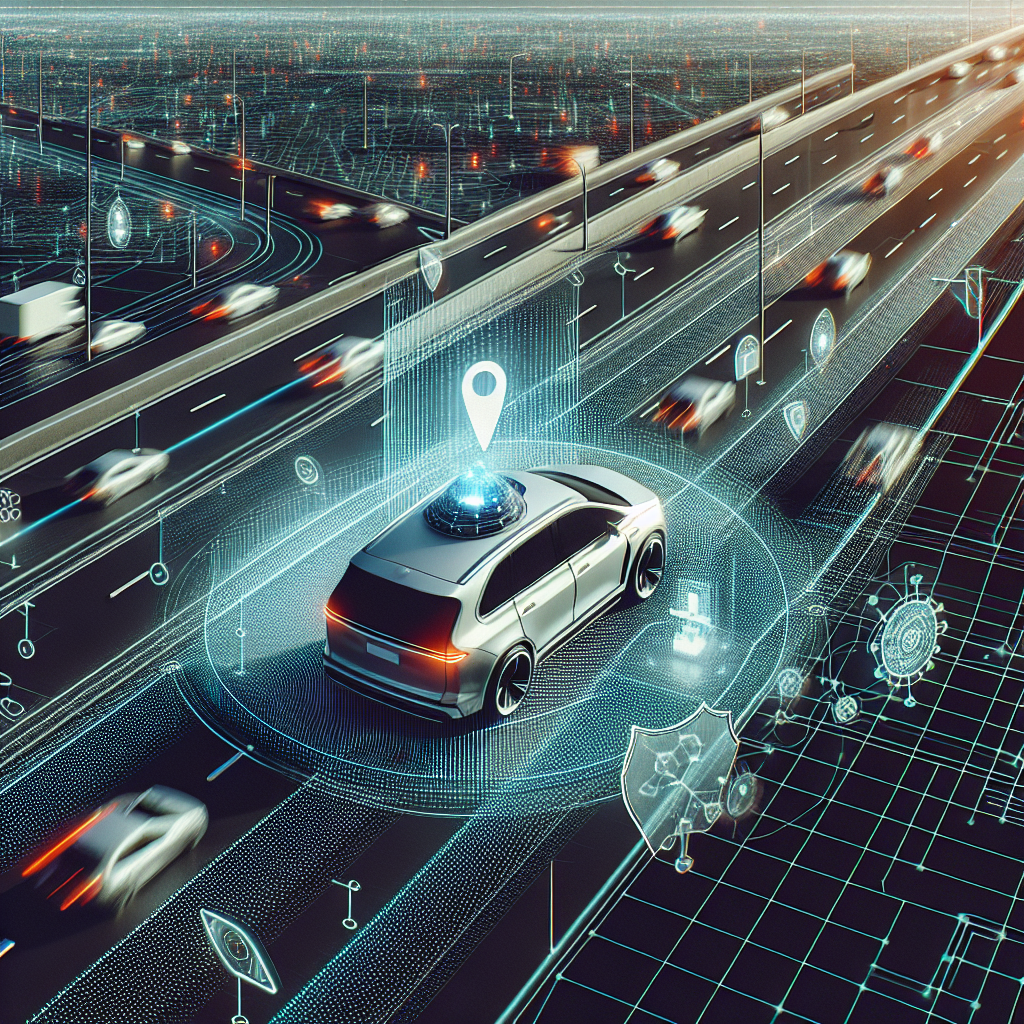
The implications of artificial intelligence (AI) on government surveillance and privacy rights in the transportation sector have been a topic of much debate in recent years. As technology continues to advance at a rapid pace, so too do the tools and capabilities available to governments for monitoring and tracking individuals in the name of national security and public safety. While there are certainly benefits to using AI in this way, there are also significant concerns about the potential for abuse and infringement on privacy rights.
Government surveillance in the transportation sector is nothing new. For decades, law enforcement agencies have used cameras, sensors, and other monitoring devices to keep an eye on public spaces like airports, train stations, and highways. However, the rise of AI has taken surveillance to a whole new level, allowing for more sophisticated tracking and analysis of data than ever before.
One of the most significant implications of AI in government surveillance is the potential for mass surveillance of individuals. With AI-powered cameras and sensors, governments can track the movements of countless people in real-time, analyzing their behavior and identifying potential threats. While this capability can certainly help in preventing terrorist attacks and other crimes, it also raises serious concerns about the erosion of privacy rights.
In the transportation sector, AI is being used in a variety of ways to enhance security and efficiency. For example, AI-powered facial recognition technology is being used at airports to quickly identify passengers and match them to their boarding passes, reducing wait times and improving security. Similarly, AI algorithms are being used to analyze traffic patterns and optimize the flow of vehicles on highways, reducing congestion and improving safety.
However, the use of AI in government surveillance also raises concerns about the potential for abuse. For example, there have been reports of governments using AI to track and monitor political dissidents, journalists, and other individuals deemed to be a threat to national security. This kind of mass surveillance can have a chilling effect on free speech and political dissent, as individuals may be afraid to speak out for fear of being targeted by the government.
Another concern is the potential for bias in AI algorithms. As AI systems are trained on large datasets of historical data, they can inadvertently learn and perpetuate biases present in that data. For example, if a facial recognition algorithm is trained on a dataset that is predominantly white, it may have difficulty accurately identifying individuals with darker skin tones. This can lead to discriminatory outcomes and violations of privacy rights for marginalized communities.
In response to these concerns, some governments have implemented regulations and guidelines for the use of AI in surveillance. For example, the European Union’s General Data Protection Regulation (GDPR) includes strict rules for the collection and processing of personal data, including requirements for transparency and consent. Similarly, the United States has laws like the Privacy Act and the Fourth Amendment, which protect against unreasonable searches and seizures by the government.
However, there is still much work to be done to ensure that AI is used responsibly and ethically in government surveillance. Transparency and accountability are key principles that must be upheld to prevent abuse and protect privacy rights. Governments must be transparent about the use of AI in surveillance, including what data is being collected, how it is being used, and who has access to it. Additionally, there must be mechanisms in place for individuals to access and correct their data, as well as avenues for redress if their rights are violated.
In conclusion, the implications of AI on government surveillance and privacy rights in the transportation sector are complex and multifaceted. While AI has the potential to enhance security and efficiency, it also raises serious concerns about mass surveillance, bias, and privacy rights. It is essential that governments and policymakers take these concerns seriously and work to ensure that AI is used in a responsible and ethical manner that respects the rights and freedoms of individuals.
FAQs:
Q: Can AI be used to track individuals in real-time?
A: Yes, AI-powered cameras and sensors can be used to track individuals in real-time, analyzing their behavior and movements.
Q: What are the implications of AI in government surveillance in the transportation sector?
A: The implications include enhanced security and efficiency, but also concerns about mass surveillance, bias, and privacy rights.
Q: How can governments ensure that AI is used responsibly in surveillance?
A: Governments can ensure responsible use of AI by being transparent about its use, respecting privacy rights, and implementing accountability mechanisms.
Q: What are some examples of AI being used in government surveillance in the transportation sector?
A: Examples include facial recognition technology at airports, traffic analysis algorithms on highways, and tracking systems on public transportation.