
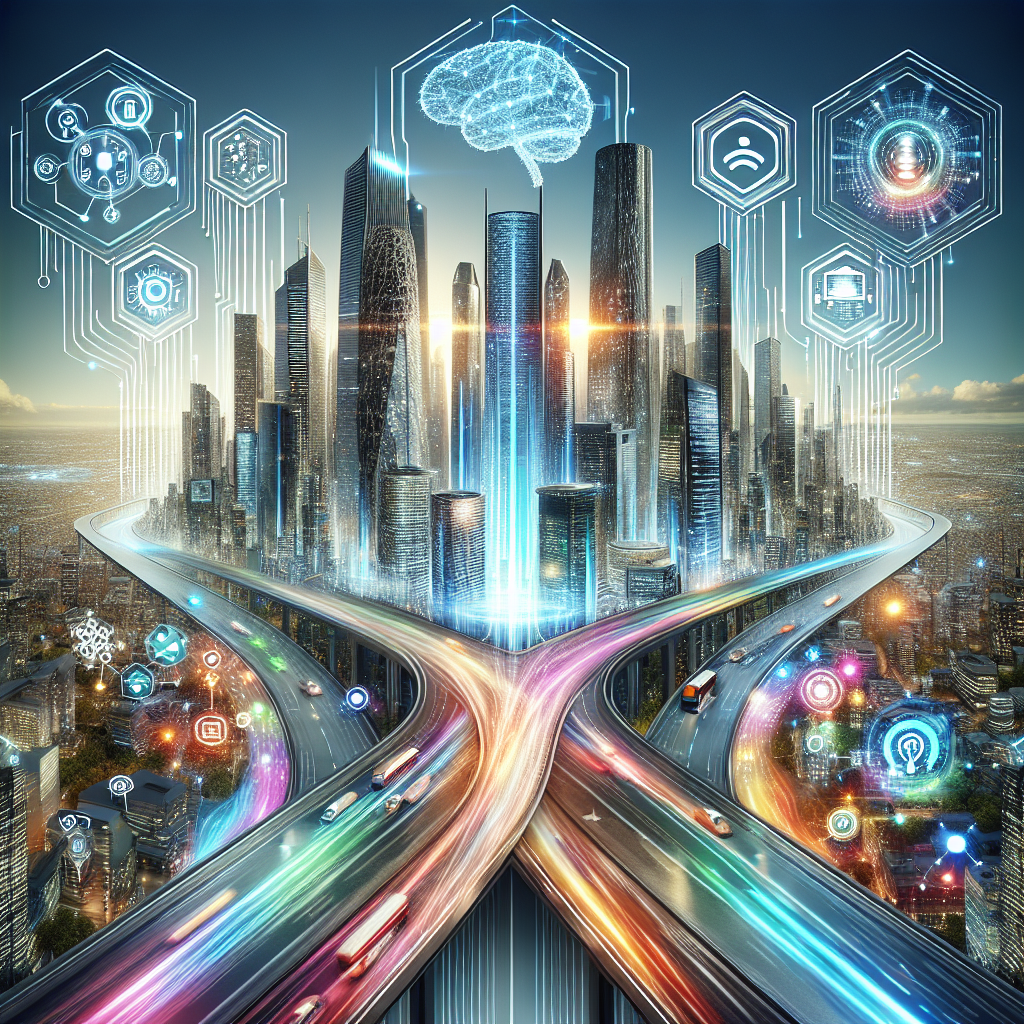
The Intersection of AI, IoT, and Cloud Computing Technologies
Artificial Intelligence (AI), Internet of Things (IoT), and Cloud Computing are three of the most transformative technologies of the 21st century. Individually, they have already revolutionized various industries and aspects of our daily lives. However, when these three technologies intersect and work together, the possibilities are endless. In this article, we will explore the intersection of AI, IoT, and Cloud Computing and how they are shaping the future of technology.
What is AI, IoT, and Cloud Computing?
Before diving into the intersection of these technologies, let’s first understand what each of them represents.
Artificial Intelligence (AI) refers to the simulation of human intelligence processes by machines, particularly computer systems. AI systems are capable of performing tasks that normally require human intelligence, such as visual perception, speech recognition, decision-making, and language translation.
Internet of Things (IoT) is a network of interconnected devices that can communicate and exchange data with each other. These devices can range from everyday objects like smartphones and smart home appliances to industrial machines and sensors. IoT enables the collection and sharing of data in real-time, leading to smarter decision-making and improved efficiency.
Cloud Computing is the delivery of computing services over the internet, where users can access and store data, run applications, and utilize resources on remote servers instead of on local devices. Cloud Computing provides scalability, flexibility, and cost-effectiveness for businesses and individuals.
The Intersection of AI, IoT, and Cloud Computing
The intersection of AI, IoT, and Cloud Computing is where the true potential of these technologies is realized. When combined, they create a powerful ecosystem that enables advanced data analytics, automation, and intelligent decision-making. Here are some ways in which these technologies intersect and complement each other:
1. Data Collection and Analysis: IoT devices generate a vast amount of data from sensors, cameras, and other sources. This data can be analyzed in real-time using AI algorithms running on cloud servers. AI can process and make sense of this data, providing valuable insights and predictions to improve decision-making.
2. Predictive Maintenance: AI algorithms can analyze IoT data to predict when a machine or device is likely to fail. This enables proactive maintenance to prevent downtime and costly repairs. Cloud Computing provides the infrastructure to run these predictive models at scale and in real-time.
3. Autonomous Systems: AI-powered IoT devices can operate autonomously without human intervention. For example, self-driving cars use AI algorithms to navigate and make decisions based on real-time data from sensors and cameras. Cloud Computing enables these devices to access and process data from the cloud for more accurate decision-making.
4. Personalized Services: AI algorithms can analyze data from IoT devices to personalize services and recommendations for users. For example, smart home devices can learn user preferences and adjust settings accordingly. Cloud Computing provides the storage and processing power to deliver personalized experiences at scale.
5. Edge Computing: In some cases, it is more efficient to process data closer to the source rather than sending it to the cloud. Edge Computing combines AI and IoT technologies to analyze data at the edge of the network, reducing latency and bandwidth usage. This is particularly useful for real-time applications like autonomous vehicles and industrial automation.
FAQs
Q: How does AI enhance IoT devices?
A: AI enhances IoT devices by providing intelligence and decision-making capabilities. AI algorithms can analyze data from sensors and cameras to detect patterns, anomalies, and trends in real-time. This enables IoT devices to make smarter decisions and take autonomous actions without human intervention.
Q: What are the benefits of combining AI, IoT, and Cloud Computing?
A: The combination of AI, IoT, and Cloud Computing offers several benefits, including improved data analysis, predictive maintenance, autonomous systems, personalized services, and edge computing. By leveraging these technologies together, businesses can achieve greater efficiency, innovation, and competitive advantage.
Q: How can businesses leverage the intersection of AI, IoT, and Cloud Computing?
A: Businesses can leverage the intersection of AI, IoT, and Cloud Computing by implementing smart solutions that automate processes, optimize operations, and enhance customer experiences. By analyzing IoT data with AI algorithms on cloud servers, businesses can gain valuable insights and make data-driven decisions to drive growth and success.
In conclusion, the intersection of AI, IoT, and Cloud Computing represents a new era of innovation and transformation in the technology landscape. By combining these technologies, businesses and individuals can unlock new possibilities and create smarter, more efficient systems. As these technologies continue to evolve and converge, the future looks bright for a world powered by AI, IoT, and Cloud Computing.