
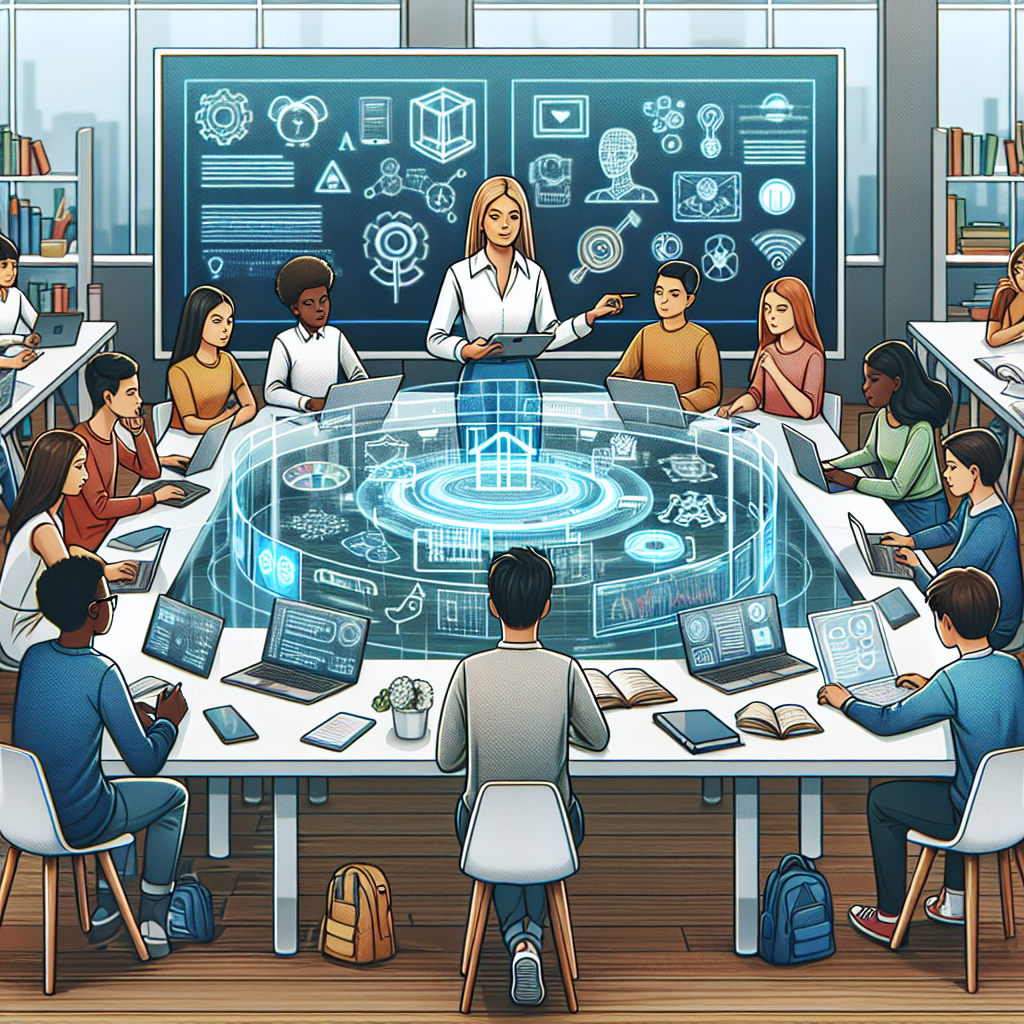
Artificial Intelligence (AI) has been making significant advancements in various industries, and its potential in education research is no exception. AI technology has the ability to transform the way research is conducted in the education sector, providing new insights and opportunities for innovation. In this article, we will explore the potential of AI in education research and how it can benefit both researchers and students.
AI has the ability to analyze vast amounts of data quickly and efficiently, which can be incredibly beneficial for education researchers. By using AI algorithms, researchers can process large datasets to identify patterns and trends that may not be immediately apparent to the human eye. This can lead to new discoveries and insights that can help improve educational practices and outcomes.
One of the key benefits of using AI in education research is its ability to personalize learning experiences for students. AI algorithms can analyze student data to understand their individual learning styles, strengths, and weaknesses. This information can then be used to create personalized learning plans that cater to each student’s unique needs, helping them to reach their full potential.
AI can also assist in the development of new teaching methods and strategies. By analyzing student performance data, researchers can identify areas where current teaching methods are falling short and develop new approaches that are more effective. This can lead to improved student outcomes and a more engaging learning experience for students.
Another area where AI can have a significant impact in education research is in the field of assessment. Traditional assessments can be time-consuming and labor-intensive for both students and teachers. AI technology can streamline the assessment process by automating grading and providing instant feedback to students. This can help students to identify areas where they need to improve and make adjustments to their learning strategies accordingly.
In addition to these benefits, AI can also help to bridge the gap between research and practice in the education sector. By analyzing data from both research studies and real-world classroom settings, researchers can gain a better understanding of how educational interventions are working in practice. This can lead to more effective policies and practices that are grounded in evidence-based research.
Despite the potential benefits of AI in education research, there are also challenges and limitations that need to be considered. One of the key challenges is ensuring that AI algorithms are unbiased and fair in their analysis of student data. Researchers need to be mindful of the potential for algorithmic bias and take steps to mitigate these risks.
Another challenge is the potential for AI to replace human researchers in the education sector. While AI technology can automate certain tasks and processes, it is important to remember that human expertise and judgment are still essential in conducting high-quality research. AI should be seen as a tool to enhance, rather than replace, the work of human researchers.
Overall, the potential of AI in education research is vast and promising. By leveraging AI technology, researchers can gain new insights, personalize learning experiences for students, and improve educational outcomes. As AI continues to evolve and advance, it is likely that its impact on education research will only continue to grow.
FAQs:
Q: How can AI technology be used to personalize learning experiences for students?
A: AI algorithms can analyze student data to understand their individual learning styles, strengths, and weaknesses. This information can then be used to create personalized learning plans that cater to each student’s unique needs.
Q: What are some of the challenges of using AI in education research?
A: One of the key challenges is ensuring that AI algorithms are unbiased and fair in their analysis of student data. Researchers also need to be mindful of the potential for algorithmic bias and take steps to mitigate these risks.
Q: Can AI technology replace human researchers in the education sector?
A: While AI technology can automate certain tasks and processes, human expertise and judgment are still essential in conducting high-quality research. AI should be seen as a tool to enhance, rather than replace, the work of human researchers.