
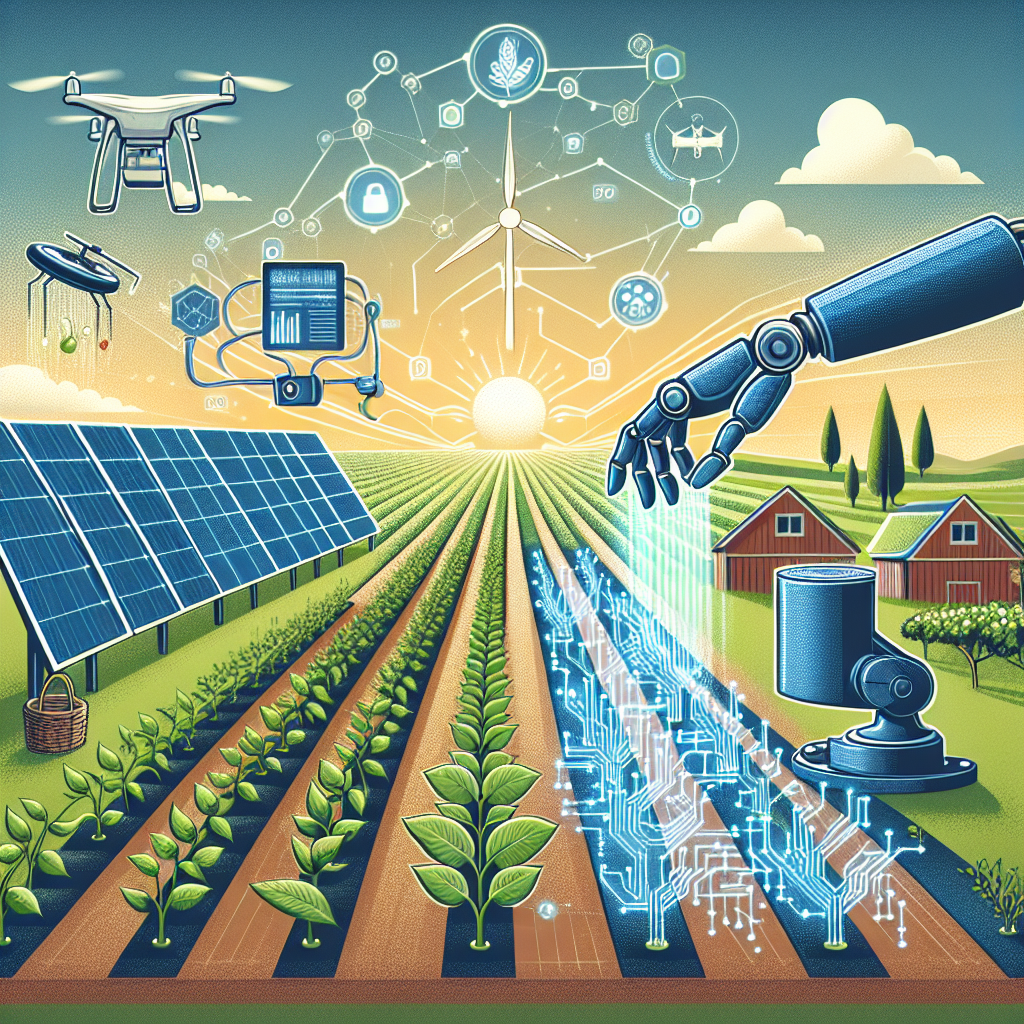
The Potential of AI in Enhancing Agricultural Resilience
Introduction
Agriculture is a vital sector that sustains the world’s population by providing food, feed, fiber, and fuel. However, it is faced with numerous challenges such as climate change, pests and diseases, water scarcity, and labor shortage. These challenges threaten food security and the livelihoods of farmers, especially in developing countries. To address these challenges and enhance agricultural resilience, there is a growing interest in the use of artificial intelligence (AI) technologies.
AI refers to the simulation of human intelligence processes by machines, including learning, reasoning, and self-correction. In agriculture, AI can be used to analyze large amounts of data, predict outcomes, optimize resource use, and automate tasks. This can help farmers make better decisions, increase productivity, reduce costs, and adapt to changing environmental conditions.
The Potential of AI in Agriculture
1. Precision Farming: AI can be used to analyze data from sensors, satellites, and drones to monitor crop health, soil moisture, and weather conditions. This information can be used to create precise maps of fields, optimize inputs such as water and fertilizer, and detect pests and diseases early. This can help farmers increase yields, reduce waste, and minimize environmental impact.
2. Crop Monitoring and Management: AI can analyze images of crops to identify diseases, pests, and nutrient deficiencies. This can help farmers take timely action to protect their crops and improve yields. AI can also predict crop yields based on weather conditions, soil quality, and management practices. This can help farmers plan their harvests, storage, and marketing strategies.
3. Livestock Monitoring and Management: AI can be used to monitor the health and behavior of livestock using sensors and cameras. This can help farmers detect diseases, optimize feeding, and improve breeding practices. AI can also predict animal growth, milk production, and meat quality. This can help farmers maximize their profits and ensure the welfare of their animals.
4. Supply Chain Management: AI can optimize logistics, storage, and distribution of agricultural products. This can help farmers reduce waste, improve traceability, and meet consumer demand. AI can also analyze market trends, prices, and regulations to help farmers make informed decisions about what to produce and where to sell their products.
5. Climate Resilience: AI can predict climate patterns, extreme weather events, and their impact on agriculture. This can help farmers adapt their practices, such as planting different crops, using drought-tolerant varieties, and adjusting irrigation schedules. AI can also optimize energy use, water management, and greenhouse gas emissions in agriculture. This can help farmers reduce their carbon footprint and contribute to climate change mitigation.
Frequently Asked Questions (FAQs)
1. How can AI help smallholder farmers in developing countries?
AI can help smallholder farmers access information, services, and markets that were previously unavailable to them. For example, AI-powered mobile apps can provide farmers with weather forecasts, market prices, and agronomic advice. AI can also help smallholder farmers organize themselves into cooperatives, access credit, and sell their products online. This can help smallholder farmers improve their livelihoods, reduce poverty, and contribute to sustainable development.
2. How can AI be integrated into traditional farming practices?
AI can be integrated into traditional farming practices by providing farmers with user-friendly tools, training, and support. For example, AI-powered drones can be used to monitor crops, AI-powered sensors can be used to monitor livestock, and AI-powered apps can be used to plan and manage farms. Farmers can also collaborate with researchers, extension agents, and agribusinesses to adopt AI technologies and practices. This can help farmers improve their productivity, profitability, and sustainability.
3. What are the ethical and social implications of AI in agriculture?
AI in agriculture raises ethical and social concerns such as data privacy, ownership, and bias. For example, AI algorithms may use sensitive information about farmers, such as their financial status and social networks, without their consent. AI algorithms may also favor certain crops, regions, or farmers over others, leading to unfair competition and unequal opportunities. To address these concerns, policymakers, researchers, and stakeholders need to develop guidelines, standards, and frameworks for the responsible use of AI in agriculture.
4. What are the costs and benefits of AI in agriculture?
The costs of AI in agriculture include the initial investment in hardware, software, and training, as well as ongoing maintenance and upgrades. The benefits of AI in agriculture include increased productivity, reduced costs, improved quality, and enhanced sustainability. For example, AI can help farmers save time, money, and resources by optimizing inputs, automating tasks, and predicting outcomes. AI can also help farmers adapt to changing environmental conditions, market trends, and regulations. Overall, the benefits of AI in agriculture can outweigh the costs, especially in the long term.
Conclusion
AI has the potential to enhance agricultural resilience by providing farmers with timely, accurate, and actionable information. AI can help farmers monitor crops, manage livestock, optimize resources, and adapt to changing environmental conditions. AI can also help farmers improve their productivity, profitability, and sustainability. However, AI in agriculture raises ethical and social concerns that need to be addressed. By working together, stakeholders can harness the power of AI to build a more resilient and sustainable food system for future generations.