
The Potential of AI in Promoting Sustainable Agriculture and Food Security
Introduction
The world is facing a growing challenge to ensure food security for a growing global population while also addressing the impacts of climate change and environmental degradation on agriculture. Sustainable agriculture practices are essential to address these challenges and ensure food security for all. Artificial Intelligence (AI) is emerging as a powerful tool to enhance sustainable agriculture practices and promote food security. AI technologies can help farmers make better decisions, improve crop yields, reduce waste, and optimize resource use. In this article, we will explore the potential of AI in promoting sustainable agriculture and food security, and how it can help address some of the key challenges facing the agricultural sector.
The Role of AI in Sustainable Agriculture
AI technologies, such as machine learning algorithms and predictive analytics, can help farmers make more informed decisions based on real-time data and insights. For example, AI-powered sensors can monitor soil conditions, weather patterns, and crop health to provide farmers with valuable information to optimize irrigation, fertilization, and pest control practices. This can help reduce the use of chemicals and water, improve crop yields, and minimize environmental impact.
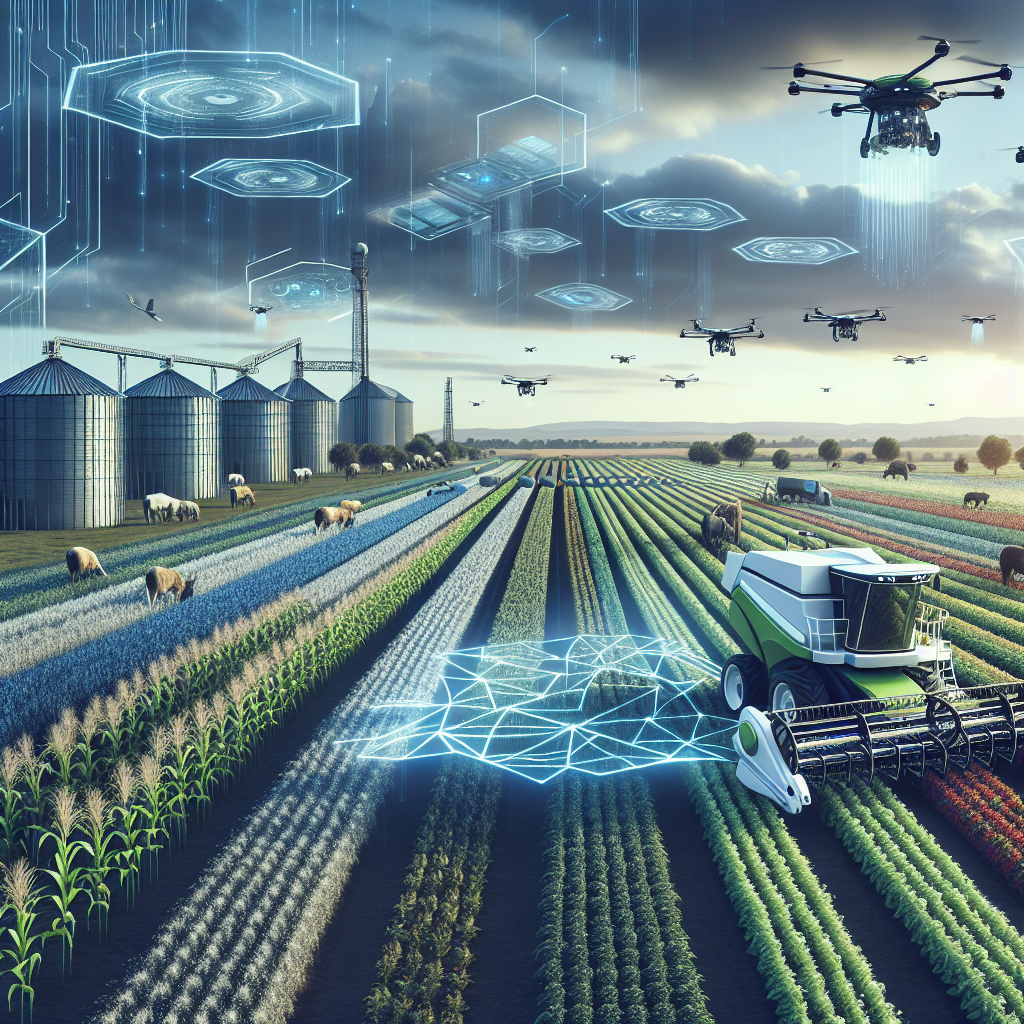
AI can also help farmers optimize resource use and reduce waste. For example, AI-powered drones can monitor crop health and identify areas of the field that need attention, enabling farmers to target inputs more effectively. AI can also help farmers predict crop yields and market demand, enabling them to plan and manage their resources more efficiently.
AI technologies can also help improve crop breeding and genetic selection. By analyzing large datasets of genetic information, AI can help identify traits that are desirable for specific conditions, such as drought resistance or disease resistance. This can help breeders develop new crop varieties that are more resilient and productive, helping farmers adapt to changing environmental conditions.
AI can also help improve supply chain management and reduce food waste. By analyzing data on supply chain logistics, market demand, and consumer preferences, AI can help optimize distribution networks and reduce spoilage. AI-powered sensors can also monitor food quality and safety throughout the supply chain, helping to ensure that food reaches consumers in good condition.
Challenges and Opportunities
While AI has the potential to revolutionize sustainable agriculture and promote food security, there are also challenges that need to be addressed. One of the key challenges is access to technology and data. Many farmers, especially smallholders in developing countries, may not have access to the necessary technology or the skills to use it effectively. Addressing this digital divide will be crucial to ensure that all farmers can benefit from AI technologies.
Another challenge is the ethical and social implications of AI in agriculture. For example, there are concerns about data privacy and ownership, as well as the potential for AI to exacerbate inequalities in the agricultural sector. It will be important to develop policies and regulations that ensure that AI is used responsibly and ethically, and that benefits are shared equitably.
Despite these challenges, there are also opportunities for AI to drive positive change in agriculture. For example, AI can help smallholder farmers access markets, finance, and information, enabling them to improve their livelihoods and food security. AI can also help address labor shortages in agriculture by automating tasks such as planting, harvesting, and monitoring, freeing up farmers to focus on more strategic activities.
Overall, AI has the potential to transform agriculture and promote sustainable food systems. By leveraging the power of AI technologies, farmers can make better decisions, optimize resource use, and improve productivity and resilience. This can help address the challenges of food security and sustainability, and ensure that agriculture can continue to feed a growing global population in a changing climate.
FAQs
Q: How can AI help farmers improve crop yields?
A: AI technologies, such as machine learning algorithms and predictive analytics, can help farmers monitor soil conditions, weather patterns, and crop health to optimize irrigation, fertilization, and pest control practices. This can help improve crop yields by ensuring that crops receive the right inputs at the right time.
Q: Is AI accessible to smallholder farmers in developing countries?
A: Access to AI technologies can be a challenge for smallholder farmers in developing countries, due to factors such as cost, infrastructure, and skills. However, there are initiatives and programs that aim to make AI more accessible to smallholder farmers, such as mobile apps and training programs.
Q: What are the ethical implications of AI in agriculture?
A: There are ethical implications of AI in agriculture, such as concerns about data privacy, ownership, and inequality. It will be important to develop policies and regulations that ensure that AI is used responsibly and ethically, and that benefits are shared equitably.
Q: How can AI help reduce food waste in the supply chain?
A: AI can help reduce food waste in the supply chain by analyzing data on supply chain logistics, market demand, and consumer preferences to optimize distribution networks and reduce spoilage. AI-powered sensors can also monitor food quality and safety throughout the supply chain, helping to ensure that food reaches consumers in good condition.