
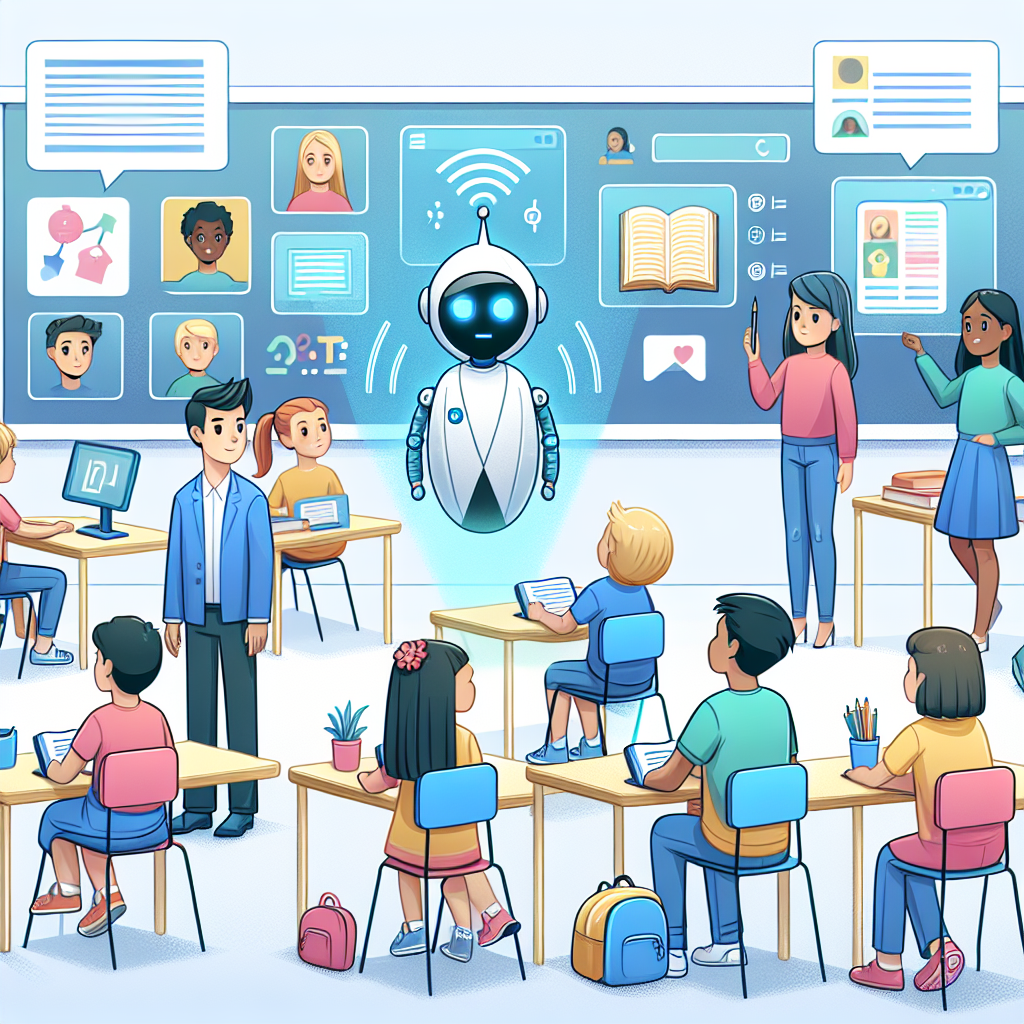
The Potential of AI in Special Education
Artificial Intelligence (AI) has the potential to revolutionize many aspects of our society, and one area where it can make a significant impact is in special education. Special education is a personalized form of education that addresses the unique needs of students with disabilities, learning difficulties, or other challenges. AI technology has the ability to enhance the learning experience for these students in a variety of ways, from personalized learning plans to adaptive assessments. In this article, we will explore the potential of AI in special education and how it can benefit both students and educators.
Personalized Learning Plans
One of the key benefits of AI in special education is the ability to create personalized learning plans for each student. AI algorithms can analyze a student’s strengths and weaknesses, learning style, and progress to tailor lesson plans to their individual needs. This level of personalization can help students with disabilities or learning difficulties to learn at their own pace and in a way that works best for them.
For example, a student with dyslexia may benefit from text-to-speech technology that reads aloud written text, while a student with autism may benefit from visual supports and social skills training. AI can help educators identify the most effective strategies for each student and provide them with the support they need to succeed.
Adaptive Assessments
Another way that AI can benefit special education is through adaptive assessments. Traditional assessments can be challenging for students with disabilities, as they may not accurately measure their knowledge and skills. AI technology can create adaptive assessments that adjust the difficulty level based on the student’s responses, ensuring that they are challenged at an appropriate level.
Adaptive assessments can provide educators with valuable insights into a student’s progress and areas of need, allowing them to make informed decisions about how to support their learning. By using AI to create more accurate and effective assessments, educators can better understand their students’ abilities and provide them with the support they need to succeed.
Virtual Tutoring
AI technology can also be used to provide virtual tutoring for students with disabilities. Virtual tutors can offer personalized support and guidance to students, helping them to work through challenging concepts and build their skills. Virtual tutoring can be especially beneficial for students who may not have access to in-person support or who prefer to learn independently.
Virtual tutors can use AI algorithms to adapt their teaching style to the individual needs of each student, providing them with a customized learning experience. By offering virtual tutoring, educators can ensure that all students have access to the support they need to succeed in their education.
FAQs
Q: How can AI technology benefit students with disabilities in special education?
A: AI technology can benefit students with disabilities by providing personalized learning plans, adaptive assessments, and virtual tutoring. These tools can help students learn at their own pace, receive targeted support, and build their skills in a way that works best for them.
Q: How can educators incorporate AI technology into their special education programs?
A: Educators can incorporate AI technology into their special education programs by using AI algorithms to create personalized learning plans, adaptive assessments, and virtual tutoring. By leveraging AI technology, educators can provide students with the support they need to succeed in their education.
Q: What are some challenges to implementing AI technology in special education?
A: Some challenges to implementing AI technology in special education include the cost of the technology, the need for training and support for educators, and concerns about data privacy and security. Educators must carefully consider these challenges and work to address them in order to successfully incorporate AI technology into their special education programs.
In conclusion, AI technology has the potential to transform special education by providing personalized learning plans, adaptive assessments, and virtual tutoring for students with disabilities. By leveraging AI technology, educators can create a more inclusive and supportive learning environment for all students, helping them to succeed in their education. As AI technology continues to advance, the possibilities for its use in special education are endless, and the benefits for students and educators alike are immense.