
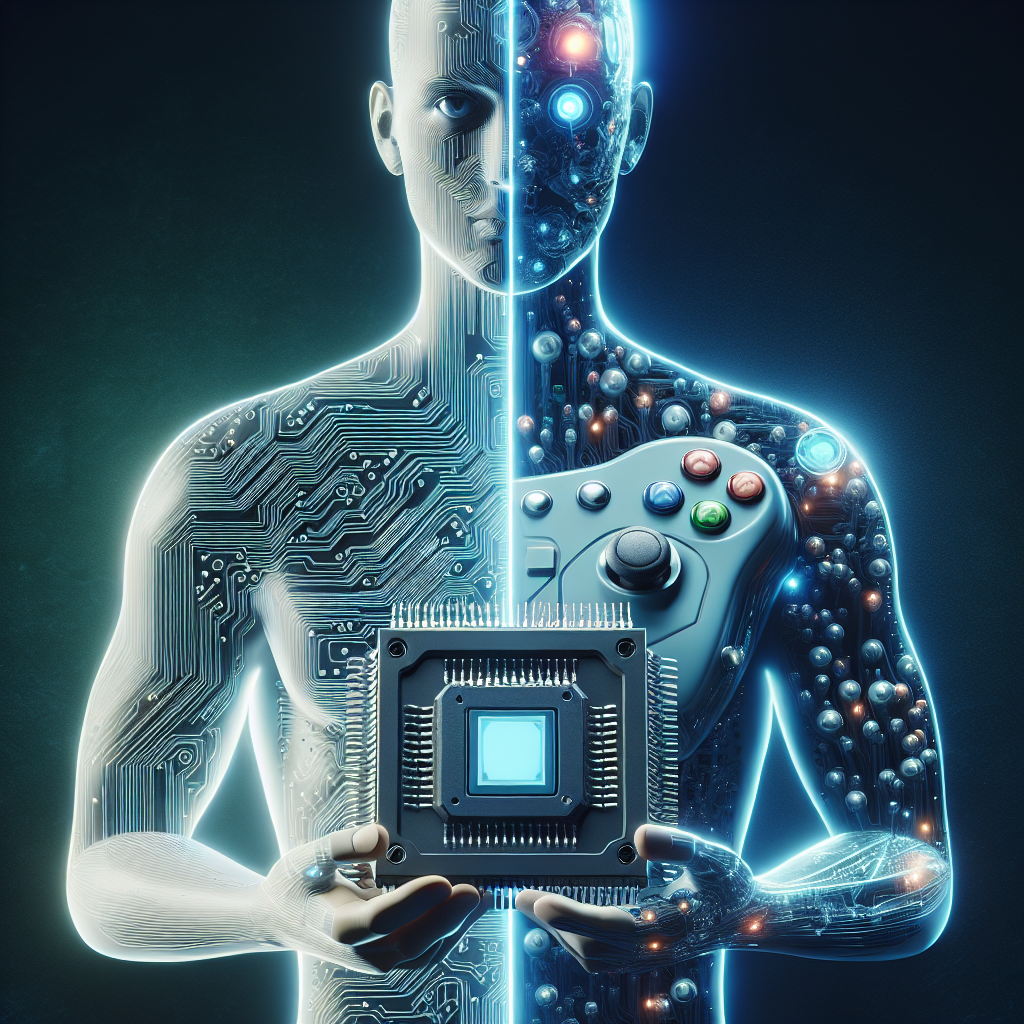
The Rise of AI in Game Tournaments
In recent years, the world of competitive gaming has been revolutionized by the rise of artificial intelligence (AI). AI-powered bots have been developed that are capable of competing against, and even defeating, some of the best human players in a variety of popular games. This development has sparked a heated debate among gamers and developers alike, with some heralding it as a groundbreaking advancement in the world of esports, while others express concerns about the potential implications of AI dominance in competitive gaming.
One of the most famous examples of AI’s rise in game tournaments is AlphaGo, a computer program developed by Google’s DeepMind that made headlines in 2016 when it defeated the world champion Go player, Lee Sedol. Go is an ancient Chinese board game that is considered one of the most complex games in existence, with more possible board configurations than there are atoms in the universe. The fact that an AI was able to master this game to the point of defeating a human champion was a major milestone in the field of artificial intelligence.
Since then, AI has continued to make strides in the world of gaming tournaments. In 2017, OpenAI’s bot defeated some of the best players in the world at the game Dota 2, a popular multiplayer online battle arena game. More recently, AI has also proven its prowess in games like StarCraft II and Poker, demonstrating its ability to adapt to different game genres and strategies.
The use of AI in game tournaments has raised a number of questions and concerns among players and spectators. One of the main concerns is the potential impact of AI on the competitive gaming scene. Will AI-powered bots eventually replace human players in tournaments? Will they become the new standard of excellence in gaming, leaving human players unable to compete?
Another concern is the fairness of AI in competitive gaming. Some argue that AI bots have an unfair advantage over human players, as they are capable of processing information and making decisions at speeds that are impossible for humans to match. This raises questions about the integrity of competitive gaming tournaments and whether AI-powered bots should be allowed to compete against human players on an equal playing field.
Despite these concerns, many see the rise of AI in game tournaments as a positive development for the gaming industry. AI bots have the potential to push the boundaries of what is possible in gaming, introducing new strategies and tactics that human players may not have considered. They also offer a unique challenge for human players, who must adapt and evolve their own skills in order to compete against these formidable opponents.
Furthermore, AI in game tournaments has the potential to attract new audiences to competitive gaming. The spectacle of watching AI-powered bots compete against human players can be a thrilling and engaging experience for spectators, drawing in viewers who may not have been interested in esports before. This increased interest and engagement can help to grow the competitive gaming scene and bring more attention to the talented players who compete in these tournaments.
In conclusion, the rise of AI in game tournaments represents a significant advancement in the world of competitive gaming. While there are valid concerns about the implications of AI dominance in gaming and the fairness of AI-powered bots in tournaments, there is also great potential for innovation and excitement in the industry. As AI continues to evolve and improve, it will be interesting to see how it shapes the future of competitive gaming and what new challenges and opportunities it brings to the table.
FAQs
Q: Will AI bots eventually replace human players in game tournaments?
A: While AI bots have proven to be formidable opponents in certain games, it is unlikely that they will completely replace human players in tournaments. Human players bring a level of creativity, adaptability, and emotional intelligence to the game that AI bots are currently unable to match.
Q: Are AI-powered bots considered cheating in game tournaments?
A: The use of AI-powered bots in game tournaments is a controversial topic, with some arguing that they give players an unfair advantage over human opponents. However, as long as the rules of the tournament allow for the use of AI bots, they are considered a legitimate part of competitive gaming.
Q: How do AI-powered bots learn to play games?
A: AI-powered bots learn to play games through a process known as reinforcement learning, where they are trained on massive amounts of game data and given rewards for successful gameplay. Over time, they develop strategies and tactics that allow them to compete at a high level against human players.
Q: What are the potential benefits of AI in game tournaments?
A: AI in game tournaments has the potential to introduce new strategies and tactics to the game, challenge human players to improve their skills, attract new audiences to competitive gaming, and push the boundaries of what is possible in gaming.