
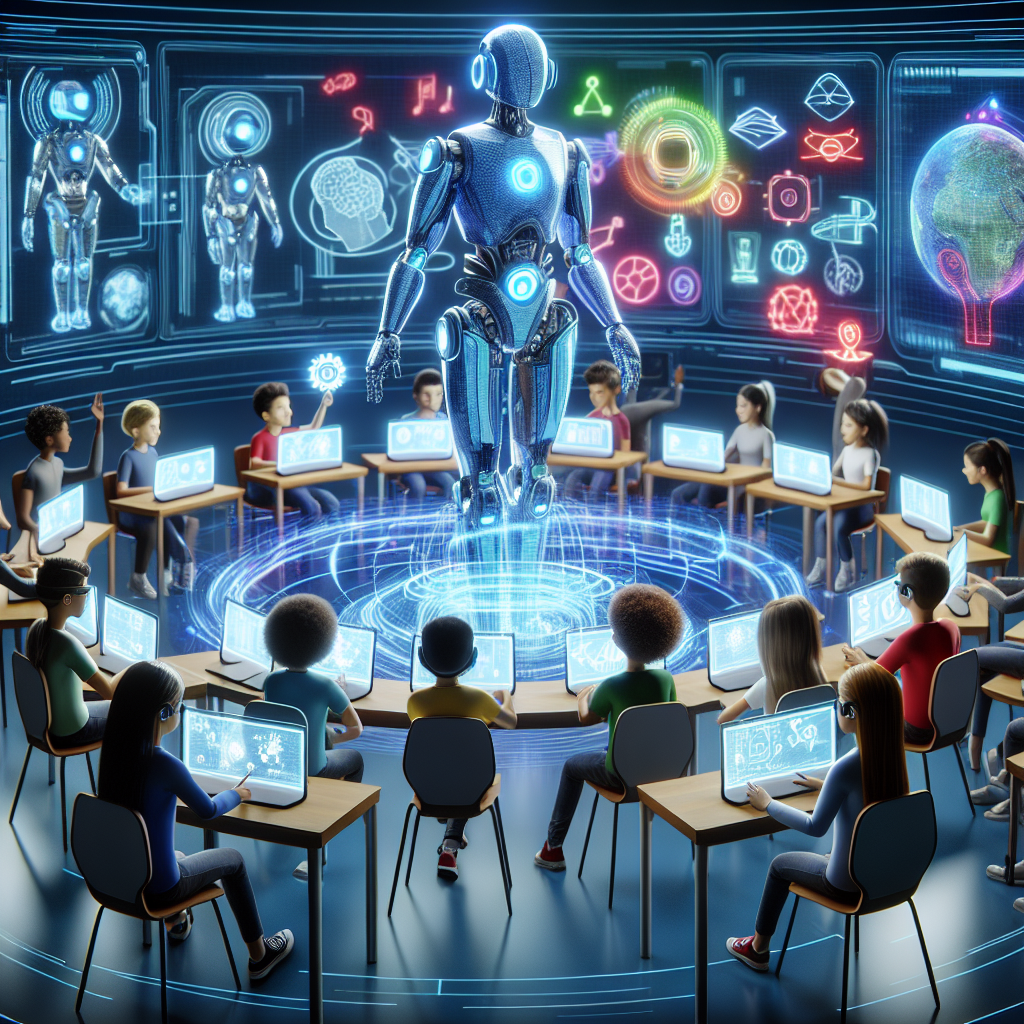
The Rise of AI-Powered Virtual Reality in Education
In recent years, the use of virtual reality (VR) technology has been steadily increasing in various fields, including education. With the integration of artificial intelligence (AI) into VR technology, educators are now able to provide more immersive and interactive learning experiences for students. This combination of AI and VR is revolutionizing the way students learn and retain information, making education more engaging, personalized, and effective than ever before.
AI-powered VR in education allows students to step into virtual worlds where they can explore, experiment, and interact with digital content in ways that were never possible with traditional teaching methods. This technology is particularly beneficial in subjects that require hands-on learning, such as science, engineering, and medicine. By using AI algorithms to analyze student behavior and performance in real-time, educators can tailor the learning experience to each individual student’s needs, providing personalized feedback and guidance to help them succeed.
One of the key advantages of AI-powered VR in education is its ability to create a safe and controlled environment for students to practice and refine their skills. For example, medical students can use VR simulations to perform virtual surgeries, allowing them to make mistakes and learn from them without putting real patients at risk. Similarly, engineering students can design and test virtual prototypes of their projects, refining their ideas before moving on to physical prototyping.
Another benefit of AI-powered VR in education is its ability to enhance collaborative learning experiences. Students can work together in virtual environments, solving problems, conducting experiments, and sharing ideas in real-time. This fosters teamwork and communication skills, preparing students for the collaborative nature of the modern workplace.
Furthermore, AI-powered VR can help educators assess student progress more accurately and efficiently. By tracking student behavior and performance in VR simulations, AI algorithms can provide valuable insights into each student’s learning style, strengths, and areas for improvement. This data can be used to create personalized learning plans for each student, ensuring that they are receiving the support and resources they need to succeed.
In addition to enhancing traditional teaching methods, AI-powered VR in education also has the potential to revolutionize distance learning. With the rise of online education platforms, students from around the world can access high-quality educational content from top institutions. AI-powered VR technology can further enhance these online learning experiences, providing students with immersive virtual classrooms where they can interact with teachers and peers in real-time.
Despite its many benefits, AI-powered VR in education also presents some challenges. One of the main concerns is the cost of implementing and maintaining this technology. VR headsets and AI algorithms can be expensive, making it difficult for schools and universities with limited budgets to adopt this technology. Additionally, there are concerns about the ethical implications of using AI algorithms to analyze student behavior and performance, as this raises questions about privacy and data security.
FAQs:
Q: How does AI-powered VR technology work in education?
A: AI-powered VR technology uses artificial intelligence algorithms to analyze student behavior and performance in virtual environments. This data is then used to provide personalized feedback and guidance to help students learn and retain information more effectively.
Q: What are the benefits of AI-powered VR in education?
A: AI-powered VR in education provides more immersive and interactive learning experiences for students, enhances collaborative learning opportunities, and allows educators to assess student progress more accurately and efficiently. This technology also has the potential to revolutionize distance learning by providing students with immersive virtual classrooms.
Q: What are the challenges of implementing AI-powered VR in education?
A: Some of the challenges of implementing AI-powered VR in education include the cost of the technology, concerns about data privacy and security, and the ethical implications of using AI algorithms to analyze student behavior and performance. Schools and universities with limited budgets may struggle to adopt this technology.
Q: How can AI-powered VR technology enhance traditional teaching methods?
A: AI-powered VR technology can enhance traditional teaching methods by providing students with hands-on learning experiences, personalized feedback and guidance, and collaborative learning opportunities. This technology can also help educators assess student progress more accurately and efficiently.
In conclusion, the rise of AI-powered VR in education is revolutionizing the way students learn and interact with digital content. By combining artificial intelligence with virtual reality technology, educators are able to provide more immersive, personalized, and effective learning experiences for students. While there are challenges to implementing this technology, the benefits far outweigh the drawbacks, making AI-powered VR a valuable tool for enhancing education in the 21st century.