
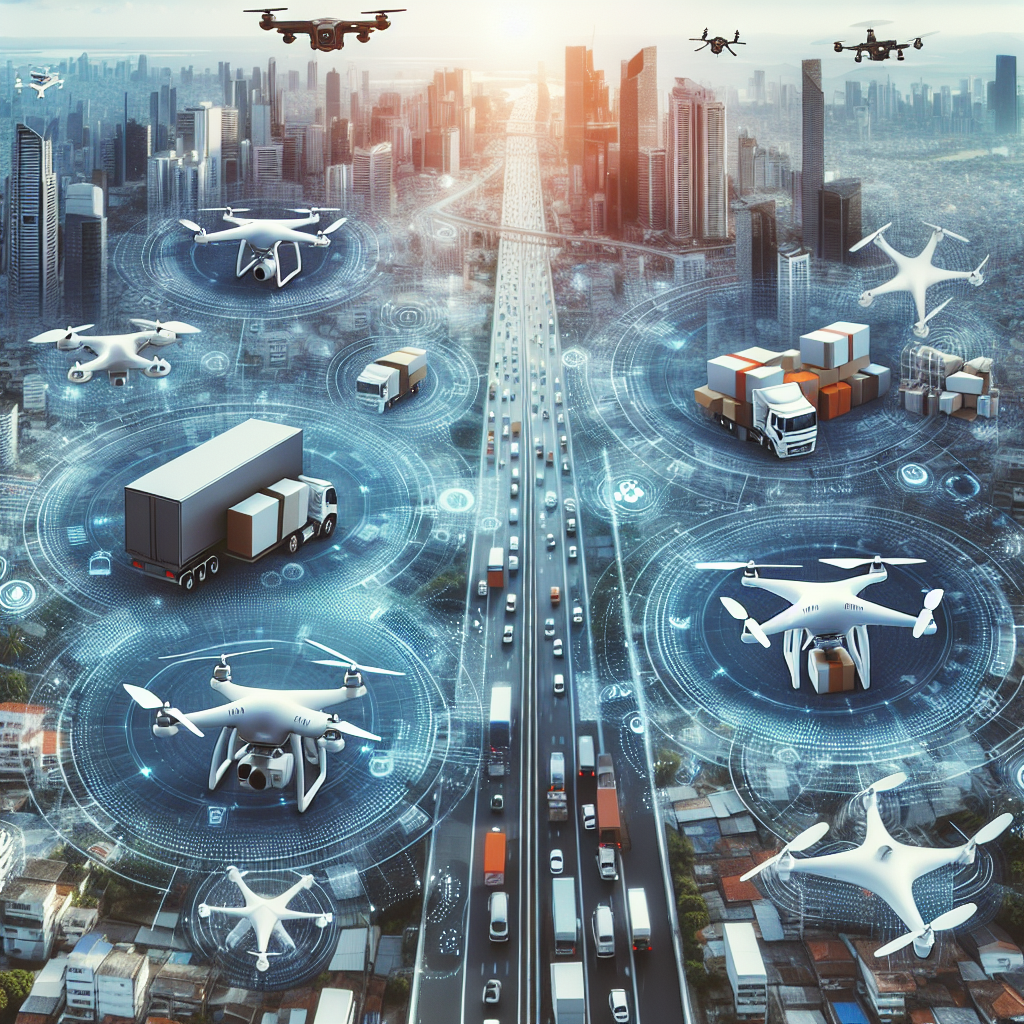
The Rise of Autonomous Drones in Transportation
In recent years, the use of autonomous drones in transportation has been on the rise. These unmanned aerial vehicles (UAVs) are equipped with advanced technology that allows them to operate without human intervention, making them ideal for a variety of tasks in the transportation industry. From delivering packages to monitoring traffic, autonomous drones are revolutionizing the way we move goods and people.
Autonomous drones are quickly becoming a popular choice for transportation companies looking to increase efficiency and reduce costs. These drones can navigate through crowded urban environments with ease, avoiding obstacles and reaching their destinations quickly. They can also operate 24/7, making them more reliable than human-operated vehicles.
One of the key advantages of autonomous drones is their ability to deliver goods quickly and efficiently. With the rise of e-commerce, the demand for fast and reliable delivery services has never been higher. Autonomous drones can deliver packages to customers in a fraction of the time it would take a traditional delivery service, making them an attractive option for companies looking to streamline their logistics operations.
In addition to delivery services, autonomous drones are also being used for monitoring and surveillance in the transportation industry. These drones can be equipped with cameras and sensors that allow them to monitor traffic patterns, detect accidents, and assess road conditions. This information can then be used to improve traffic flow, reduce congestion, and enhance overall safety on the roads.
The use of autonomous drones in transportation is not without its challenges, however. One of the main concerns is the potential for accidents and collisions with other vehicles or pedestrians. To address this issue, companies are developing advanced collision avoidance systems that allow drones to detect and avoid obstacles in real-time. These systems use a combination of sensors, cameras, and artificial intelligence to navigate safely through the environment.
Another challenge facing the adoption of autonomous drones in transportation is the regulatory environment. Many countries have strict regulations governing the use of drones in public spaces, and companies must navigate a complex web of rules and restrictions in order to operate legally. However, as the technology advances and the benefits become more apparent, we can expect to see more lenient regulations that allow for the widespread use of autonomous drones in transportation.
Despite these challenges, the future of autonomous drones in transportation looks bright. As the technology continues to evolve and improve, we can expect to see a wide range of applications for these unmanned aerial vehicles, from last-mile delivery to air taxi services. The potential for autonomous drones to revolutionize the way we move goods and people is immense, and companies that embrace this technology early on stand to benefit greatly.
FAQs:
1. What are the main benefits of using autonomous drones in transportation?
– Autonomous drones can deliver goods quickly and efficiently, monitor traffic patterns, detect accidents, and assess road conditions. They can also operate 24/7, making them more reliable than human-operated vehicles.
2. What are some of the challenges facing the adoption of autonomous drones in transportation?
– One of the main challenges is the potential for accidents and collisions with other vehicles or pedestrians. Companies are developing advanced collision avoidance systems to address this issue. Another challenge is the regulatory environment, with many countries having strict regulations governing the use of drones in public spaces.
3. What are some of the potential applications for autonomous drones in transportation?
– Autonomous drones can be used for last-mile delivery, monitoring and surveillance, air taxi services, and more. As the technology continues to evolve, we can expect to see a wide range of applications for these unmanned aerial vehicles.
4. How do autonomous drones navigate through crowded urban environments?
– Autonomous drones use a combination of sensors, cameras, and artificial intelligence to navigate through crowded urban environments. These systems allow drones to detect and avoid obstacles in real-time, ensuring safe and efficient operation.
5. How can companies benefit from adopting autonomous drones in transportation?
– Companies that adopt autonomous drones in transportation can benefit from increased efficiency, reduced costs, and improved customer satisfaction. These drones can streamline logistics operations, deliver goods quickly, and enhance overall safety on the roads.