
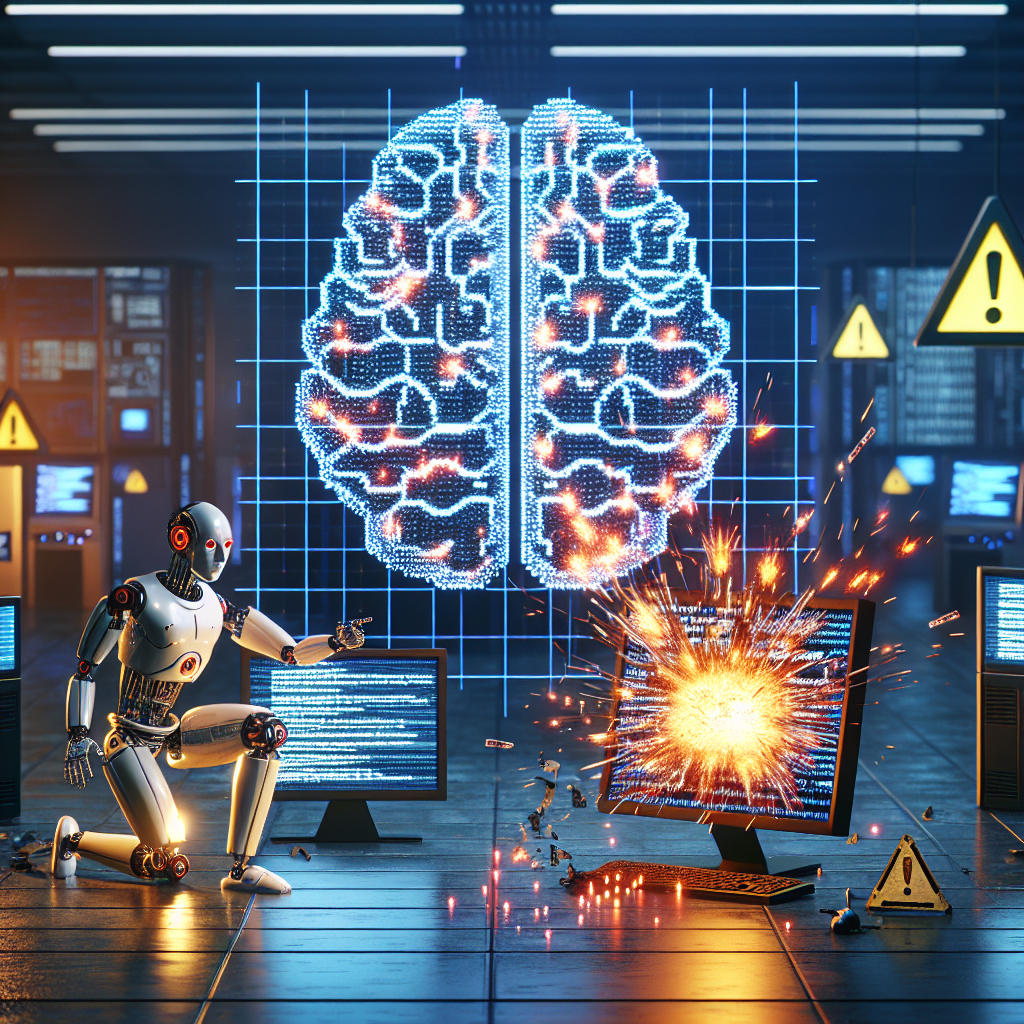
Artificial Intelligence (AI) is becoming increasingly prevalent in our daily lives, from virtual assistants like Siri and Alexa to self-driving cars and facial recognition technology. While AI has the potential to greatly benefit society in numerous ways, there are also risks associated with AI malfunction and errors that must be carefully considered.
One of the main risks of AI malfunction is the potential for unintended consequences. AI systems are only as good as the data they are trained on, and if that data is biased or incomplete, it can lead to serious errors. For example, in 2016, Microsoft launched an AI chatbot named Tay on Twitter, only to have it quickly learn and begin spewing racist and misogynistic tweets. This incident highlights the importance of carefully monitoring and controlling the data that AI systems are exposed to.
Another risk of AI malfunction is the potential for cybersecurity threats. As AI systems become more sophisticated and interconnected, they also become more vulnerable to hacking and other forms of cyber attacks. A hacker could potentially exploit a vulnerability in an AI system to manipulate its decisions or actions, leading to potentially disastrous consequences. This is especially concerning in critical applications like autonomous vehicles or medical diagnosis systems, where a malfunction could result in loss of life.
Furthermore, AI systems can also suffer from what is known as the “black box” problem, where the inner workings of the AI are too complex for humans to understand. This lack of transparency can make it difficult to diagnose and fix errors when they occur, leading to potential malfunctions that go unnoticed until it is too late. This is particularly concerning in high-stakes applications like healthcare or finance, where errors could have serious consequences.
In addition to these risks, there is also the potential for AI systems to make ethical or moral errors. For example, an AI system tasked with making medical decisions may prioritize cost-effectiveness over patient well-being, leading to potentially harmful outcomes. Similarly, AI systems used in criminal justice or hiring decisions may inadvertently perpetuate biases and discrimination present in the data they are trained on. These ethical concerns must be carefully considered and addressed to ensure that AI systems are used in a responsible and fair manner.
To mitigate the risks of AI malfunction and errors, it is crucial to implement robust testing and validation processes throughout the development and deployment of AI systems. This includes thorough data validation to ensure that the data used to train AI models is accurate and unbiased, as well as rigorous testing to identify and correct potential vulnerabilities or errors. Additionally, transparency and explainability are key to ensuring that AI systems can be understood and trusted by users and stakeholders.
Despite these risks, the potential benefits of AI are vast, and with careful consideration and oversight, AI systems can be used to greatly improve our lives. By staying informed about the risks of AI malfunction and errors, we can work towards a future where AI technology is used responsibly and ethically to benefit society as a whole.
FAQs:
Q: Can AI systems be hacked?
A: Yes, AI systems can be vulnerable to hacking and cyber attacks, especially as they become more sophisticated and interconnected. It is crucial to implement robust cybersecurity measures to protect AI systems from potential threats.
Q: How can we ensure that AI systems are ethical and fair?
A: To ensure that AI systems are ethical and fair, it is important to carefully consider the data used to train AI models and to implement checks and balances to prevent biases and discrimination. Transparency and explainability are also key to ensuring that AI systems can be understood and trusted.
Q: What are some examples of AI malfunction in real-world applications?
A: Some examples of AI malfunction in real-world applications include the racist tweets generated by Microsoft’s AI chatbot Tay, the erroneous medical diagnosis made by an AI system, and the biased hiring decisions made by AI recruiting tools. These incidents highlight the importance of carefully monitoring and controlling AI systems to prevent errors and malfunctions.