
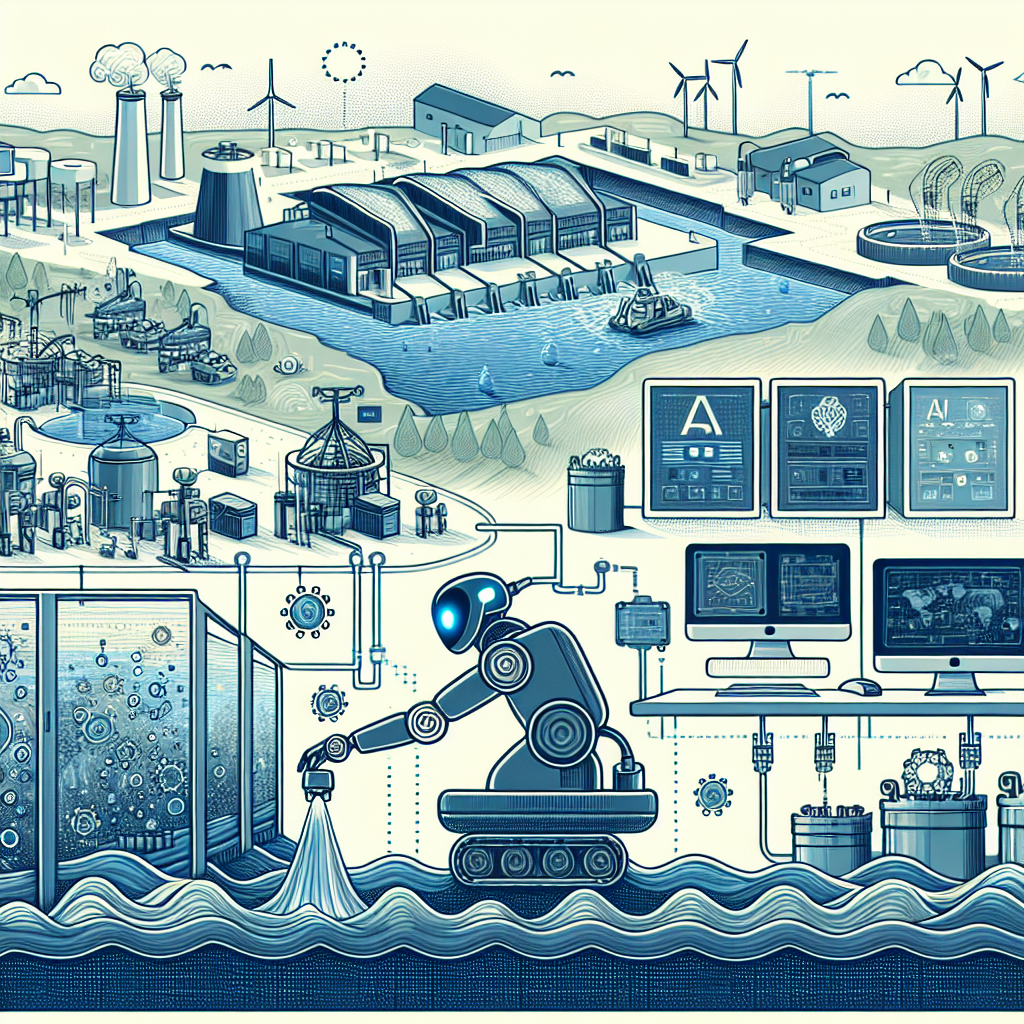
The Role of AI Deployment in Water Resource Management
Water is one of the most important resources on Earth, critical for all forms of life. With the increasing demands for water due to population growth and climate change, proper management of water resources has become essential. Artificial Intelligence (AI) has emerged as a powerful tool in water resource management, offering innovative solutions to address the challenges faced by water managers worldwide.
AI technologies such as machine learning, neural networks, and data analytics can analyze large amounts of data in real-time to make accurate predictions and decisions. By leveraging AI, water managers can optimize water allocation, improve water quality, and enhance water conservation efforts. In this article, we will explore the role of AI deployment in water resource management and its potential benefits.
1. Optimizing Water Allocation
One of the key challenges in water resource management is optimizing water allocation to meet the diverse needs of various stakeholders. AI can help water managers make informed decisions by analyzing historical data, weather forecasts, and other relevant information to predict water demand and supply. By using AI algorithms, water managers can optimize water distribution systems, minimize water losses, and ensure equitable distribution of water resources.
For example, AI-powered smart irrigation systems can adjust water flow based on real-time weather conditions and soil moisture levels, reducing water wastage and improving crop yields. Similarly, AI can be used to optimize water release from reservoirs and dams, taking into account factors such as hydrological conditions, environmental constraints, and water rights agreements.
2. Improving Water Quality
Maintaining water quality is crucial for human health, ecosystem sustainability, and economic development. AI can play a significant role in monitoring and managing water quality by analyzing water samples, sensor data, and satellite imagery to detect pollutants, algal blooms, and other contaminants. AI algorithms can identify patterns and trends in water quality data, helping water managers to take proactive measures to prevent water pollution and address water quality issues.
For example, AI-powered water quality monitoring systems can detect changes in water parameters such as pH, turbidity, and dissolved oxygen levels, triggering alerts and notifications when water quality exceeds acceptable limits. AI can also be used to predict water quality trends, assess the impact of pollution sources, and develop strategies to mitigate water pollution.
3. Enhancing Water Conservation
Water scarcity is a growing concern in many regions around the world, necessitating the need for effective water conservation strategies. AI can help water managers optimize water use, reduce water consumption, and promote sustainable water management practices. By analyzing data from sensors, meters, and IoT devices, AI can identify water leaks, detect inefficiencies in water systems, and suggest ways to reduce water wastage.
For example, AI-powered leak detection systems can analyze acoustic signals to pinpoint the location of water leaks in pipelines, enabling timely repairs and preventing water losses. AI can also optimize water reuse and recycling processes, identify opportunities for water conservation, and provide recommendations to optimize water use efficiency.
4. Addressing Climate Change Impacts
Climate change is expected to have a significant impact on water resources, leading to more frequent droughts, floods, and extreme weather events. AI can help water managers adapt to the changing climate by forecasting water availability, predicting extreme events, and developing resilience strategies. By analyzing climate data, hydrological models, and remote sensing data, AI can provide valuable insights into how climate change will affect water resources and help water managers prepare for future challenges.
For example, AI-powered flood forecasting systems can analyze rainfall data, river flow data, and terrain information to predict floods and issue early warnings to at-risk communities. AI can also optimize water storage and release strategies in response to changing climate conditions, helping to mitigate the impacts of droughts and water shortages.
5. Enhancing Decision-Making
AI can support water managers in making informed decisions by providing real-time monitoring, predictive analytics, and scenario analysis tools. By integrating AI into decision-making processes, water managers can improve operational efficiency, reduce costs, and enhance resource allocation. AI can help water managers identify trends, patterns, and anomalies in water data, enabling them to make data-driven decisions to optimize water management practices.
For example, AI-powered decision support systems can analyze historical data, simulation models, and risk assessments to evaluate different water management scenarios and identify the most effective strategies. AI can also automate routine tasks, such as data collection, analysis, and reporting, allowing water managers to focus on strategic planning and policy development.
FAQs:
1. What are the key benefits of AI deployment in water resource management?
AI deployment in water resource management offers several key benefits, including:
– Optimizing water allocation to meet diverse needs
– Improving water quality through real-time monitoring
– Enhancing water conservation efforts to reduce water wastage
– Addressing climate change impacts on water resources
– Enhancing decision-making processes with real-time data analysis
2. How can AI help in optimizing water allocation?
AI can help in optimizing water allocation by analyzing historical data, weather forecasts, and other relevant information to predict water demand and supply. AI algorithms can optimize water distribution systems, minimize water losses, and ensure equitable distribution of water resources.
3. What role does AI play in improving water quality?
AI plays a significant role in improving water quality by monitoring and managing water quality data to detect pollutants, algal blooms, and other contaminants. AI algorithms can identify patterns and trends in water quality data, helping water managers to take proactive measures to prevent water pollution and address water quality issues.
4. How can AI enhance water conservation efforts?
AI can enhance water conservation efforts by analyzing data from sensors, meters, and IoT devices to identify water leaks, detect inefficiencies in water systems, and suggest ways to reduce water wastage. AI-powered leak detection systems can pinpoint the location of water leaks in pipelines, enabling timely repairs and preventing water losses.
5. What are some examples of AI applications in water resource management?
Some examples of AI applications in water resource management include smart irrigation systems, water quality monitoring systems, leak detection systems, flood forecasting systems, and decision support systems. These AI applications help water managers optimize water allocation, improve water quality, conserve water, and make informed decisions to enhance water resource management practices.
In conclusion, AI deployment in water resource management offers innovative solutions to address the challenges faced by water managers worldwide. By leveraging AI technologies, water managers can optimize water allocation, improve water quality, enhance water conservation efforts, address climate change impacts, and enhance decision-making processes. AI has the potential to revolutionize water resource management and ensure sustainable water management practices for future generations.