
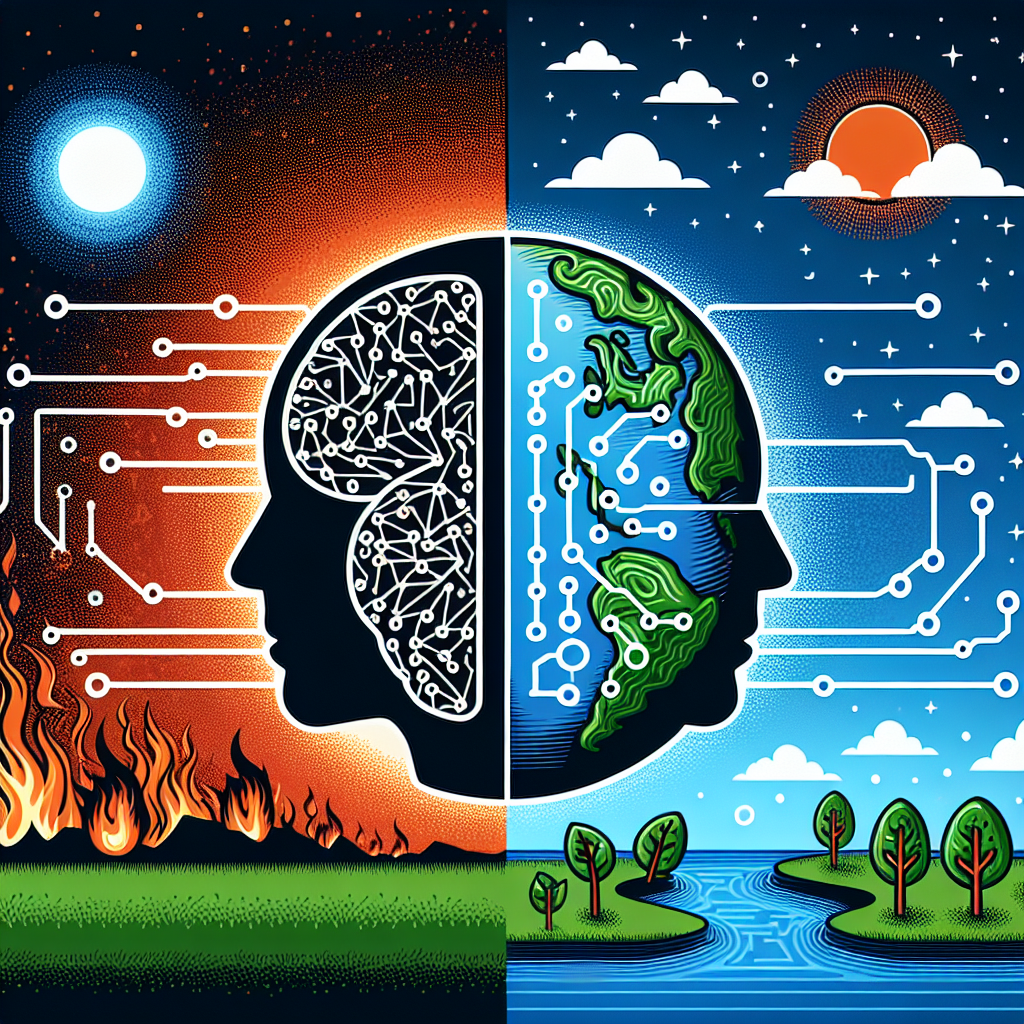
Climate change is one of the most pressing issues facing our planet today. With rising global temperatures, melting ice caps, and extreme weather events becoming more common, it is clear that urgent action is needed to mitigate the effects of climate change. One potential solution that has gained traction in recent years is the use of artificial intelligence (AI) technology to help address the challenges posed by climate change.
AI has the potential to revolutionize the way we approach climate change mitigation by providing innovative solutions to complex problems. From predicting extreme weather events to optimizing energy consumption, AI can play a crucial role in helping us reduce our carbon footprint and transition to a more sustainable future.
One of the key ways in which AI can help mitigate climate change is through its ability to analyze vast amounts of data and identify patterns and trends. By using AI algorithms, researchers can better understand the impact of human activities on the environment and develop more effective strategies for reducing greenhouse gas emissions. For example, AI can be used to analyze satellite data to track deforestation rates, monitor changes in sea levels, and predict the impact of climate change on biodiversity.
Another way in which AI can help combat climate change is through the development of smart energy systems. By using AI algorithms to optimize energy consumption, we can reduce waste and increase the efficiency of our energy infrastructure. For example, AI can be used to predict electricity demand and adjust power generation accordingly, leading to a more reliable and sustainable energy grid.
AI can also play a role in the development of renewable energy sources such as solar and wind power. By using AI algorithms to optimize the placement of solar panels and wind turbines, we can maximize energy production and reduce our reliance on fossil fuels. AI can also be used to improve the efficiency of energy storage systems, making renewable energy sources more reliable and cost-effective.
In addition to these innovations, AI can also help us adapt to the effects of climate change. By using AI algorithms to analyze data from sensors and other sources, we can better predict and respond to extreme weather events such as floods, droughts, and wildfires. AI can help us identify vulnerable populations and develop strategies to protect them from the impacts of climate change.
Despite the potential benefits of AI in climate change mitigation, there are also challenges and limitations to consider. For example, AI technologies are not immune to bias and can produce inaccurate results if not properly calibrated. Additionally, the deployment of AI systems on a large scale may require significant investment and infrastructure, which could limit their widespread adoption.
Despite these challenges, the potential benefits of AI in climate change mitigation are clear. By harnessing the power of AI technology, we can develop innovative solutions to combat climate change and create a more sustainable future for generations to come.
FAQs:
1. How can AI help mitigate climate change?
AI can help mitigate climate change by analyzing data, optimizing energy consumption, developing renewable energy sources, and predicting and responding to extreme weather events.
2. What are the limitations of using AI in climate change mitigation?
Some limitations of using AI in climate change mitigation include the potential for bias, the need for significant investment and infrastructure, and the complexity of implementing AI systems on a large scale.
3. How can individuals contribute to climate change mitigation efforts?
Individuals can contribute to climate change mitigation efforts by reducing their carbon footprint, supporting renewable energy sources, and advocating for policy changes that promote sustainability.
4. What role can governments and businesses play in leveraging AI for climate change mitigation?
Governments and businesses can play a crucial role in leveraging AI for climate change mitigation by investing in research and development, supporting the deployment of AI technologies, and implementing policies that promote sustainability.
5. What are some examples of AI technologies being used to address climate change?
Some examples of AI technologies being used to address climate change include predictive analytics for extreme weather events, optimization of energy consumption, and development of smart energy systems.