
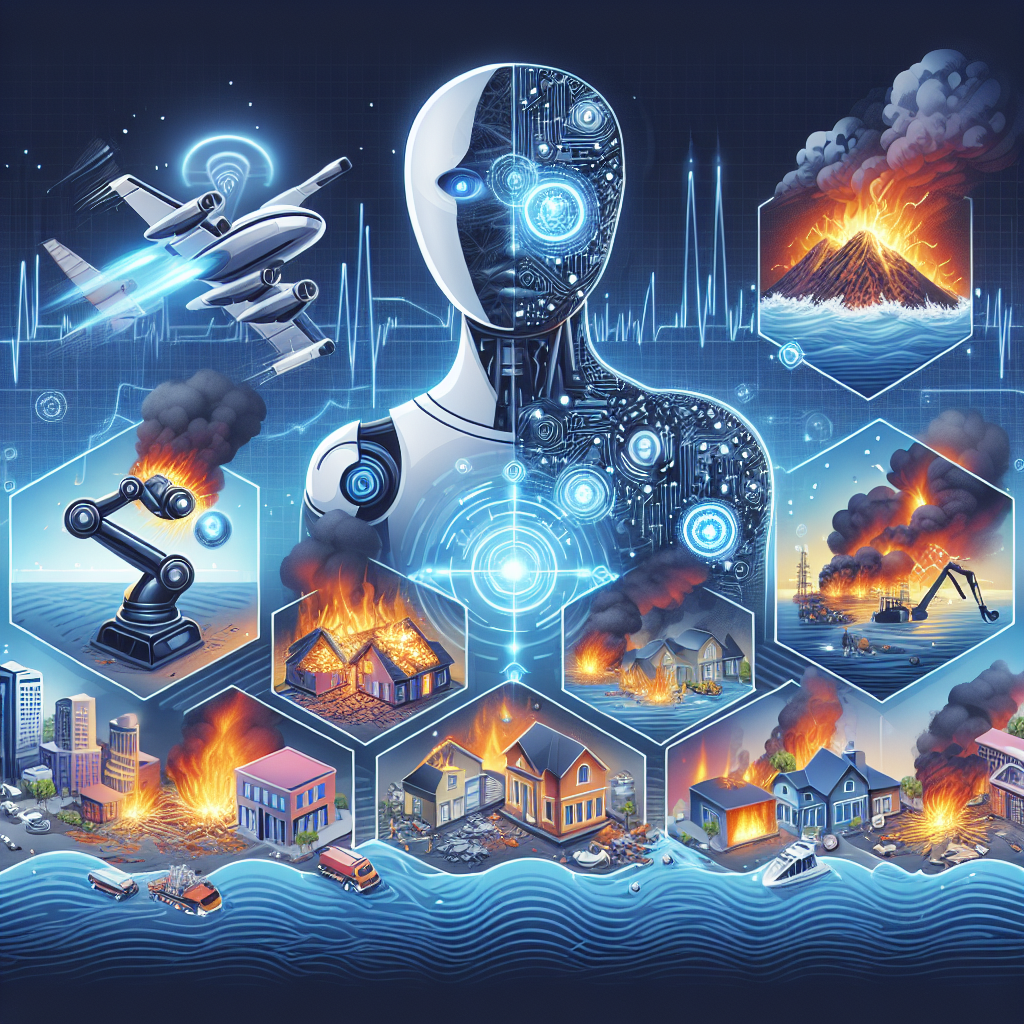
Disaster recovery planning is a crucial aspect of any business or organization’s operations. It involves preparing for and responding to unforeseen events that could disrupt normal operations, such as natural disasters, cyber-attacks, or other emergencies. In recent years, the role of artificial intelligence (AI) in disaster recovery planning has become increasingly important. AI technologies can help organizations better prepare for and respond to disasters by providing advanced analytics, automation, and predictive capabilities.
One of the key benefits of using AI in disaster recovery planning is its ability to analyze large amounts of data quickly and accurately. This can help organizations identify potential risks and vulnerabilities in their systems and infrastructure, allowing them to take proactive steps to mitigate these risks before a disaster strikes. AI can also help organizations automate certain processes, such as data backup and recovery, which can help streamline the recovery process and reduce downtime.
Another important role of AI in disaster recovery planning is its ability to provide predictive capabilities. AI algorithms can analyze historical data and trends to forecast potential disasters and their potential impact on an organization. This can help organizations develop more effective disaster recovery plans and allocate resources more efficiently to prepare for potential disasters.
AI can also play a crucial role in the response phase of disaster recovery. For example, AI-powered chatbots can be used to communicate with employees and customers during a disaster, providing real-time updates and information on the situation. AI can also help organizations assess the extent of the damage caused by a disaster and prioritize recovery efforts based on data and analytics.
Overall, the role of AI in disaster recovery planning is to help organizations better prepare for, respond to, and recover from disasters. By leveraging AI technologies, organizations can improve their resilience to disasters and minimize the impact on their operations and stakeholders.
FAQs:
Q: How can AI help organizations prepare for disasters?
A: AI can help organizations prepare for disasters by analyzing large amounts of data to identify potential risks and vulnerabilities, providing predictive capabilities to forecast potential disasters, and automating certain processes such as data backup and recovery.
Q: How can AI help organizations respond to disasters?
A: AI can help organizations respond to disasters by providing real-time updates and information through chatbots, assessing the extent of the damage caused by a disaster, and prioritizing recovery efforts based on data and analytics.
Q: What are some examples of AI technologies used in disaster recovery planning?
A: Some examples of AI technologies used in disaster recovery planning include machine learning algorithms for data analysis, chatbots for communication during disasters, and predictive analytics for forecasting potential disasters.
Q: How can organizations integrate AI into their existing disaster recovery plans?
A: Organizations can integrate AI into their existing disaster recovery plans by partnering with AI vendors or consultants, training their staff on AI technologies, and incorporating AI tools and systems into their disaster recovery processes.
Q: What are the potential challenges of using AI in disaster recovery planning?
A: Some potential challenges of using AI in disaster recovery planning include the high cost of AI technologies, the need for specialized skills and expertise to implement and manage AI systems, and concerns about data privacy and security.