
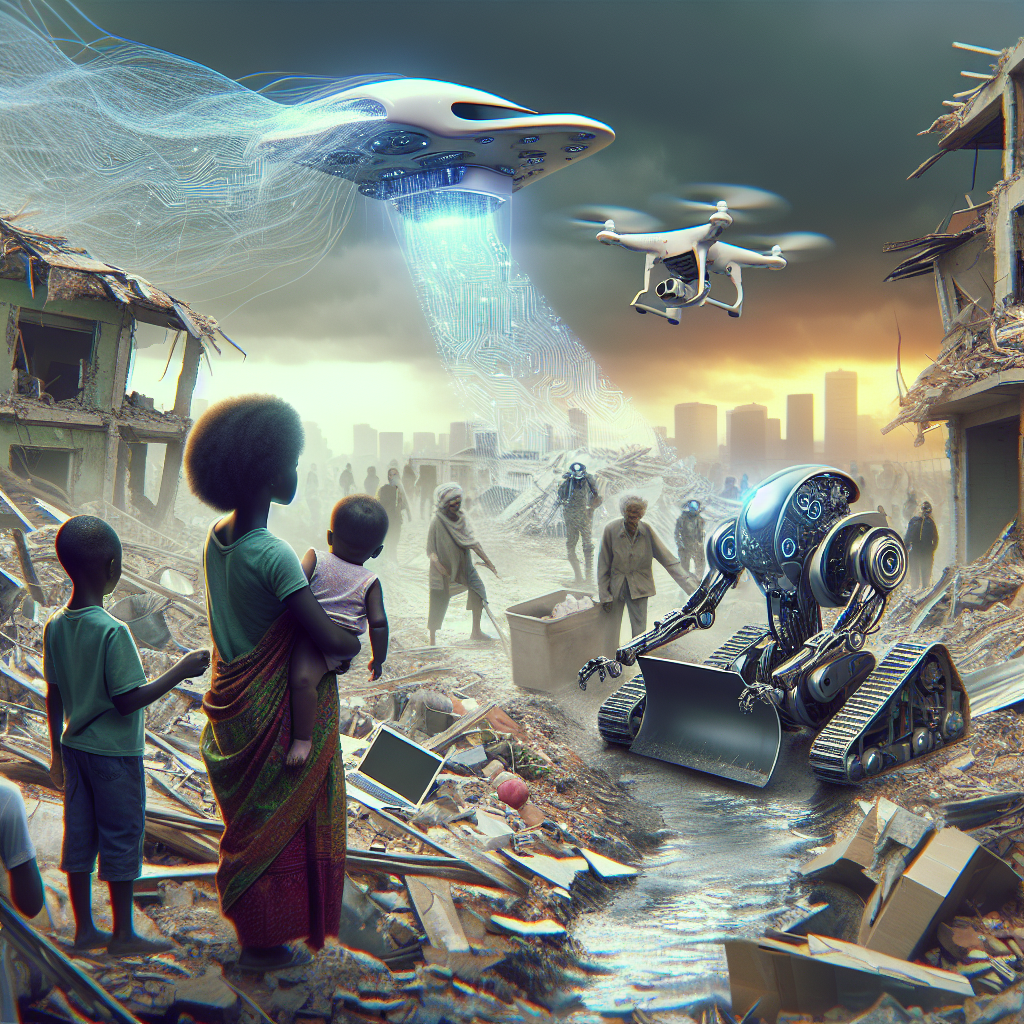
Disasters, both natural and man-made, have become increasingly common in today’s world. From earthquakes and hurricanes to pandemics and industrial accidents, the need for effective disaster relief efforts has never been greater. In recent years, artificial intelligence (AI) has emerged as a powerful tool in disaster response and recovery. This article will explore the role of AI in disaster relief efforts, highlighting its benefits, challenges, and potential for the future.
One of the key benefits of AI in disaster relief efforts is its ability to process and analyze vast amounts of data quickly and efficiently. In the aftermath of a disaster, time is of the essence, and AI can help emergency responders make faster and more informed decisions. For example, AI algorithms can analyze satellite imagery to assess the extent of damage caused by a natural disaster, identify areas that are most in need of assistance, and even predict where future disasters may occur.
AI can also be used to improve communication and coordination among different stakeholders involved in disaster relief efforts. By using AI-powered chatbots and virtual assistants, emergency responders can quickly disseminate critical information to affected populations, coordinate rescue and evacuation efforts, and provide real-time updates on the situation on the ground.
Furthermore, AI can help optimize the allocation of resources during disaster relief efforts. By analyzing data on population density, infrastructure, and other key factors, AI algorithms can help emergency responders prioritize their response efforts and ensure that resources are distributed to where they are needed most. This can help save lives, reduce suffering, and minimize the long-term impact of a disaster on affected communities.
Despite these benefits, there are also challenges and limitations to using AI in disaster relief efforts. One of the main challenges is the need for accurate and reliable data to train AI algorithms. In many cases, data on affected populations, infrastructure, and other key factors may be incomplete, outdated, or unavailable, making it difficult for AI systems to make accurate predictions and recommendations.
Another challenge is the ethical and privacy concerns associated with using AI in disaster relief efforts. For example, there may be concerns about the use of AI-powered surveillance technology to monitor and track affected populations, or the potential for biases in AI algorithms to disproportionately impact certain groups of people. It is important for emergency responders to be aware of these concerns and take steps to ensure that AI systems are used in a fair and transparent manner.
Despite these challenges, the potential for AI to transform disaster relief efforts is immense. In the coming years, we can expect to see further advancements in AI technology that will enable emergency responders to respond more effectively and efficiently to disasters of all kinds. By harnessing the power of AI, we can save lives, reduce suffering, and build more resilient communities in the face of future disasters.
FAQs:
Q: How is AI used in disaster response efforts?
A: AI is used in disaster response efforts in a variety of ways, including analyzing satellite imagery to assess damage, coordinating rescue and evacuation efforts, optimizing the allocation of resources, and providing real-time updates to affected populations.
Q: What are some of the benefits of using AI in disaster relief efforts?
A: Some of the benefits of using AI in disaster relief efforts include faster and more informed decision-making, improved communication and coordination among stakeholders, and optimized allocation of resources.
Q: What are some of the challenges of using AI in disaster relief efforts?
A: Some of the challenges of using AI in disaster relief efforts include the need for accurate and reliable data, ethical and privacy concerns, and potential biases in AI algorithms.
Q: What is the future of AI in disaster relief efforts?
A: The future of AI in disaster relief efforts is bright, with further advancements in AI technology expected to enable emergency responders to respond more effectively and efficiently to disasters of all kinds.