
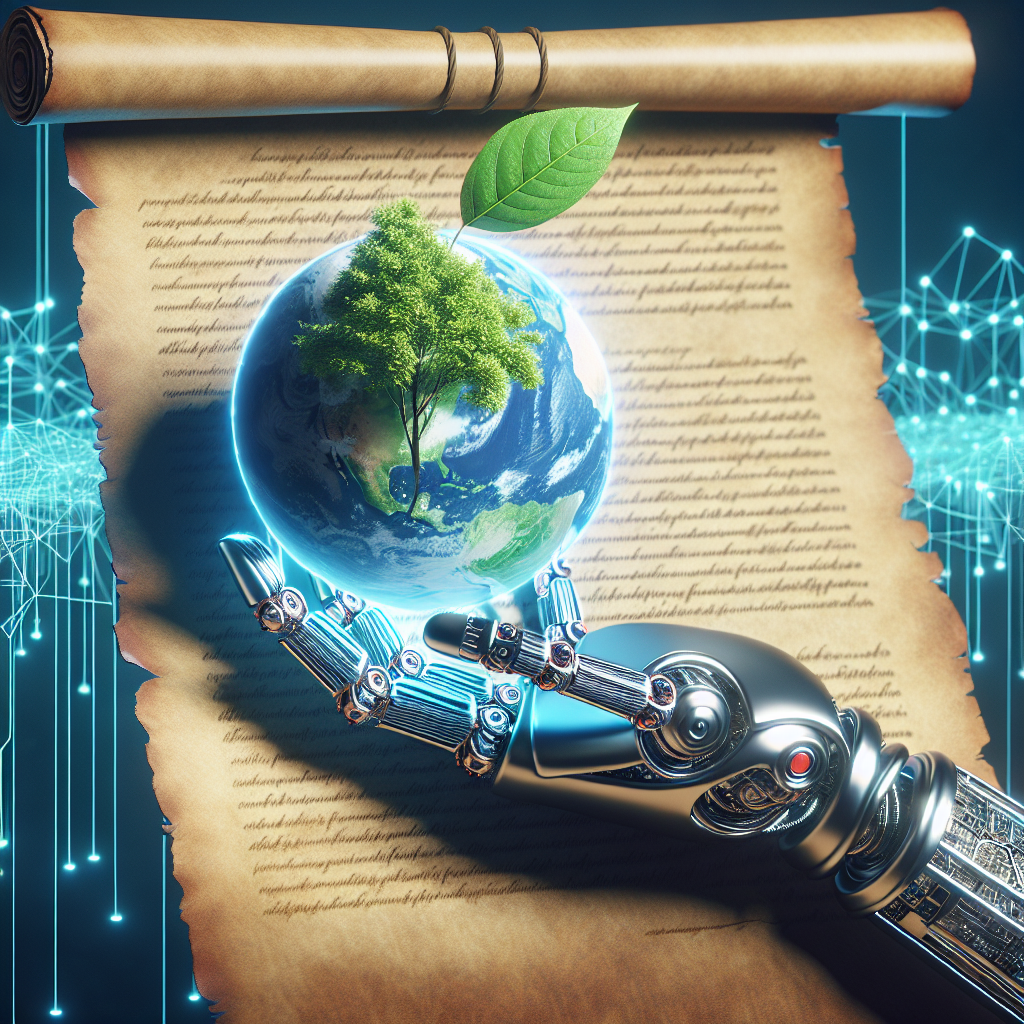
Artificial Intelligence (AI) has become a powerful tool in various fields, including environmental law and sustainability. With its ability to analyze large amounts of data, predict outcomes, and provide insights, AI is revolutionizing the way environmental issues are addressed and managed. In this article, we will explore the role of AI in environmental law and sustainability, and how it is helping to create a more sustainable and environmentally friendly future.
AI in Environmental Law
In recent years, AI has been increasingly used in environmental law to help governments and organizations better understand and address environmental issues. One of the key ways AI is being used in this field is through the analysis of large datasets to identify patterns and trends in environmental data. For example, AI can be used to analyze satellite imagery to monitor deforestation, track changes in land use, and detect illegal activities such as poaching and illegal fishing.
AI can also be used to predict the environmental impact of proposed projects or policies. By analyzing data on air and water quality, biodiversity, and other environmental factors, AI can help policymakers and regulators make more informed decisions about how to mitigate the environmental impact of new developments.
Another way AI is being used in environmental law is through the development of predictive models. These models use AI algorithms to analyze historical data and predict future environmental trends. For example, predictive models can be used to forecast the effects of climate change on sea levels, biodiversity, and ecosystems, helping policymakers and planners anticipate and prepare for these changes.
AI in Sustainability
In addition to its role in environmental law, AI is also playing a significant role in promoting sustainability. AI can help organizations and businesses reduce their environmental impact by optimizing energy use, reducing waste, and improving resource efficiency. For example, AI-powered systems can analyze energy consumption data to identify opportunities for energy savings, or optimize supply chains to reduce waste and emissions.
AI is also being used to develop new technologies and solutions to address environmental challenges. For example, AI algorithms are being used to optimize renewable energy systems, improve water management, and develop more sustainable agricultural practices. By harnessing the power of AI, researchers and innovators are able to create new solutions that can help us transition to a more sustainable future.
FAQs
Q: How is AI being used to address climate change?
A: AI is being used to analyze climate data, predict future climate trends, and develop new technologies to reduce greenhouse gas emissions and promote renewable energy sources. By harnessing the power of AI, researchers and policymakers are able to better understand the causes and effects of climate change, and develop strategies to mitigate its impact.
Q: Can AI help us achieve sustainability goals?
A: Yes, AI can help us achieve sustainability goals by optimizing resource use, reducing waste, and promoting renewable energy sources. By analyzing data and identifying opportunities for improvement, AI can help organizations and businesses reduce their environmental impact and promote sustainable practices.
Q: Are there any ethical concerns associated with the use of AI in environmental law and sustainability?
A: Yes, there are ethical concerns associated with the use of AI in environmental law and sustainability. For example, there are concerns about data privacy, bias in AI algorithms, and the potential for AI to replace human decision-making. It is important for policymakers and researchers to address these concerns and ensure that AI is used in a responsible and ethical manner.
In conclusion, AI is playing a crucial role in environmental law and sustainability by helping us better understand and address environmental issues, promote sustainable practices, and develop new solutions to environmental challenges. By harnessing the power of AI, we can create a more sustainable and environmentally friendly future for generations to come.