
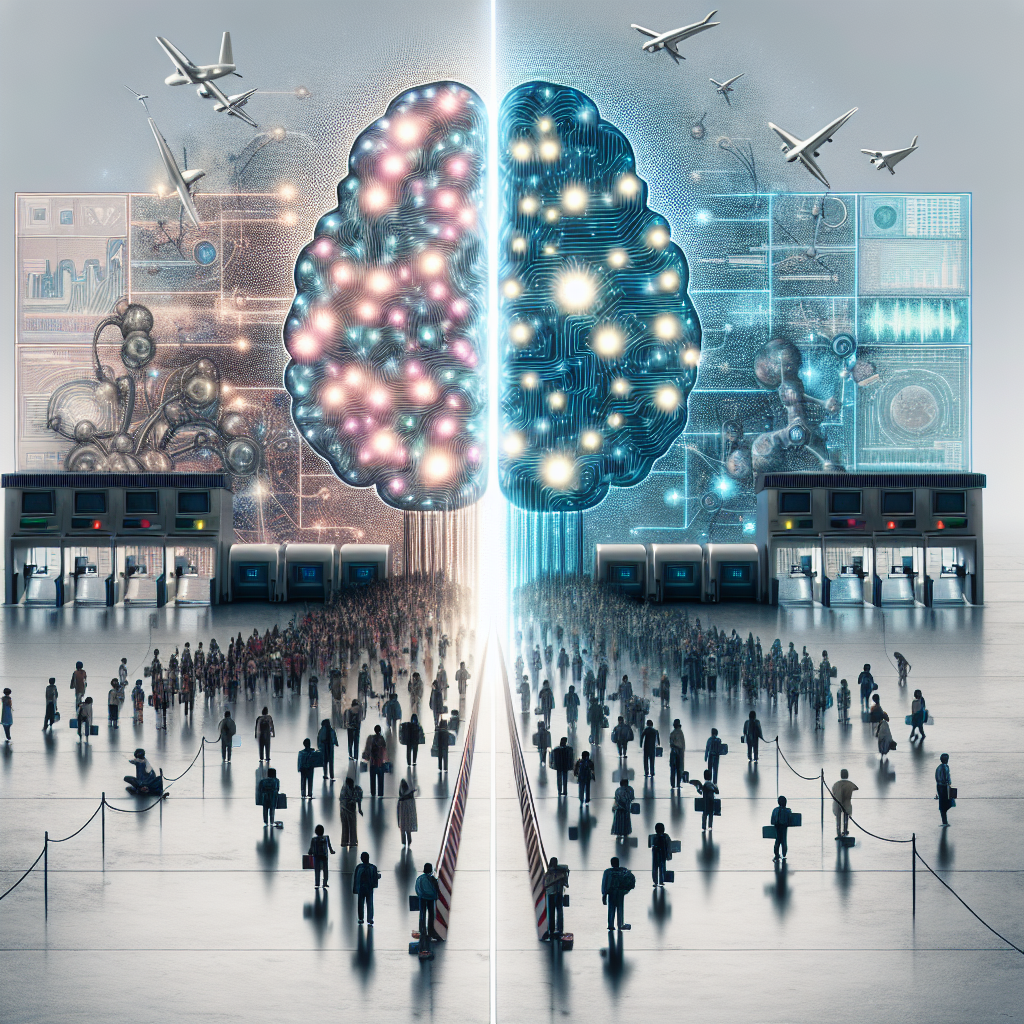
The Role of AI in Immigration Policy
Immigration policy is a complex and often contentious issue that has significant implications for both the countries receiving immigrants and the individuals seeking to migrate. As the global population continues to grow and the world becomes increasingly interconnected, governments are facing more pressure than ever to develop effective immigration policies that balance the needs of their citizens with the rights of immigrants.
One tool that is increasingly being used to help inform and shape immigration policy is artificial intelligence (AI). AI has the potential to revolutionize the way governments approach immigration, from visa processing to border security to refugee resettlement. In this article, we will explore the role of AI in immigration policy and the opportunities and challenges it presents.
Opportunities of AI in Immigration Policy
One of the primary benefits of using AI in immigration policy is its ability to process vast amounts of data quickly and accurately. AI algorithms can analyze large datasets to identify trends and patterns that may not be immediately apparent to human analysts. This can help governments make more informed decisions about who to admit into the country and how to allocate resources for border security.
AI can also help streamline the visa application process, making it faster and more efficient for both applicants and government officials. By automating routine tasks such as data entry and document verification, AI can reduce the likelihood of errors and speed up the processing time for visa applications.
Another potential benefit of AI in immigration policy is its ability to enhance border security. AI-powered surveillance systems can monitor border crossings in real-time and alert officials to suspicious activity. This can help prevent illegal immigration and improve the overall security of the country.
Challenges of AI in Immigration Policy
Despite its many benefits, AI also presents some challenges when it comes to immigration policy. One of the biggest concerns is the potential for algorithmic bias. AI algorithms are only as good as the data they are trained on, and if that data is biased or incomplete, the algorithm may produce biased results. This could lead to discriminatory outcomes for certain groups of immigrants.
Another challenge is the lack of transparency in AI systems. Many AI algorithms are black boxes, meaning that it is difficult to understand how they arrive at their decisions. This can make it challenging for policymakers to trust the recommendations of AI systems and could lead to unintended consequences.
Finally, there are concerns about the impact of AI on jobs in the immigration sector. As AI becomes more advanced, it has the potential to automate many tasks currently performed by human workers, such as visa processing and border security. While this could lead to cost savings for governments, it could also result in job losses for human workers.
FAQs
Q: How is AI currently being used in immigration policy?
A: AI is being used in a variety of ways in immigration policy, including visa processing, border security, and refugee resettlement. For example, some countries are using AI algorithms to analyze visa applications and identify potential security threats. Others are using AI-powered surveillance systems to monitor border crossings and detect illegal activity.
Q: What are some examples of algorithmic bias in immigration policy?
A: One example of algorithmic bias in immigration policy is the use of predictive analytics to assess the risk of visa applicants. If the data used to train the algorithm is biased against certain groups, the algorithm may unfairly discriminate against those groups when making recommendations about visa approvals.
Q: How can policymakers address the challenges of AI in immigration policy?
A: Policymakers can address the challenges of AI in immigration policy by ensuring that AI systems are transparent and accountable. This can be done by requiring companies to disclose how their algorithms work and allowing independent audits of AI systems. Policymakers can also work to mitigate the impact of job losses by investing in retraining programs for workers who are displaced by AI.
In conclusion, AI has the potential to revolutionize immigration policy by helping governments make more informed decisions about who to admit into the country and how to allocate resources for border security. However, there are also challenges that need to be addressed, such as algorithmic bias and job displacement. By carefully considering these challenges and working to mitigate them, policymakers can harness the power of AI to create more efficient and effective immigration policies.