
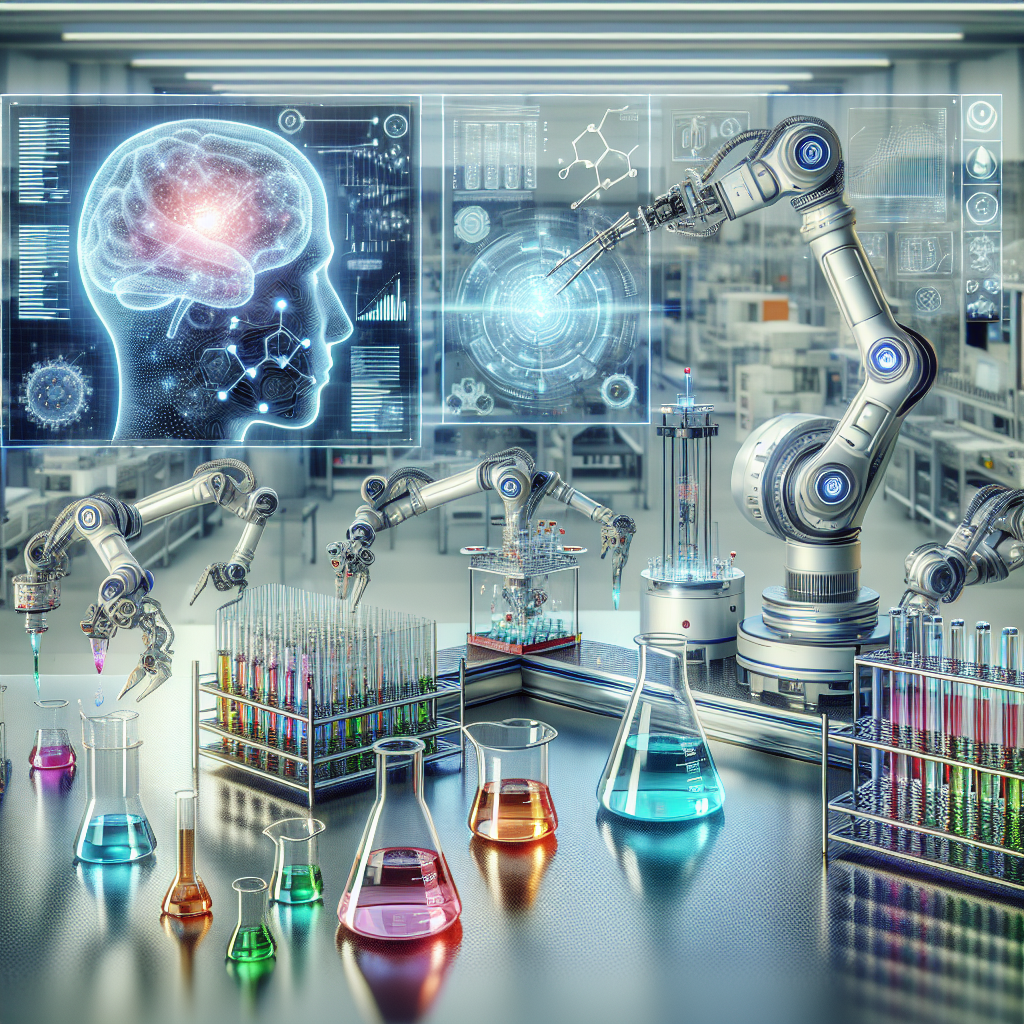
In recent years, artificial intelligence (AI) has been making significant strides in revolutionizing various industries, and the pharmaceutical manufacturing sector is no exception. AI has the potential to streamline processes, improve efficiency, and enhance the quality of pharmaceutical products. In this article, we will explore the role of AI in pharmaceutical manufacturing and its impact on the industry.
AI in Pharmaceutical Manufacturing
AI is being used in pharmaceutical manufacturing in a variety of ways, from drug discovery and development to production and quality control. One of the key areas where AI is being utilized is in the process of drug discovery. Traditionally, drug discovery has been a time-consuming and expensive process, with a high failure rate. AI has the potential to speed up this process by analyzing vast amounts of data to identify potential drug candidates more quickly and accurately.
AI algorithms can sift through massive data sets, such as genetic information, chemical structures, and clinical trial data, to identify patterns and relationships that may not be immediately apparent to human researchers. This can lead to the discovery of new drug targets and potential treatment options for various diseases. AI can also help predict the safety and efficacy of potential drug candidates, reducing the need for costly and time-consuming animal testing.
In addition to drug discovery, AI is also being used in pharmaceutical manufacturing to improve production processes and quality control. AI-powered systems can monitor and control manufacturing processes in real-time, ensuring that products are produced efficiently and consistently. AI can also help optimize production schedules, reduce waste, and improve overall manufacturing efficiency.
Furthermore, AI can be used to enhance quality control processes in pharmaceutical manufacturing. AI-powered systems can analyze data from various sources, such as sensors and cameras, to detect defects and anomalies in products. This can help ensure that products meet regulatory standards and are safe for consumption.
Overall, AI has the potential to transform the pharmaceutical manufacturing industry by speeding up drug discovery, improving production processes, and enhancing quality control. By leveraging the power of AI, pharmaceutical companies can bring new drugs to market faster, more efficiently, and with higher quality standards.
FAQs
Q: How does AI help in drug discovery?
A: AI can analyze vast amounts of data to identify potential drug candidates more quickly and accurately. By sifting through genetic information, chemical structures, and clinical trial data, AI algorithms can identify patterns and relationships that may not be immediately apparent to human researchers, leading to the discovery of new drug targets and potential treatment options for various diseases.
Q: How does AI improve production processes in pharmaceutical manufacturing?
A: AI-powered systems can monitor and control manufacturing processes in real-time, ensuring that products are produced efficiently and consistently. AI can also help optimize production schedules, reduce waste, and improve overall manufacturing efficiency.
Q: How does AI enhance quality control in pharmaceutical manufacturing?
A: AI-powered systems can analyze data from various sources, such as sensors and cameras, to detect defects and anomalies in products. This can help ensure that products meet regulatory standards and are safe for consumption.
Q: What are some challenges in implementing AI in pharmaceutical manufacturing?
A: Some challenges in implementing AI in pharmaceutical manufacturing include data privacy and security concerns, regulatory hurdles, and the need for skilled AI professionals. Companies must also invest in the necessary infrastructure and technology to leverage the full potential of AI in pharmaceutical manufacturing.