
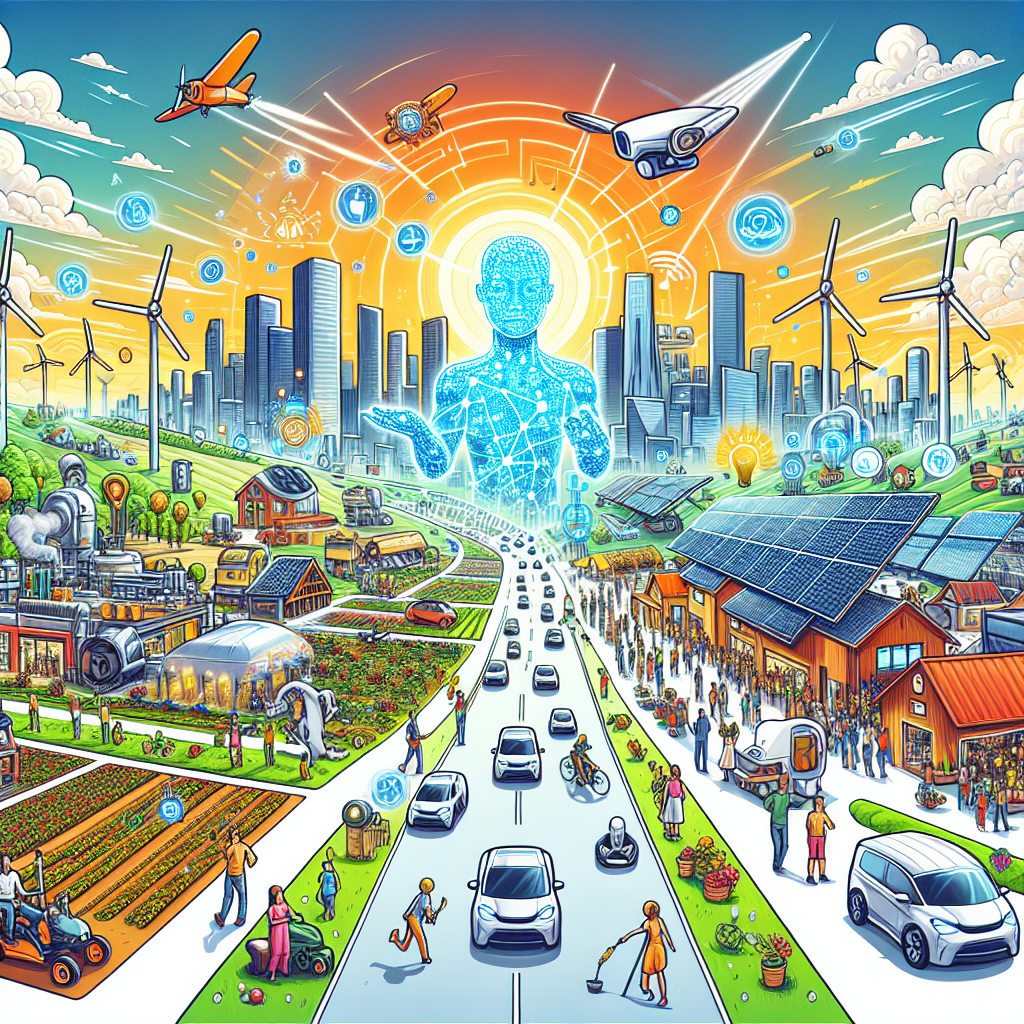
Artificial Intelligence (AI) has the potential to revolutionize many aspects of society, including promoting sustainable livelihoods and economic development. AI technologies can be used to address various challenges facing communities around the world, from improving agricultural productivity to enhancing healthcare services. In this article, we will explore the role of AI in promoting sustainable livelihoods and economic development, and discuss the potential benefits and challenges associated with its implementation.
AI and Sustainable Livelihoods
Sustainable livelihoods refer to the ability of individuals and communities to maintain or enhance their well-being in a way that does not deplete natural resources or harm the environment. AI can play a significant role in promoting sustainable livelihoods by providing innovative solutions to complex challenges. For example, in the agricultural sector, AI technologies can be used to improve crop yields, optimize irrigation practices, and reduce the use of harmful pesticides. By leveraging AI tools such as drones, sensors, and predictive analytics, farmers can make more informed decisions and increase productivity while minimizing environmental impact.
AI can also help promote sustainable livelihoods by enabling more efficient resource management. For instance, AI-powered energy management systems can optimize energy usage in buildings, reducing costs and carbon emissions. Similarly, AI algorithms can be used to optimize transportation routes, reducing fuel consumption and emissions. By promoting sustainable practices in various sectors, AI can help create more resilient and environmentally friendly economies.
AI and Economic Development
AI has the potential to drive economic development by fostering innovation, increasing productivity, and creating new business opportunities. By automating routine tasks and enabling more efficient decision-making, AI can help businesses improve their operations and reduce costs. This can lead to increased competitiveness and growth, which in turn can create jobs and stimulate economic activity.
AI technologies can also enable the development of new products and services that address emerging market needs. For example, AI-powered healthcare solutions can improve patient outcomes and reduce healthcare costs, while AI-driven financial services can increase access to credit and financial inclusion. By fostering innovation and entrepreneurship, AI can help create new sources of revenue and drive economic development in both developed and developing countries.
Challenges and Considerations
While AI holds great promise for promoting sustainable livelihoods and economic development, there are also challenges and considerations that need to be addressed. One of the key challenges is ensuring that AI technologies are accessible and affordable to all communities, especially in developing countries. There is a risk that AI could widen existing inequalities if not implemented in a fair and inclusive manner. Governments and organizations need to ensure that AI is deployed in a way that benefits all segments of society and does not exacerbate social disparities.
Another challenge is the potential impact of AI on jobs and employment. While AI can automate routine tasks and increase productivity, there is a concern that it could lead to job displacement in certain sectors. To mitigate this risk, governments and businesses need to invest in reskilling and upskilling programs to help workers adapt to the changing labor market. AI can also create new job opportunities in emerging fields such as data science, machine learning, and AI ethics, which require specialized skills and expertise.
FAQs
Q: How can AI be used to promote sustainable agriculture?
A: AI technologies such as drones, sensors, and predictive analytics can be used to improve crop yields, optimize irrigation practices, and reduce the use of harmful pesticides in agriculture.
Q: What are some examples of AI applications in healthcare?
A: AI-powered healthcare solutions can be used to improve patient outcomes, diagnose diseases, personalize treatment plans, and reduce healthcare costs.
Q: How can AI help address climate change?
A: AI technologies can be used to optimize energy usage, reduce emissions, and promote sustainable practices in various sectors, helping to mitigate the impact of climate change.
Q: What are some potential risks associated with AI?
A: Risks associated with AI include job displacement, privacy concerns, biases in algorithms, and the potential for misuse of AI technologies for malicious purposes.
In conclusion, AI has the potential to play a significant role in promoting sustainable livelihoods and economic development. By leveraging AI technologies to address complex challenges and foster innovation, societies can create more resilient and environmentally friendly economies. However, it is important to address challenges such as accessibility, job displacement, and ethical considerations to ensure that AI is deployed in a way that benefits all segments of society. By harnessing the power of AI in a responsible and inclusive manner, we can create a more sustainable and prosperous future for all.