
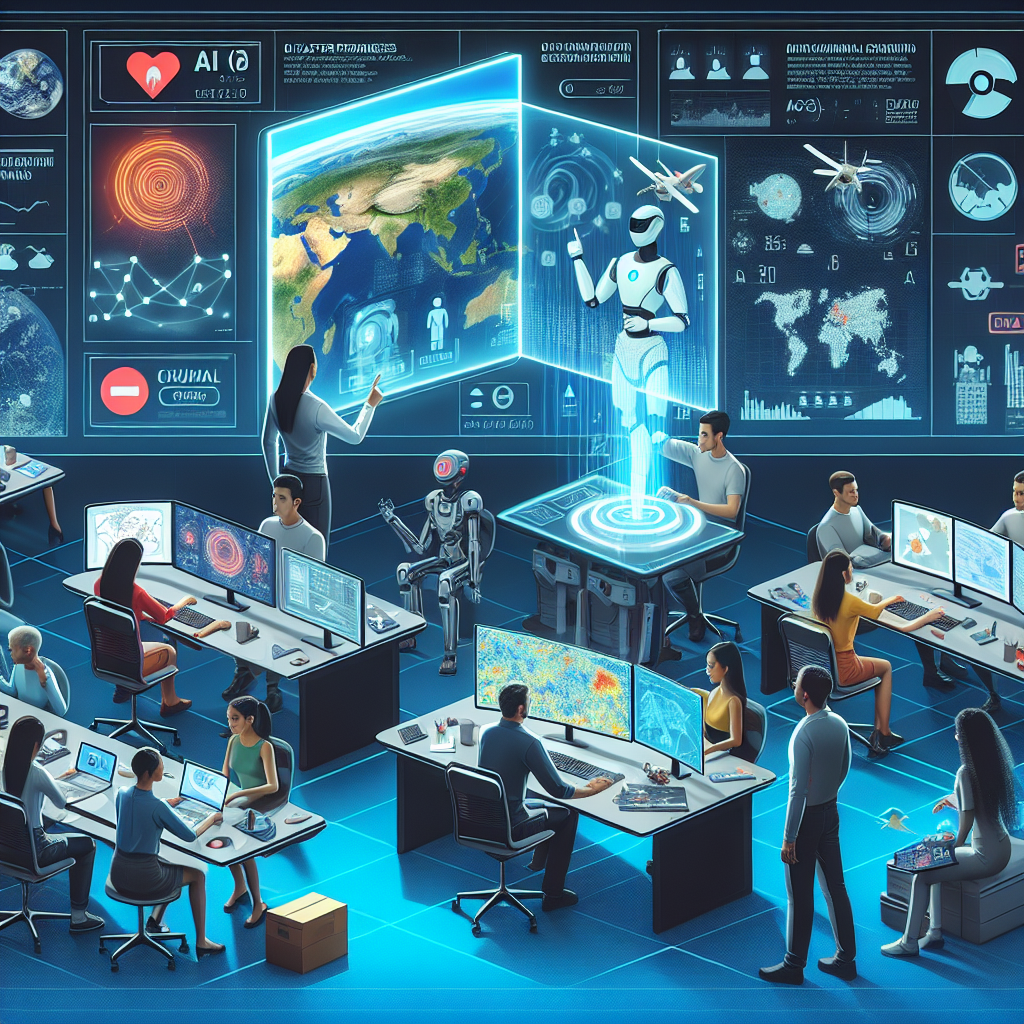
In recent years, the use of artificial intelligence (AI) platforms has become increasingly prevalent in various industries, including disaster preparedness and response. These platforms have the ability to process large amounts of data quickly and efficiently, enabling organizations to better predict and prepare for potential disasters. In this article, we will explore the role of AI platforms in disaster preparedness and discuss how they are revolutionizing the way we approach emergency management.
The Role of AI Platforms in Disaster Preparedness
AI platforms play a crucial role in disaster preparedness by providing real-time data and insights that help organizations make informed decisions before, during, and after a disaster. These platforms use a variety of technologies, such as machine learning, natural language processing, and computer vision, to analyze data from various sources, including social media, satellite imagery, and sensors. By processing this data, AI platforms can identify patterns, trends, and anomalies that may indicate a potential disaster or help organizations respond more effectively to a crisis.
One of the key benefits of AI platforms in disaster preparedness is their ability to automate and streamline processes that would otherwise be time-consuming and labor-intensive. For example, AI platforms can quickly analyze satellite imagery to assess the damage caused by a natural disaster, such as a hurricane or earthquake, and identify areas that require immediate attention. This information can then be used to prioritize resources and coordinate response efforts more effectively.
Additionally, AI platforms can help organizations better understand the impact of a disaster on a community by analyzing social media posts, news articles, and other sources of information. By monitoring social media activity, for example, AI platforms can identify emerging trends and concerns among the affected population, allowing organizations to tailor their response efforts accordingly. This real-time feedback is invaluable in ensuring that resources are allocated where they are most needed and that the needs of the community are being met.
Furthermore, AI platforms can help organizations improve their disaster preparedness by providing predictive analytics that forecast the likelihood and severity of future disasters. By analyzing historical data and trends, AI platforms can identify patterns that may indicate an increased risk of a particular type of disaster, such as a wildfire or flood. This information can then be used to develop proactive strategies and mitigation measures to reduce the impact of a disaster and protect vulnerable communities.
Overall, AI platforms are revolutionizing the way organizations approach disaster preparedness by providing real-time data, predictive analytics, and automated processes that enable more effective and efficient response efforts. By harnessing the power of AI, organizations can better prepare for and respond to disasters, ultimately saving lives and minimizing the impact on communities.
FAQs
Q: How do AI platforms gather data for disaster preparedness?
A: AI platforms gather data from various sources, including social media, satellite imagery, sensors, and news articles. By analyzing this data, AI platforms can identify patterns, trends, and anomalies that may indicate a potential disaster or help organizations respond more effectively to a crisis.
Q: How do AI platforms help organizations respond to disasters?
A: AI platforms help organizations respond to disasters by providing real-time data and insights that enable informed decision-making. By automating and streamlining processes, AI platforms can help organizations prioritize resources, coordinate response efforts, and tailor their strategies to meet the needs of the affected community.
Q: Can AI platforms predict future disasters?
A: AI platforms can provide predictive analytics that forecast the likelihood and severity of future disasters by analyzing historical data and trends. By identifying patterns that may indicate an increased risk of a particular type of disaster, AI platforms can help organizations develop proactive strategies and mitigation measures to reduce the impact on vulnerable communities.
Q: How are AI platforms changing the way organizations approach disaster preparedness?
A: AI platforms are revolutionizing the way organizations approach disaster preparedness by providing real-time data, predictive analytics, and automated processes that enable more effective and efficient response efforts. By harnessing the power of AI, organizations can better prepare for and respond to disasters, ultimately saving lives and minimizing the impact on communities.
In conclusion, AI platforms are playing an increasingly important role in disaster preparedness by providing organizations with the tools and insights they need to effectively respond to emergencies. By harnessing the power of AI, organizations can better prepare for and mitigate the impact of disasters, ultimately saving lives and protecting communities. As technology continues to advance, the role of AI platforms in disaster preparedness will only continue to grow, providing new opportunities for innovation and improvement in emergency management.