
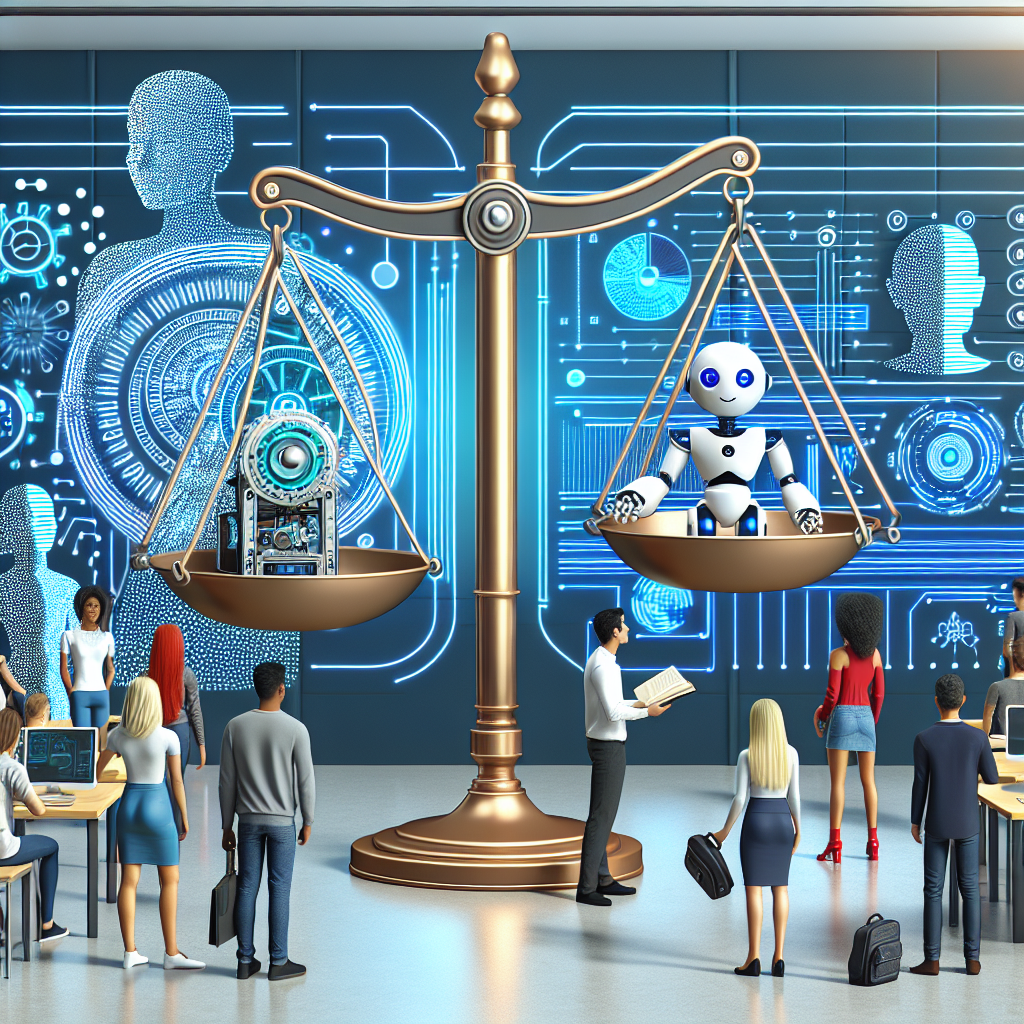
The Role of Ethics in AI Education and Training
Artificial Intelligence (AI) is a rapidly growing field that has the potential to revolutionize various industries and aspects of society. As AI technology becomes more advanced and integrated into our daily lives, it is crucial to consider the ethical implications of its use. The role of ethics in AI education and training is essential to ensure that AI systems are developed and used in a responsible and ethical manner.
Ethical considerations in AI education and training encompass a wide range of issues, including privacy, bias, transparency, accountability, and the impact of AI on society. It is important for AI developers, researchers, and users to be aware of these ethical considerations and to incorporate them into their work.
One of the key ethical considerations in AI education and training is the issue of bias in AI systems. AI algorithms are trained on large datasets, and if these datasets contain biases, the AI system will learn and perpetuate those biases. For example, if a facial recognition system is trained on a dataset that is predominantly made up of white faces, it may not accurately recognize faces of people of other races. It is essential for AI developers to be aware of these biases and to take steps to mitigate them.
Another important ethical consideration in AI education and training is the issue of transparency. AI systems are often complex and opaque, making it difficult for users to understand how they make decisions. This lack of transparency can lead to mistrust and skepticism about AI technology. It is crucial for AI developers to make their systems more transparent and to provide explanations for how AI systems make decisions.
Accountability is another critical ethical consideration in AI education and training. As AI systems become more autonomous and make decisions that impact individuals and society, it is important to establish mechanisms for holding AI developers and users accountable for the outcomes of their systems. This includes developing standards for ethical AI development, as well as mechanisms for addressing issues of bias and discrimination in AI systems.
The impact of AI on society is another important ethical consideration in AI education and training. AI technology has the potential to create significant social and economic disruptions, including job displacement, inequality, and loss of privacy. It is essential for AI developers and users to consider the broader societal implications of their work and to take steps to mitigate any negative impacts.
Incorporating ethics into AI education and training is essential to ensure that AI technology is developed and used in a responsible and ethical manner. This includes integrating ethics into AI curricula, providing training on ethical considerations in AI development, and promoting ethical decision-making among AI developers and users.
FAQs
Q: Why is ethics important in AI education and training?
A: Ethics is important in AI education and training to ensure that AI technology is developed and used in a responsible and ethical manner. Ethical considerations in AI encompass a wide range of issues, including bias, transparency, accountability, and the impact of AI on society. It is crucial for AI developers and users to be aware of these ethical considerations and to incorporate them into their work.
Q: What are some examples of ethical considerations in AI education and training?
A: Some examples of ethical considerations in AI education and training include bias in AI systems, transparency of AI algorithms, accountability for the outcomes of AI systems, and the broader societal impact of AI technology. It is important for AI developers and users to be aware of these ethical considerations and to take steps to address them in their work.
Q: How can ethics be incorporated into AI education and training?
A: Ethics can be incorporated into AI education and training in a variety of ways, including integrating ethics into AI curricula, providing training on ethical considerations in AI development, and promoting ethical decision-making among AI developers and users. It is essential for AI educators to emphasize the importance of ethics in AI technology and to provide students with the tools and knowledge they need to make ethical decisions in their work.
Q: What are some best practices for addressing ethical considerations in AI education and training?
A: Some best practices for addressing ethical considerations in AI education and training include being aware of biases in AI systems, promoting transparency in AI algorithms, establishing mechanisms for accountability for the outcomes of AI systems, and considering the broader societal impact of AI technology. It is important for AI developers and users to be proactive in addressing ethical considerations and to prioritize ethical decision-making in their work.
In conclusion, the role of ethics in AI education and training is essential to ensure that AI technology is developed and used in a responsible and ethical manner. By incorporating ethics into AI curricula, providing training on ethical considerations in AI development, and promoting ethical decision-making among AI developers and users, we can help to ensure that AI technology benefits society in a positive and responsible way.