
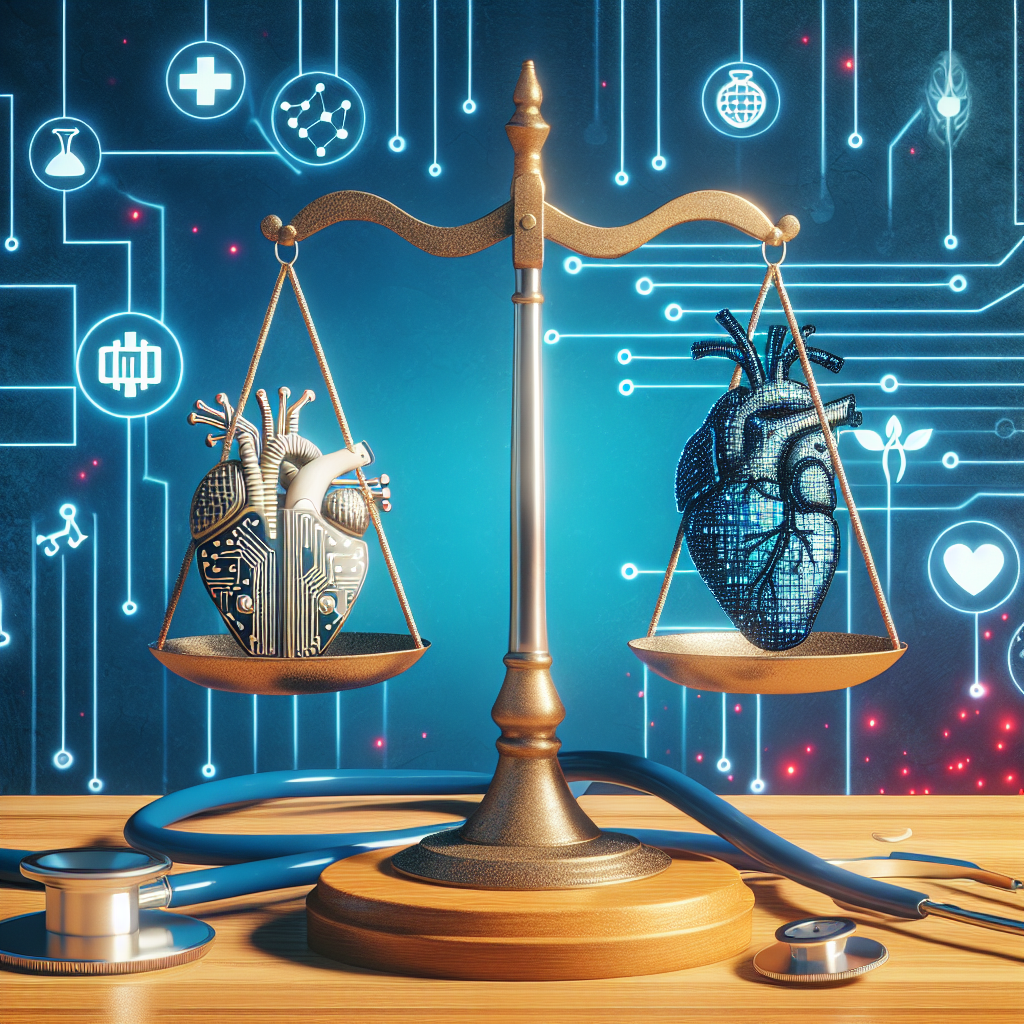
Artificial Intelligence (AI) has been revolutionizing various industries, and healthcare is no exception. From diagnosing diseases to predicting patient outcomes, AI has the potential to greatly improve the efficiency and effectiveness of healthcare delivery. However, with these advancements come unforeseen consequences that must be carefully considered and addressed.
One of the main concerns with AI in healthcare is the potential for bias in algorithms. AI algorithms are only as good as the data they are trained on, and if that data is biased, the algorithm will reflect that bias. For example, if a machine learning algorithm is trained on data that disproportionately represents a certain demographic group, the algorithm may produce biased results that negatively impact other groups. This can lead to disparities in healthcare outcomes and perpetuate existing inequalities in healthcare.
Another concern is the potential for AI to replace human healthcare providers. While AI has the potential to greatly improve the efficiency and accuracy of healthcare delivery, there is a fear that it may also lead to job loss for healthcare workers. Healthcare providers must be prepared to adapt to the changing landscape of healthcare delivery and find ways to work alongside AI technology rather than be replaced by it.
AI also raises ethical concerns in healthcare. For example, how should AI be used to make decisions about patient care? Who is responsible if an AI algorithm makes a mistake that harms a patient? These ethical considerations must be carefully thought out and addressed to ensure that AI is used responsibly and ethically in healthcare.
Despite these concerns, AI has the potential to greatly improve healthcare delivery in a number of ways. For example, AI can help healthcare providers make more accurate diagnoses by analyzing vast amounts of patient data and identifying patterns that human providers may miss. AI can also help predict patient outcomes and tailor treatment plans to individual patients, leading to more personalized and effective care.
Additionally, AI can help healthcare providers improve efficiency and reduce costs by automating routine tasks and streamlining administrative processes. This can free up healthcare providers to spend more time with patients and focus on providing high-quality care.
Overall, the benefits of AI in healthcare are vast, but it is important to carefully consider and address the potential unintended consequences of AI in order to ensure that it is used responsibly and ethically.
FAQs:
1. What are some examples of AI applications in healthcare?
– Some examples of AI applications in healthcare include image recognition software for diagnosing diseases from medical images, predictive analytics for identifying patients at risk of developing certain conditions, and natural language processing for analyzing unstructured patient data.
2. How can healthcare providers ensure that AI algorithms are not biased?
– Healthcare providers can ensure that AI algorithms are not biased by carefully curating training data to be representative of the population they are serving, regularly testing algorithms for bias, and incorporating diversity and inclusion principles into algorithm development.
3. How can healthcare providers adapt to the changing landscape of healthcare delivery with the rise of AI?
– Healthcare providers can adapt to the changing landscape of healthcare delivery with the rise of AI by investing in training and education for healthcare workers on how to work alongside AI technology, fostering a culture of innovation and continuous learning within healthcare organizations, and staying informed about the latest advancements in AI technology.
4. What are some ethical considerations when using AI in healthcare?
– Some ethical considerations when using AI in healthcare include ensuring patient consent and privacy are protected, being transparent about how AI algorithms are used in decision-making, and ensuring that healthcare providers remain accountable for the decisions made with the help of AI technology.
In conclusion, AI has the potential to greatly improve healthcare delivery, but it is important to carefully consider and address the potential unintended consequences of AI in order to ensure that it is used responsibly and ethically. By addressing issues such as bias, job displacement, and ethical considerations, healthcare providers can harness the power of AI to improve patient outcomes and enhance the quality of care.