
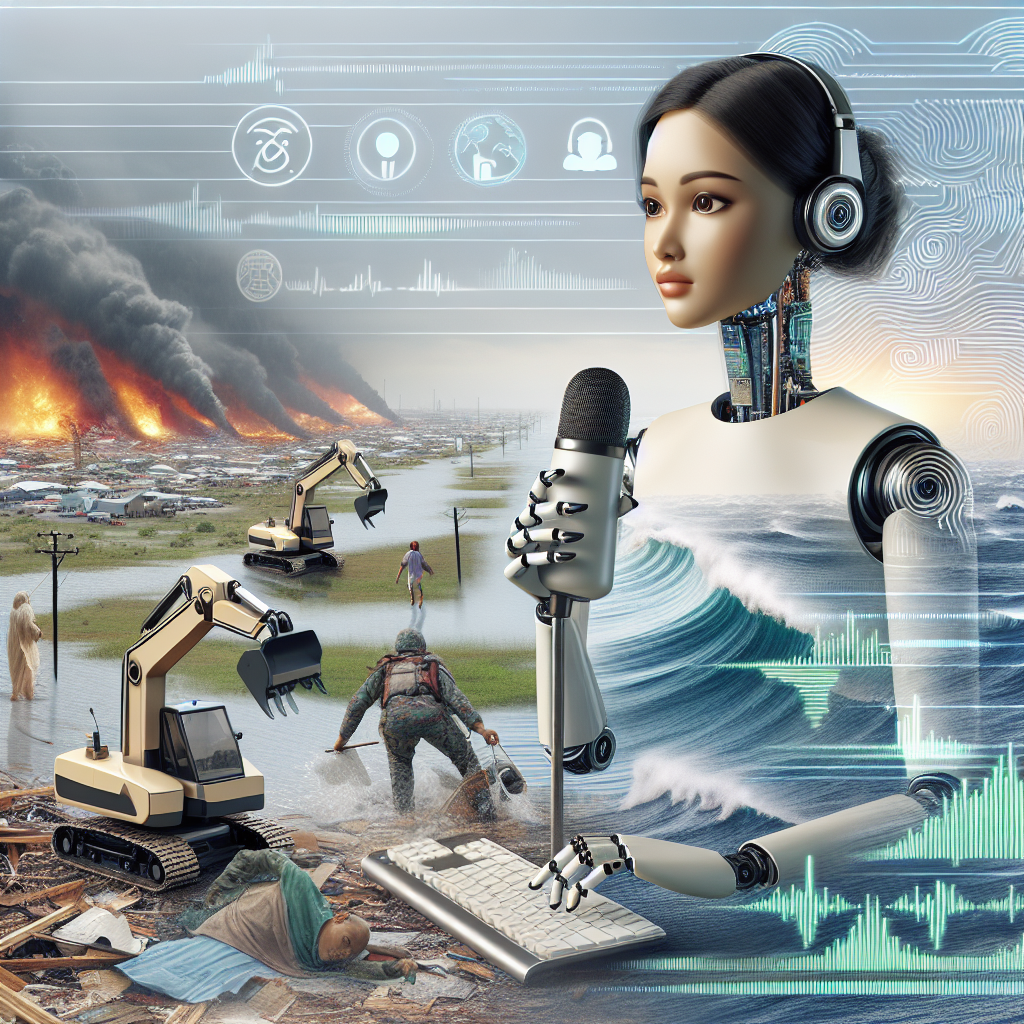
In recent years, advancements in technology have revolutionized the way we respond to disasters and communicate during crises. One of the most impactful technologies in this regard is Artificial Intelligence (AI). AI has been increasingly utilized in disaster reporting and crisis communication to improve response times, gather real-time data, and provide more accurate information to those affected by emergencies. In this article, we will explore the use of AI in disaster reporting and crisis communication, its benefits, and potential challenges.
AI in Disaster Reporting
Disaster reporting is a critical component of emergency response efforts. Timely and accurate information can help save lives and minimize damage during a disaster. AI has been instrumental in improving the speed and accuracy of disaster reporting by analyzing vast amounts of data in real-time.
One of the key ways AI is used in disaster reporting is through the analysis of social media data. During a disaster, people often turn to social media to share information and seek help. AI algorithms can monitor social media platforms to identify relevant posts, tweets, and images related to the disaster. This data can help emergency responders understand the scope of the disaster, identify areas that need immediate attention, and coordinate rescue efforts more effectively.
AI can also be used to analyze satellite imagery to assess the extent of damage caused by a disaster. By using computer vision algorithms, AI can quickly identify damaged buildings, roads, and infrastructure, providing valuable information to aid organizations and government agencies.
Another way AI is being used in disaster reporting is through the development of predictive models. By analyzing historical data and real-time information, AI algorithms can predict the potential impact of a disaster, such as the path of a hurricane or the likelihood of a flood in a specific area. These predictions can help authorities prepare for the disaster, evacuate at-risk populations, and allocate resources more efficiently.
AI in Crisis Communication
Effective communication is essential during a crisis to ensure that accurate information reaches the public, emergency responders, and other stakeholders. AI has been increasingly used in crisis communication to improve the speed, accuracy, and reach of information dissemination.
One of the key ways AI is used in crisis communication is through the development of chatbots and virtual assistants. These AI-powered tools can provide real-time information to the public, answer frequently asked questions, and offer guidance on how to stay safe during a disaster. Chatbots can be integrated into websites, social media platforms, and messaging apps to provide instant support to those in need.
AI can also be used to analyze news articles, social media posts, and other sources of information to identify misinformation and fake news during a crisis. By using natural language processing algorithms, AI can detect false information and alert authorities to take corrective action. This can help prevent panic, confusion, and misinformation from spreading during a disaster.
Furthermore, AI can be used to personalize communication messages based on the needs and preferences of different groups of people. By analyzing demographic data, social media behavior, and other sources of information, AI algorithms can tailor messages to specific audiences, ensuring that information is relevant and accessible to everyone.
Benefits of AI in Disaster Reporting and Crisis Communication
The use of AI in disaster reporting and crisis communication offers several benefits, including:
1. Faster response times: AI can analyze vast amounts of data in real-time, enabling emergency responders to quickly assess the situation and take action.
2. Improved accuracy: AI algorithms can analyze data more accurately than humans, reducing the risk of errors in reporting and communication.
3. Enhanced situational awareness: AI can provide a comprehensive view of the disaster, helping authorities understand the scope of the crisis and make informed decisions.
4. Personalized communication: AI can tailor messages to specific audiences, ensuring that information is relevant and accessible to everyone.
5. Detection of misinformation: AI can identify fake news and misinformation, helping prevent panic, confusion, and misinformation from spreading during a disaster.
Challenges of AI in Disaster Reporting and Crisis Communication
While AI offers many benefits in disaster reporting and crisis communication, there are also challenges that need to be addressed, including:
1. Data privacy concerns: The use of AI requires access to vast amounts of data, raising concerns about privacy and data security.
2. Bias in algorithms: AI algorithms can be biased based on the data they are trained on, leading to inaccurate or discriminatory results.
3. Technical limitations: AI technology is still evolving, and there may be technical limitations that impact its effectiveness in disaster reporting and crisis communication.
4. Integration with existing systems: Integrating AI into existing communication systems and workflows can be challenging and may require training and support.
5. Ethical considerations: The use of AI in disaster reporting and crisis communication raises ethical questions about the use of technology in emergency situations and its potential impact on vulnerable populations.
FAQs
Q: How can AI improve disaster reporting and crisis communication?
A: AI can improve disaster reporting and crisis communication by analyzing vast amounts of data in real-time, providing faster response times, improving accuracy, and detecting misinformation.
Q: What are some examples of AI applications in disaster reporting and crisis communication?
A: Some examples of AI applications in disaster reporting and crisis communication include the analysis of social media data, satellite imagery, predictive modeling, chatbots, virtual assistants, and personalized communication messages.
Q: What are the benefits of using AI in disaster reporting and crisis communication?
A: The benefits of using AI in disaster reporting and crisis communication include faster response times, improved accuracy, enhanced situational awareness, personalized communication, and detection of misinformation.
Q: What are the challenges of using AI in disaster reporting and crisis communication?
A: The challenges of using AI in disaster reporting and crisis communication include data privacy concerns, bias in algorithms, technical limitations, integration with existing systems, and ethical considerations.
Q: How can organizations leverage AI in disaster reporting and crisis communication?
A: Organizations can leverage AI in disaster reporting and crisis communication by investing in AI technology, training staff on AI applications, integrating AI into existing systems, and collaborating with AI experts and technology providers.
In conclusion, the use of AI in disaster reporting and crisis communication has the potential to revolutionize emergency response efforts and improve the way we communicate during crises. By leveraging AI technology, organizations can provide faster, more accurate information to those affected by disasters, saving lives and minimizing damage. While there are challenges to overcome, the benefits of using AI in disaster reporting and crisis communication far outweigh the risks. As technology continues to evolve, AI will play an increasingly critical role in mitigating the impact of disasters and ensuring effective communication during emergencies.