
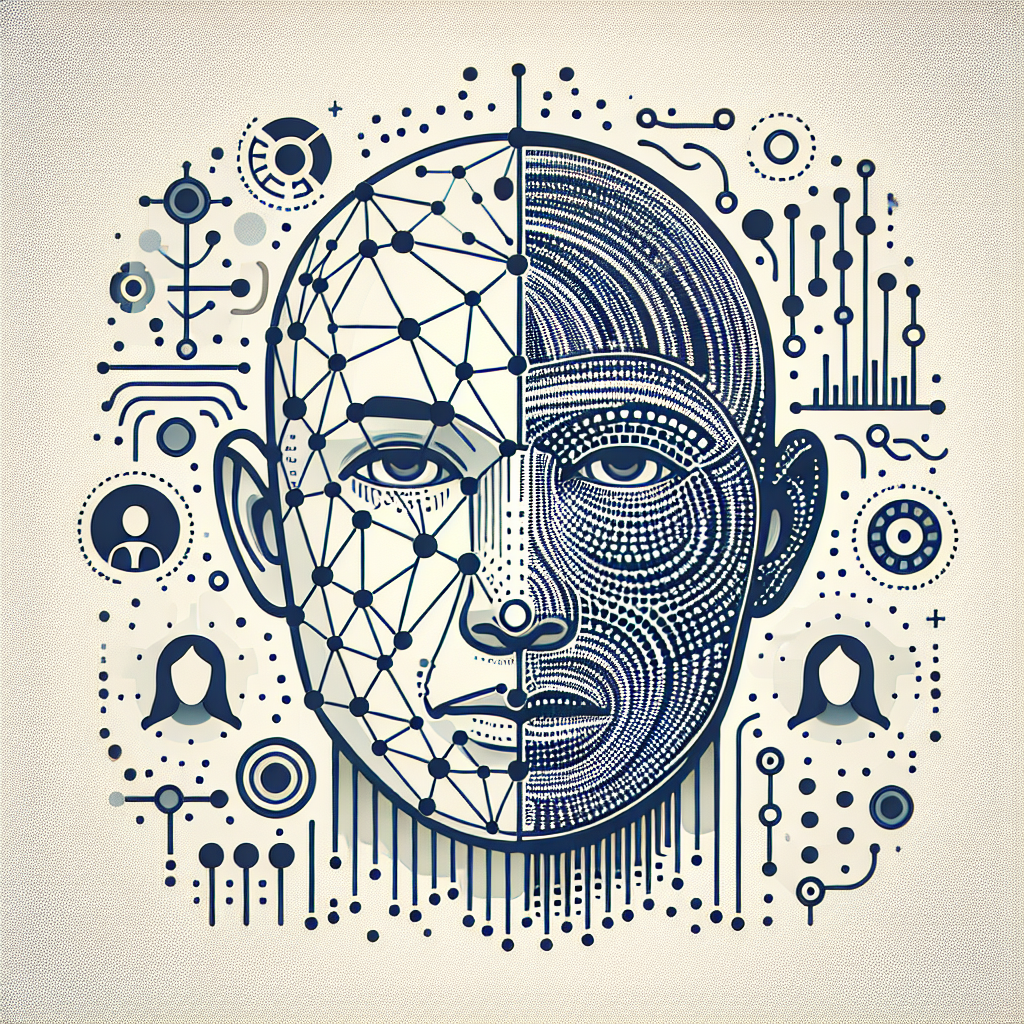
In recent years, facial recognition technology has seen significant advancements, thanks to artificial intelligence (AI) tools. These tools have revolutionized the way we identify and verify individuals based on their facial features. From security and surveillance to personalized marketing and customer service, the applications of facial recognition AI tools are vast and diverse.
In this article, we will explore some of the top AI tools for facial recognition that are currently available in the market and how they are being used in various industries.
1. Amazon Rekognition:
Amazon Rekognition is a cloud-based AI tool that provides highly accurate facial analysis and recognition capabilities. It can detect, analyze, and compare faces in images and videos, making it ideal for applications such as security, access control, and personalized user experiences. Amazon Rekognition also offers real-time face recognition for live video streams, making it suitable for surveillance and monitoring purposes.
2. Microsoft Azure Face API:
Microsoft Azure Face API is another powerful facial recognition tool that offers facial detection, analysis, and identification features. It can identify faces in images and videos, extract facial attributes such as age, gender, emotions, and facial landmarks, and verify individuals based on their facial features. Microsoft Azure Face API is widely used in security, retail, and healthcare industries for identity verification and access control.
3. Kairos:
Kairos is a facial recognition AI tool that provides advanced face recognition capabilities for a wide range of applications. It offers features such as face detection, face matching, emotion analysis, and age estimation, making it suitable for security, marketing, and customer service purposes. Kairos also provides an easy-to-use API that allows developers to integrate facial recognition into their applications quickly and efficiently.
4. FaceFirst:
FaceFirst is a facial recognition platform that offers real-time face recognition capabilities for high-traffic environments such as airports, stadiums, and retail stores. It can identify individuals in crowded settings, track their movements, and provide real-time alerts for security and surveillance purposes. FaceFirst also offers advanced features such as watchlist management, sentiment analysis, and demographic profiling, making it a versatile tool for various industries.
5. IBM Watson Visual Recognition:
IBM Watson Visual Recognition is a comprehensive AI tool that provides facial recognition capabilities along with image analysis and classification features. It can identify faces in images and videos, classify them based on predefined categories, and extract valuable insights from visual data. IBM Watson Visual Recognition is used in industries such as retail, healthcare, and marketing for personalized user experiences, content moderation, and product recommendation purposes.
FAQs:
Q: How accurate are facial recognition AI tools?
A: Facial recognition AI tools can achieve high levels of accuracy in identifying and verifying individuals based on their facial features. The accuracy of these tools depends on various factors such as the quality of the images, lighting conditions, and the complexity of the facial features. In general, most facial recognition AI tools can achieve accuracy rates of over 90% in ideal conditions.
Q: Are facial recognition AI tools secure?
A: Facial recognition AI tools use advanced encryption and security protocols to protect the privacy and security of the facial data they process. However, like any other technology, facial recognition AI tools can be vulnerable to security threats such as data breaches and unauthorized access. It is essential to implement robust security measures and compliance protocols to ensure the safe and secure use of facial recognition AI tools.
Q: What are the ethical considerations of using facial recognition AI tools?
A: The use of facial recognition AI tools raises various ethical considerations related to privacy, consent, bias, and discrimination. It is essential to use facial recognition AI tools responsibly and ethically by obtaining proper consent from individuals, ensuring data privacy and security, and addressing potential biases in the algorithms. Organizations should also comply with relevant regulations and guidelines to protect the rights and interests of individuals.
In conclusion, facial recognition AI tools have transformed the way we identify and verify individuals based on their facial features. With their advanced capabilities and versatility, these tools are being used in a wide range of industries for security, surveillance, marketing, and customer service purposes. By leveraging the top AI tools for facial recognition mentioned in this article, organizations can enhance their operational efficiency, improve security measures, and deliver personalized user experiences.