
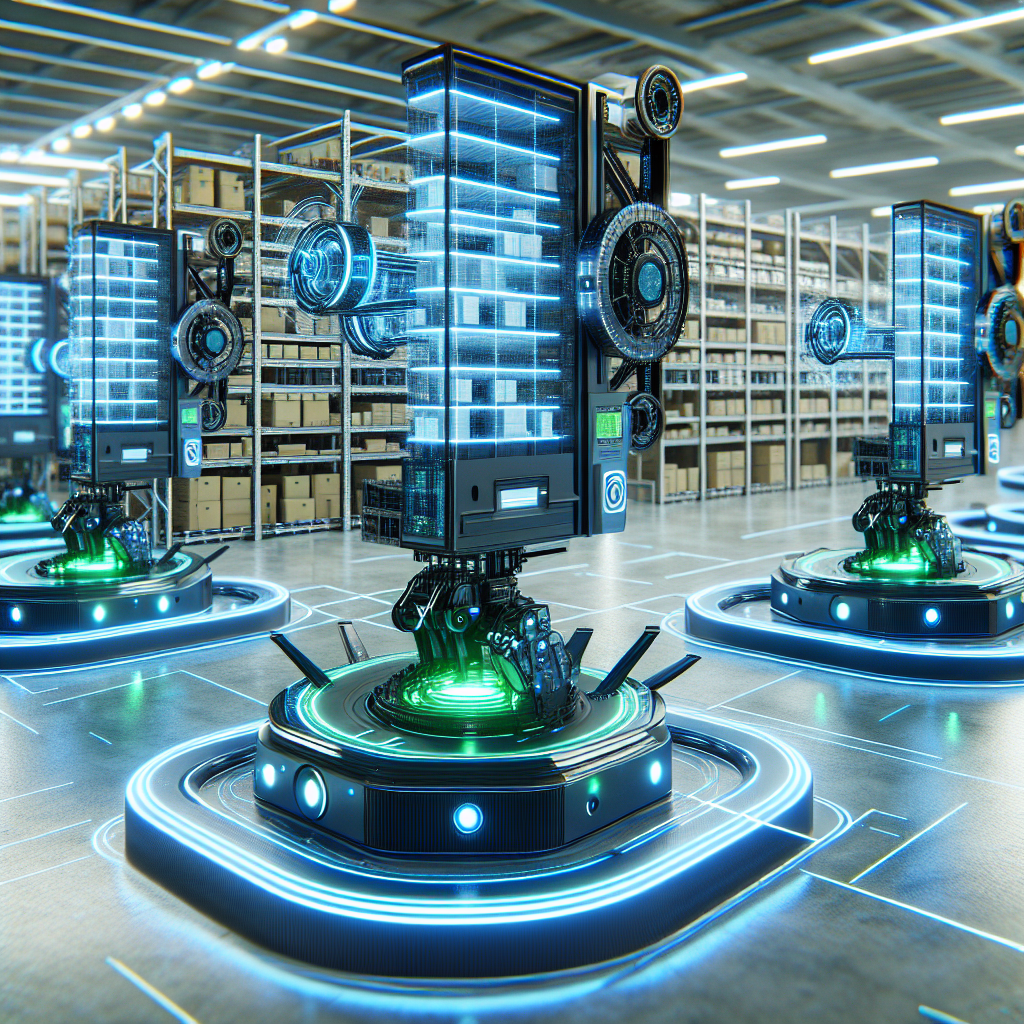
In today’s fast-paced world, distribution centers are facing increasing pressure to operate more efficiently and effectively. With the rise of e-commerce and the growing demand for faster delivery times, companies are turning to artificial intelligence (AI) to transform their distribution centers and meet the challenges of the modern supply chain.
AI technology has the potential to revolutionize distribution centers by optimizing processes, reducing costs, and improving overall performance. By leveraging AI algorithms, companies can gain valuable insights into their operations, automate manual tasks, and make data-driven decisions to enhance productivity and customer satisfaction.
One of the key areas where AI is making a significant impact in distribution centers is in inventory management. Traditional inventory management systems rely on historical data and manual inputs to forecast demand and track inventory levels. However, AI-powered systems can analyze real-time data from multiple sources, such as sales trends, weather patterns, and social media activity, to predict demand more accurately and optimize inventory levels. This can help companies reduce stockouts, minimize overstocking, and improve overall inventory turnover rates.
AI technology can also be used to optimize warehouse layout and design. By analyzing data on product demand, order volume, and pick paths, AI algorithms can suggest the most efficient warehouse layout to minimize travel times and improve order fulfillment speed. This can lead to significant cost savings and operational efficiencies for distribution centers.
Another area where AI is transforming distribution centers is in predictive maintenance. By monitoring equipment performance in real-time and analyzing data on machine health, AI systems can predict potential failures before they occur and schedule maintenance proactively. This can help companies reduce downtime, extend the lifespan of equipment, and improve overall operational reliability.
Furthermore, AI-powered robotics and automation systems are increasingly being used in distribution centers to streamline order picking and packing processes. Autonomous robots can navigate warehouse aisles, pick up items, and deliver them to packing stations, reducing the need for human intervention and increasing order fulfillment speed. This can help companies meet the growing demand for faster delivery times and improve overall customer satisfaction.
In addition to improving operational efficiency, AI technology can also enhance the customer experience in distribution centers. By analyzing customer data and purchase history, companies can personalize product recommendations, offer targeted promotions, and provide a more seamless shopping experience for their customers. This can help companies build brand loyalty, increase customer retention rates, and drive revenue growth.
Despite the many benefits of AI in distribution centers, companies may face challenges in implementing AI technology due to factors such as data privacy concerns, integration with existing systems, and employee resistance to change. However, with the right strategy and investment, companies can overcome these challenges and reap the rewards of AI-powered distribution centers.
In conclusion, artificial intelligence has the potential to transform distribution centers by optimizing processes, reducing costs, and improving overall performance. By leveraging AI technology in inventory management, warehouse layout design, predictive maintenance, robotics and automation, and customer experience, companies can gain a competitive edge in the modern supply chain. With the right approach and commitment, companies can harness the power of AI to drive innovation, improve efficiency, and meet the evolving demands of the market.
FAQs:
Q: What are the benefits of using artificial intelligence in distribution centers?
A: AI technology can optimize processes, reduce costs, improve performance, enhance customer experience, and drive innovation in distribution centers.
Q: What are some challenges companies may face in implementing AI technology in distribution centers?
A: Challenges may include data privacy concerns, integration with existing systems, and employee resistance to change.
Q: How can companies overcome these challenges and successfully implement AI technology in distribution centers?
A: Companies can overcome challenges by developing a clear strategy, investing in the right technology, providing training for employees, and fostering a culture of innovation and collaboration.
Q: How can AI technology improve inventory management in distribution centers?
A: AI technology can analyze real-time data to predict demand more accurately, optimize inventory levels, reduce stockouts, minimize overstocking, and improve inventory turnover rates.
Q: What are some examples of AI applications in distribution centers?
A: AI applications include inventory management, warehouse layout design, predictive maintenance, robotics and automation, and customer experience enhancement.