
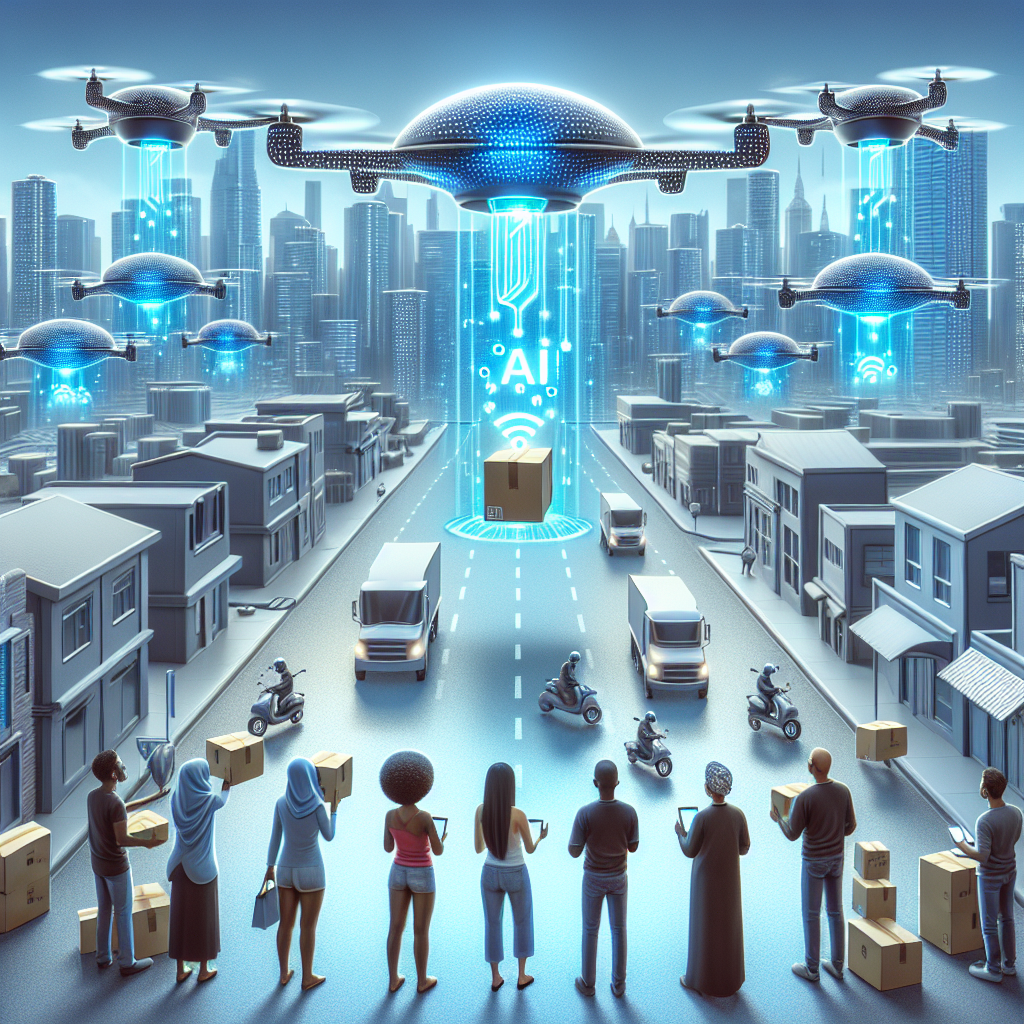
Transforming Last-Mile Delivery with Artificial Intelligence
The last-mile delivery process has always been a critical aspect of the logistics industry. It refers to the final leg of the delivery journey, where goods are transported from a distribution center to the end customer’s doorstep. This stage is often the most challenging and expensive part of the delivery process, as it involves navigating through busy urban areas, dealing with traffic congestion, and ensuring timely and accurate deliveries to customers.
In recent years, the rise of e-commerce has led to a significant increase in demand for last-mile delivery services. As a result, logistics companies are under pressure to improve the efficiency and reliability of their delivery operations. One way they are doing this is by leveraging artificial intelligence (AI) technology to transform the last-mile delivery process.
AI in last-mile delivery
AI refers to the simulation of human intelligence processes by machines, particularly computer systems. In the context of last-mile delivery, AI can be used to optimize various aspects of the delivery process, from route planning and vehicle scheduling to package sorting and delivery tracking. By leveraging AI technology, logistics companies can streamline their operations, reduce costs, and improve customer satisfaction.
One of the key applications of AI in last-mile delivery is route optimization. Traditional route planning methods rely on manual input and historical data, which may not always be accurate or up to date. AI algorithms, on the other hand, can analyze real-time data such as traffic conditions, weather forecasts, and delivery volumes to generate the most efficient delivery routes for drivers. This not only saves time and fuel costs but also helps reduce the carbon footprint of delivery operations.
Another important application of AI in last-mile delivery is package sorting and loading. AI-powered sorting systems can automatically categorize and label packages based on their size, weight, and destination, allowing for faster and more accurate loading of delivery vehicles. This helps minimize errors and delays in the delivery process, ensuring that packages reach customers on time.
AI technology can also be used to enhance delivery tracking and customer communication. By integrating AI-powered tracking systems with GPS technology, logistics companies can provide real-time updates on the status of deliveries, allowing customers to track their packages every step of the way. AI chatbots can also be used to automate customer service inquiries and provide instant responses to common questions, improving the overall customer experience.
Benefits of AI in last-mile delivery
The adoption of AI technology in last-mile delivery offers a range of benefits for logistics companies and customers alike. Some of the key advantages include:
1. Improved efficiency: AI algorithms can optimize delivery routes, reduce idle time, and streamline package sorting, leading to faster and more efficient delivery operations.
2. Cost savings: By reducing fuel costs, minimizing errors, and increasing delivery efficiency, AI technology can help logistics companies save money and improve their bottom line.
3. Enhanced customer experience: Real-time tracking, instant updates, and automated customer service through AI technology can improve customer satisfaction and loyalty.
4. Sustainability: AI-powered route optimization and vehicle scheduling can help reduce the environmental impact of last-mile delivery operations, leading to a more sustainable supply chain.
5. Scalability: AI technology can easily scale to meet the growing demands of e-commerce and online shopping, allowing logistics companies to handle increasing volumes of deliveries without compromising efficiency.
FAQs
Q: How does AI improve route planning in last-mile delivery?
A: AI algorithms analyze real-time data such as traffic conditions, weather forecasts, and delivery volumes to generate the most efficient delivery routes for drivers, saving time and fuel costs.
Q: Can AI help reduce errors and delays in package sorting and loading?
A: Yes, AI-powered sorting systems can automatically categorize and label packages based on their size, weight, and destination, ensuring faster and more accurate loading of delivery vehicles.
Q: How does AI technology enhance delivery tracking and customer communication?
A: By integrating AI-powered tracking systems with GPS technology, logistics companies can provide real-time updates on the status of deliveries and automate customer service inquiries through AI chatbots.
Q: What are the main benefits of using AI in last-mile delivery?
A: AI technology improves efficiency, reduces costs, enhances the customer experience, promotes sustainability, and allows for scalability in handling increasing delivery volumes.
In conclusion, artificial intelligence is transforming the last-mile delivery process in the logistics industry, offering a range of benefits for logistics companies and customers. By leveraging AI technology for route optimization, package sorting, delivery tracking, and customer communication, logistics companies can streamline their operations, reduce costs, and improve the overall customer experience. As e-commerce continues to grow and evolve, AI will play an increasingly important role in shaping the future of last-mile delivery.