
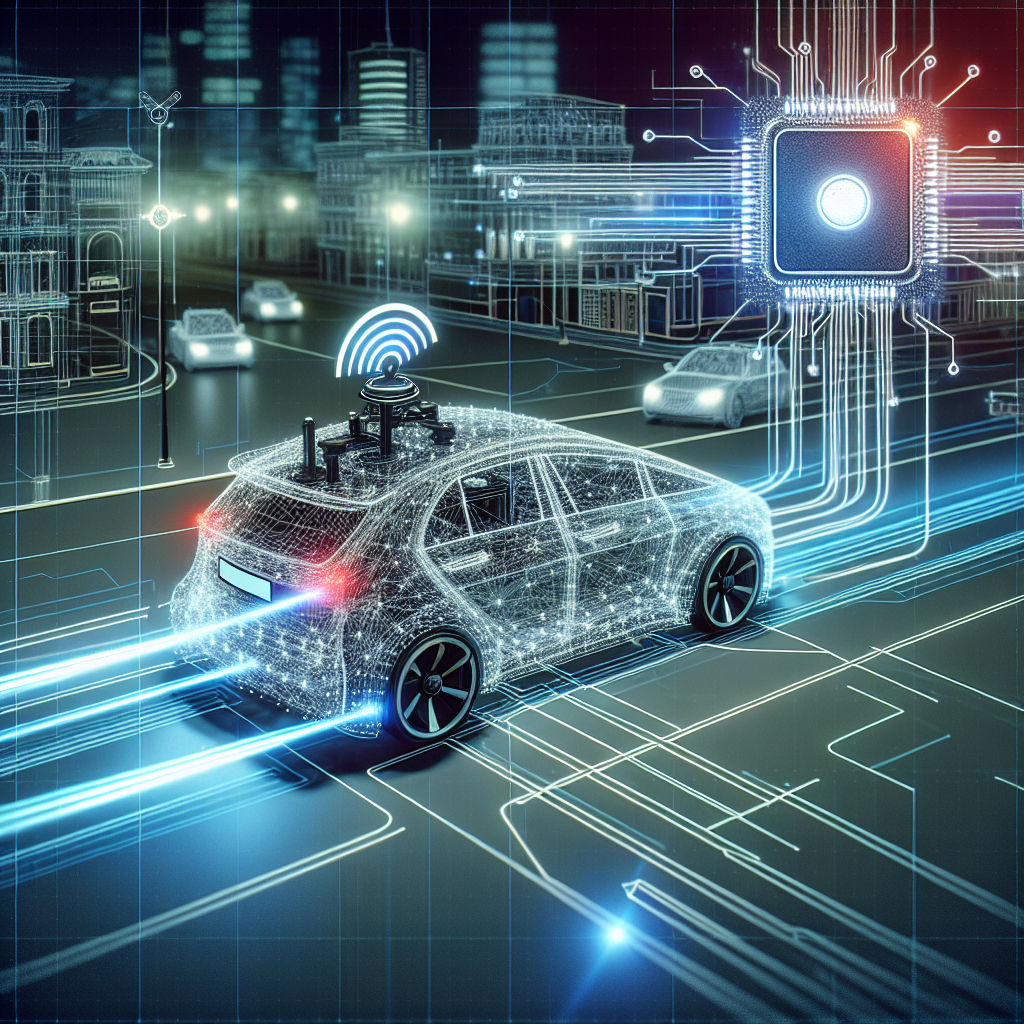
Artificial Intelligence (AI) has revolutionized many industries, and one of the most exciting applications of AI is in autonomous vehicles. These self-driving cars are equipped with sophisticated AI software that allows them to navigate roads, avoid obstacles, and make decisions in real-time without human intervention. Understanding the role of AI software in autonomous vehicles is crucial to realizing the full potential of this groundbreaking technology.
What is AI Software in Autonomous Vehicles?
AI software in autonomous vehicles refers to the computer programs and algorithms that enable the vehicle to perceive its environment, make decisions, and control its movements without human input. These software systems use a combination of sensors, cameras, radar, and lidar to collect data about the vehicle’s surroundings and analyze it to make informed decisions.
The AI software in autonomous vehicles is responsible for a wide range of tasks, including:
1. Perception: The AI software processes sensor data to detect and identify objects in the vehicle’s environment, such as other vehicles, pedestrians, and traffic signs. This allows the vehicle to understand its surroundings and react accordingly.
2. Decision-making: Based on the information gathered from its sensors, the AI software in autonomous vehicles makes decisions about how to navigate the road, avoid obstacles, and follow traffic rules. This involves complex calculations and predictions to ensure the vehicle can safely reach its destination.
3. Control: The AI software controls the vehicle’s steering, acceleration, and braking systems to execute the decisions made during the decision-making process. This requires precise coordination to ensure the vehicle moves smoothly and safely through its environment.
How Does AI Software in Autonomous Vehicles Work?
The AI software in autonomous vehicles operates through a combination of machine learning, deep learning, and computer vision techniques. Machine learning algorithms are trained on large datasets of labeled images and sensor data to recognize patterns and make predictions about the vehicle’s surroundings. Deep learning algorithms, a subset of machine learning, are used to process complex data and make decisions based on that information.
Computer vision techniques are used to interpret visual data from cameras and sensors, allowing the AI software to identify objects, track their movements, and understand the layout of the road. This information is then fed into the decision-making process, where the AI software determines the best course of action based on the data it has collected.
The AI software in autonomous vehicles also incorporates reinforcement learning, a form of machine learning where the software learns from its own actions and adjusts its behavior based on feedback from its environment. This allows the vehicle to adapt to changing road conditions and improve its performance over time.
What Are the Benefits of AI Software in Autonomous Vehicles?
The use of AI software in autonomous vehicles offers a wide range of benefits, including:
1. Improved safety: Autonomous vehicles equipped with AI software have the potential to significantly reduce accidents and fatalities on the road. The software can react faster and more accurately than human drivers, making split-second decisions to avoid collisions and hazards.
2. Increased efficiency: AI software in autonomous vehicles can optimize driving routes, reduce traffic congestion, and improve fuel efficiency by making smart decisions about acceleration, braking, and lane changes. This can lead to shorter travel times and lower emissions.
3. Enhanced accessibility: Autonomous vehicles have the potential to provide transportation options for individuals who are unable to drive due to age, disability, or other factors. AI software can allow these individuals to travel independently and safely, increasing their mobility and quality of life.
4. Cost savings: Autonomous vehicles equipped with AI software can reduce the need for human drivers, lowering labor costs for transportation companies and increasing operational efficiency. This can lead to lower transportation costs for consumers and businesses.
5. Innovation and progress: The development of AI software in autonomous vehicles is driving innovation in the automotive industry and pushing the boundaries of technology. This technology has the potential to revolutionize transportation and change the way we think about mobility.
What Are the Challenges of AI Software in Autonomous Vehicles?
While the benefits of AI software in autonomous vehicles are clear, there are also several challenges that must be addressed before this technology can become widespread:
1. Safety concerns: Ensuring the safety of autonomous vehicles is a top priority, as any malfunction or error in the AI software could have serious consequences. Developers must rigorously test and validate their software to minimize the risk of accidents.
2. Ethical considerations: Autonomous vehicles must make difficult decisions in emergency situations, such as choosing between colliding with a pedestrian or swerving into oncoming traffic. Developers must grapple with complex ethical dilemmas and design their software to prioritize human safety.
3. Regulatory hurdles: Autonomous vehicles are subject to a complex web of regulations and standards that vary by country and region. Developers must navigate this regulatory landscape to ensure their software complies with all relevant laws and guidelines.
4. Cybersecurity risks: Autonomous vehicles are vulnerable to cyber attacks that could compromise their AI software and control systems. Developers must implement robust cybersecurity measures to protect against hacking and ensure the safety and security of the vehicle.
5. Public acceptance: Convincing the public to trust autonomous vehicles and embrace this new technology is a significant challenge. Developers must educate consumers about the benefits of AI software in autonomous vehicles and address any concerns or misconceptions they may have.
FAQs
Q: Are autonomous vehicles safe?
A: Autonomous vehicles equipped with AI software have the potential to be safer than human-driven vehicles, as they can react faster and more accurately to potential hazards on the road. However, ensuring the safety of autonomous vehicles requires rigorous testing, validation, and regulatory oversight to minimize the risk of accidents.
Q: How do autonomous vehicles navigate the road?
A: Autonomous vehicles use a combination of sensors, cameras, radar, and lidar to collect data about their surroundings and make decisions about how to navigate the road. The AI software in autonomous vehicles processes this data to identify objects, track their movements, and plan a safe route to the vehicle’s destination.
Q: Can autonomous vehicles operate in all weather conditions?
A: Autonomous vehicles equipped with AI software are designed to operate in a wide range of weather conditions, including rain, snow, fog, and extreme temperatures. However, challenging weather conditions can affect the performance of the vehicle’s sensors and cameras, making it more difficult for the AI software to accurately perceive its environment.
Q: How do autonomous vehicles communicate with other vehicles on the road?
A: Autonomous vehicles use vehicle-to-vehicle (V2V) communication systems to exchange information with other vehicles on the road, such as their speed, direction, and location. This allows autonomous vehicles to coordinate their movements and avoid collisions, improving safety and efficiency on the road.
Q: Will autonomous vehicles replace human drivers?
A: While autonomous vehicles have the potential to revolutionize transportation and improve road safety, they are unlikely to completely replace human drivers in the near future. Autonomous vehicles will likely coexist with human-driven vehicles for many years to come, with each serving different needs and preferences.
In conclusion, understanding the role of AI software in autonomous vehicles is essential to realizing the full potential of this groundbreaking technology. AI software enables autonomous vehicles to perceive their environment, make decisions, and control their movements without human intervention, offering a wide range of benefits in terms of safety, efficiency, accessibility, cost savings, and innovation. However, there are also challenges that must be addressed, including safety concerns, ethical considerations, regulatory hurdles, cybersecurity risks, and public acceptance. By addressing these challenges and continuing to innovate, developers can unlock the full potential of AI software in autonomous vehicles and revolutionize the way we think about transportation.