
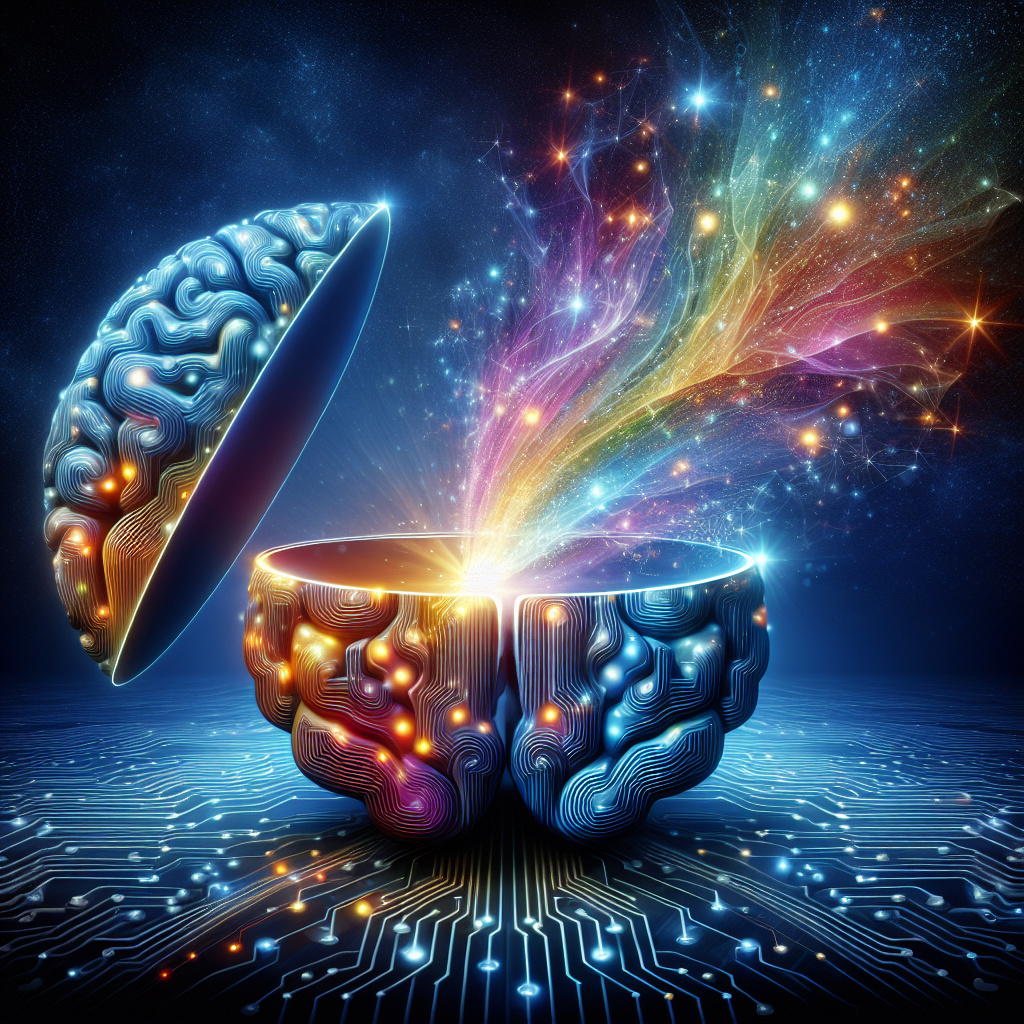
Artificial Intelligence (AI) has become a revolutionary technology in recent years, transforming industries and redefining the way we live and work. While AI is commonly associated with tasks such as data analysis, automation, and machine learning, its potential for unleashing creativity is often overlooked. In this article, we will explore how AI can be harnessed to unlock the creative power of individuals and organizations.
AI and Creativity: A Powerful Combination
Creativity is a fundamental aspect of human intelligence, enabling us to imagine, innovate, and solve complex problems. Traditionally, creativity has been seen as a uniquely human trait, difficult to replicate or imitate. However, AI has proven to be a powerful tool for enhancing and augmenting human creativity in various ways.
One of the key ways in which AI can enhance creativity is through the generation of new ideas and concepts. AI algorithms can analyze vast amounts of data, identify patterns, and generate novel solutions to problems. For example, in the field of art and design, AI can be used to create original artwork, music, or literature based on existing styles and themes. This can help artists and creators to explore new directions and push the boundaries of their creativity.
AI can also be used to enhance the creative process by providing real-time feedback and suggestions. For example, AI-powered tools can analyze a piece of writing or artwork and provide suggestions for improvement, such as alternative word choices, layout suggestions, or color palettes. This real-time feedback can help creators to iterate and refine their work more efficiently, leading to better outcomes.
Furthermore, AI can be used to automate repetitive tasks and free up creative energy for more meaningful work. For example, AI-powered tools can assist with tasks such as data entry, image editing, or social media management, allowing creators to focus on the more creative aspects of their work. By automating these routine tasks, AI can help creators to work more efficiently and effectively, leading to higher levels of creativity and productivity.
Challenges and Limitations
While AI has the potential to enhance creativity in many ways, there are also challenges and limitations to be aware of. One of the main challenges is the potential for AI to replace human creativity altogether. Some critics argue that AI-generated art, music, or literature lacks the emotional depth and authenticity of human-created work. While AI can certainly mimic human creativity to a certain extent, it is unlikely to fully replace the unique qualities of human creativity.
Another challenge is the potential for bias and limitations in AI algorithms. AI algorithms are trained on existing data, which can contain biases and limitations that may impact the output of the AI system. For example, AI algorithms trained on a dataset of predominantly male artists may be biased towards male-centric styles and themes. It is important for creators to be aware of these biases and limitations when using AI-powered tools for creative work.
Furthermore, there are ethical considerations to take into account when using AI for creative purposes. For example, there are questions around ownership and copyright of AI-generated work, as well as concerns about the impact of AI on the job market for creative professionals. It is important for creators to consider these ethical implications and ensure that they are using AI in a responsible and ethical manner.
Unleashing the Creative Power of AI: Practical Applications
Despite these challenges, there are many practical applications of AI for unleashing creativity in various fields. Here are some examples of how AI can be used to enhance creativity:
1. Art and Design: AI can be used to generate original artwork, music, or design concepts based on existing styles and themes. AI-powered tools such as deep learning algorithms and generative adversarial networks (GANs) can create realistic and compelling visuals and sounds that can inspire artists and designers to explore new directions.
2. Writing and Literature: AI-powered tools can assist with tasks such as drafting, editing, and proofreading of written content. For example, tools such as Grammarly and Hemingway can provide suggestions for improving writing style, grammar, and readability. AI can also be used to generate original text based on prompts or keywords, helping writers to overcome creative blocks and generate new ideas.
3. Marketing and Advertising: AI can be used to analyze consumer data, identify trends, and optimize marketing campaigns. For example, AI-powered tools such as chatbots and recommendation engines can personalize marketing messages and deliver targeted content to customers. AI can also be used to create personalized ads and visuals that resonate with target audiences.
4. Film and Entertainment: AI can be used to enhance the visual effects, editing, and production of films and TV shows. For example, AI-powered tools such as deep learning algorithms can generate realistic 3D animations and special effects, while machine learning algorithms can analyze audience preferences and predict box office success. AI can also be used to create personalized content recommendations for viewers.
5. Gaming and Virtual Reality: AI can be used to create immersive and interactive gaming experiences. AI-powered tools such as procedural generation algorithms can create dynamic and unpredictable game worlds, while reinforcement learning algorithms can adapt gameplay to individual player preferences. AI can also be used to enhance virtual reality experiences by creating realistic environments and characters.
FAQs
Q: Can AI really be creative?
A: While AI can mimic human creativity to a certain extent, it is unlikely to fully replicate the unique qualities of human creativity. AI algorithms can generate new ideas, analyze data, and provide suggestions, but they lack the emotional depth and authenticity of human-created work.
Q: How can AI enhance creativity?
A: AI can enhance creativity by generating new ideas and concepts, providing real-time feedback and suggestions, automating repetitive tasks, and freeing up creative energy for more meaningful work. AI-powered tools can assist with tasks such as art and design, writing and literature, marketing and advertising, film and entertainment, gaming and virtual reality.
Q: What are the challenges of using AI for creative purposes?
A: Some of the challenges of using AI for creative purposes include the potential for AI to replace human creativity, bias and limitations in AI algorithms, and ethical considerations around ownership and copyright of AI-generated work. It is important for creators to be aware of these challenges and use AI in a responsible and ethical manner.
In conclusion, AI has the potential to unleash the creative power of individuals and organizations in various fields. By harnessing the capabilities of AI for tasks such as idea generation, feedback and suggestions, task automation, and more, creators can enhance their creativity and productivity. While there are challenges and limitations to be aware of, the practical applications of AI for unleashing creativity are vast and diverse. By embracing AI as a tool for enhancing creativity, creators can push the boundaries of innovation and achieve new levels of artistic expression.