
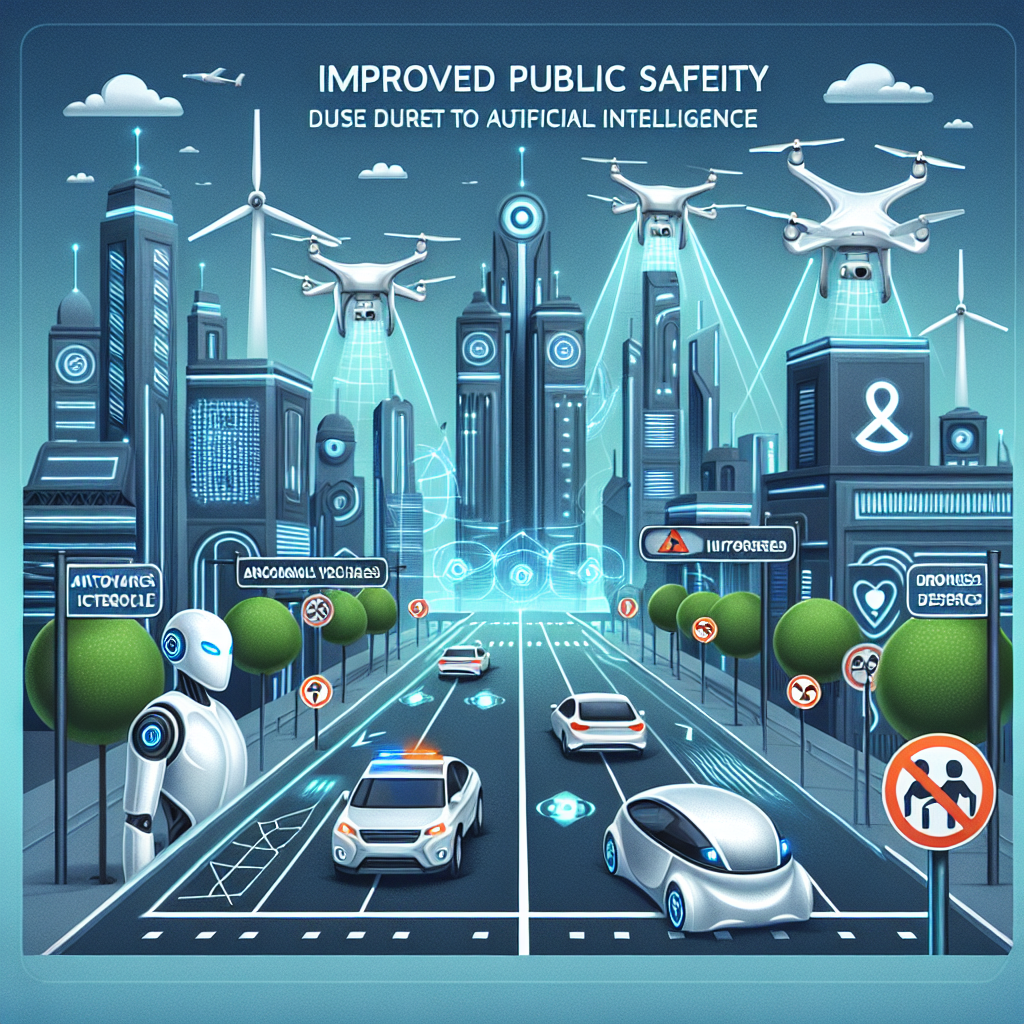
Artificial intelligence (AI) is rapidly transforming various industries, including public safety. By leveraging AI technologies, government agencies and law enforcement organizations can enhance their ability to prevent, respond to, and investigate crimes. From predictive policing to facial recognition, AI has the potential to revolutionize how we address public safety challenges.
One of the key benefits of using AI in public safety is its ability to analyze vast amounts of data quickly and accurately. This can help law enforcement agencies identify patterns and trends that may indicate criminal activity, allowing them to allocate resources more effectively and respond to incidents in a timely manner. Additionally, AI can assist in the identification of suspects through facial recognition technology, helping law enforcement agencies solve crimes more efficiently.
One of the most promising applications of AI in public safety is predictive policing. By analyzing historical crime data and other relevant information, AI algorithms can predict where and when crimes are likely to occur. This allows law enforcement agencies to proactively deploy resources to high-risk areas, deter criminal activity, and prevent incidents before they happen. Several studies have shown that predictive policing can lead to a significant reduction in crime rates and improve public safety outcomes.
Another important use case of AI in public safety is in emergency response. AI-powered systems can analyze incoming emergency calls, prioritize them based on the severity of the situation, and dispatch the appropriate response teams. This can help emergency services respond more quickly to critical incidents, saving lives and reducing the impact of disasters.
AI can also be used to enhance video surveillance systems, enabling law enforcement agencies to monitor public spaces more effectively and identify suspicious behavior in real-time. By using advanced video analytics and facial recognition technology, AI-powered surveillance systems can help law enforcement agencies track down suspects, locate missing persons, and prevent crimes before they happen.
In addition to these applications, AI can also be used to improve public safety in other ways, such as by analyzing social media data to detect potential threats, monitoring traffic patterns to reduce accidents, and optimizing resource allocation for disaster response. Overall, AI has the potential to revolutionize how we approach public safety and make our communities safer and more secure.
FAQs:
Q: Is AI in public safety ethical?
A: The use of AI in public safety raises ethical concerns, particularly around privacy, bias, and transparency. It is essential for government agencies and law enforcement organizations to implement safeguards to ensure that AI technologies are used responsibly and in compliance with ethical standards.
Q: Can AI replace human law enforcement officers?
A: While AI can augment the capabilities of law enforcement officers, it is unlikely to replace them entirely. Human judgment, empathy, and decision-making skills are still essential in many aspects of public safety, and AI should be seen as a tool to support and enhance the work of law enforcement personnel.
Q: How can AI help prevent bias in law enforcement?
A: AI algorithms can be trained to detect and mitigate biases in data, such as racial profiling or discriminatory practices. By regularly auditing and monitoring AI systems, law enforcement agencies can ensure that they are fair and unbiased in their decision-making processes.
Q: What are the potential risks of using AI in public safety?
A: Some potential risks of using AI in public safety include the misuse of data, the erosion of privacy rights, and the potential for AI systems to make mistakes or misinterpret information. It is crucial for government agencies and law enforcement organizations to carefully consider these risks and implement appropriate safeguards to mitigate them.
In conclusion, AI has the potential to revolutionize public safety by enabling government agencies and law enforcement organizations to analyze data more effectively, predict and prevent crimes, and respond to emergencies more efficiently. While there are ethical and practical considerations to be mindful of, the benefits of using AI in public safety are undeniable. By harnessing the power of AI technologies, we can create safer communities and improve the quality of life for all citizens.