
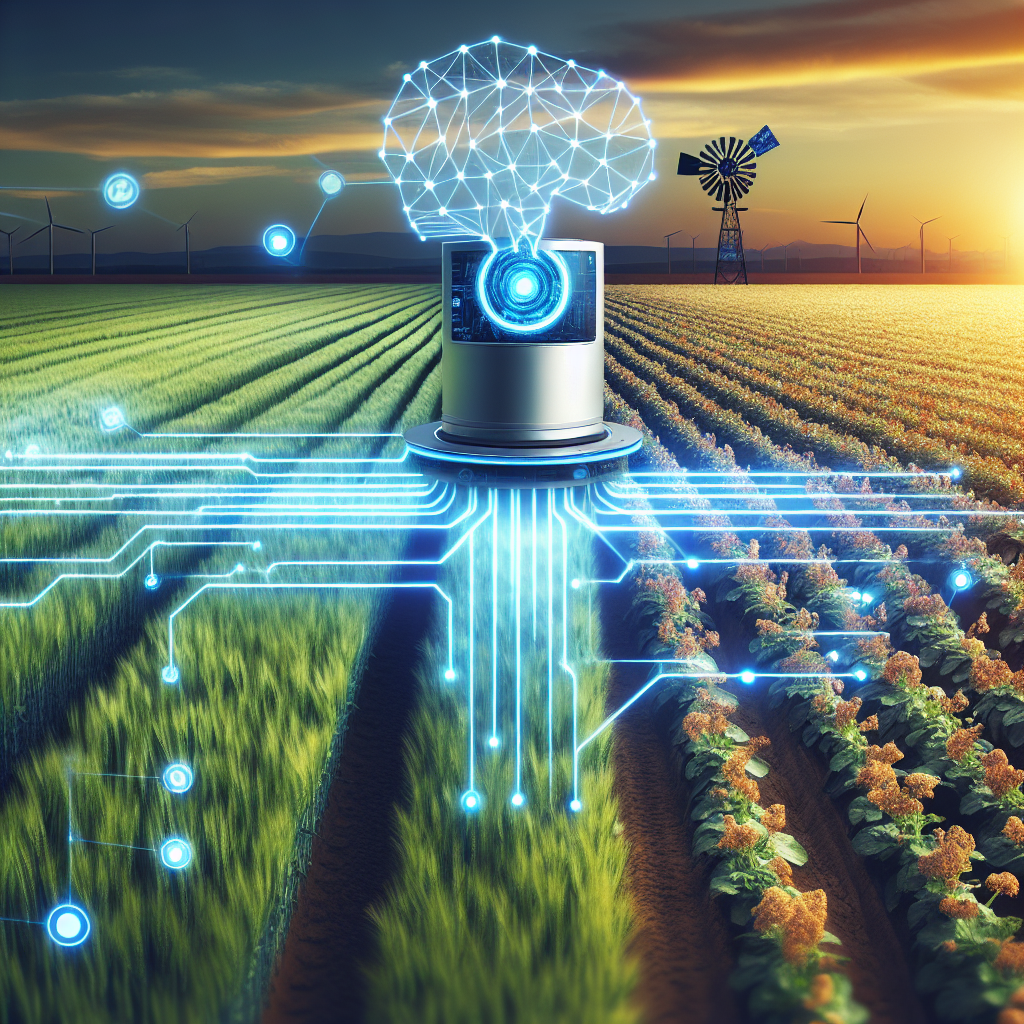
Agriculture is an essential industry that provides food for the world’s growing population. However, it faces challenges such as climate change, water scarcity, and soil degradation, which can impact crop yields and increase food waste. In recent years, there has been a growing interest in using artificial intelligence (AI) to optimize crop yields and reduce waste in agriculture.
AI refers to the simulation of human intelligence processes by machines, especially computer systems. In agriculture, AI can be used to analyze various data points such as weather patterns, soil health, and plant growth to make more informed decisions about crop management. This can help farmers increase their yields, reduce waste, and minimize the impact on the environment.
One of the key ways AI can optimize crop yields is through precision agriculture. Precision agriculture involves using technology to monitor and manage crop production more precisely. AI technologies such as drones, sensors, and satellite imagery can collect data on various aspects of crop growth, such as soil moisture levels, nutrient levels, and pest infestations. This data can then be analyzed using AI algorithms to provide farmers with insights on how to optimize their crop management practices.
For example, AI can help farmers determine the optimal time to plant, irrigate, and harvest crops based on weather patterns and soil conditions. It can also help identify areas of the field that may be underperforming and suggest ways to improve productivity. By using AI to tailor their farming practices to specific needs, farmers can increase their yields and reduce waste.
In addition to optimizing crop yields, AI can also help reduce waste in agriculture. According to the United Nations Food and Agriculture Organization, around one-third of all food produced for human consumption is lost or wasted globally. This waste not only represents a significant economic loss but also has environmental implications, such as increased greenhouse gas emissions and water usage.
AI can help reduce waste in agriculture by improving supply chain management, predicting crop diseases, and optimizing harvesting techniques. For example, AI algorithms can analyze data on crop storage conditions, transportation routes, and market demand to help farmers and distributors minimize food spoilage and reduce food waste. AI can also analyze images of crops to detect diseases and pests early on, allowing farmers to take targeted action to prevent crop losses.
Furthermore, AI can optimize harvesting techniques by using machine learning algorithms to predict the best time to harvest crops based on factors such as weather conditions and crop maturity. This can help farmers maximize their yields while minimizing waste due to overripe or underripe crops.
Overall, using AI to optimize crop yields and reduce waste in agriculture has the potential to revolutionize the industry and make it more sustainable and efficient. By harnessing the power of AI technologies, farmers can make more informed decisions about their crop management practices, increase their yields, and minimize waste, ultimately contributing to a more sustainable food system.
FAQs:
Q: How does AI help optimize crop yields in agriculture?
A: AI can analyze various data points such as weather patterns, soil health, and plant growth to provide farmers with insights on how to optimize their crop management practices. This can help farmers increase their yields by tailoring their farming practices to specific needs.
Q: How does AI help reduce waste in agriculture?
A: AI can improve supply chain management, predict crop diseases, and optimize harvesting techniques to help farmers and distributors minimize food spoilage and reduce waste. AI can also detect diseases and pests early on, allowing farmers to take targeted action to prevent crop losses.
Q: What are some examples of AI technologies used in agriculture?
A: Some examples of AI technologies used in agriculture include drones, sensors, satellite imagery, and machine learning algorithms. These technologies can collect data on various aspects of crop growth and analyze it to provide farmers with insights on how to optimize their crop management practices.