
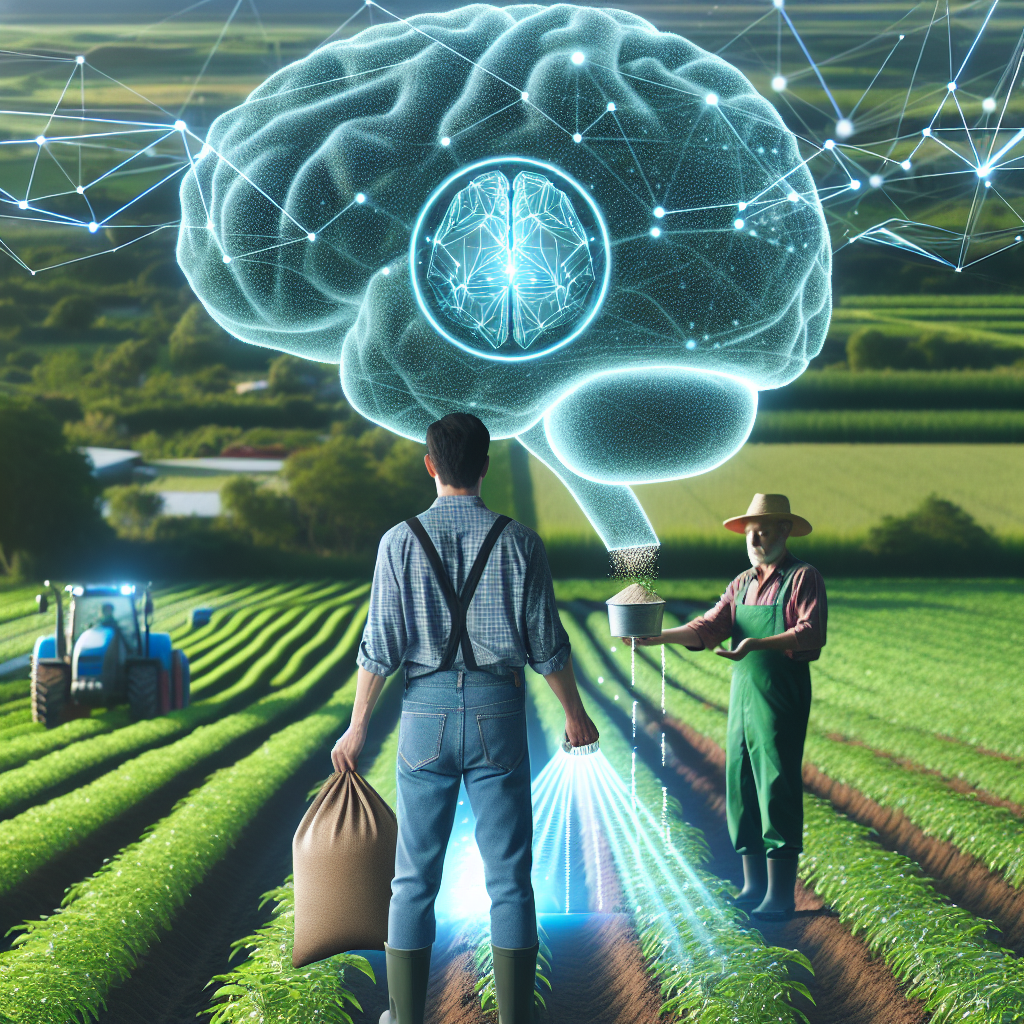
Agriculture is a vital industry that sustains human life by providing food, fiber, and other essential resources. However, agriculture faces numerous challenges, such as climate change, soil degradation, and the need to produce more food for a growing global population. One of the key factors in improving agricultural productivity is the efficient use of fertilizers, which are essential for supplying nutrients to crops and increasing yields.
Fertilizers play a crucial role in modern agriculture by providing essential nutrients such as nitrogen, phosphorus, and potassium to crops. However, the overuse or inefficient use of fertilizers can lead to environmental pollution, soil degradation, and reduced crop yields. To address these challenges, farmers are increasingly turning to technology and data-driven solutions, such as artificial intelligence (AI), to optimize fertilizer application in agriculture.
AI refers to the simulation of human intelligence processes by machines, particularly computer systems. In agriculture, AI can be used to analyze vast amounts of data, such as soil samples, weather patterns, and crop yields, to help farmers make more informed decisions about when and how much fertilizer to apply. By using AI to optimize fertilizer application, farmers can reduce costs, increase crop yields, and minimize environmental impact.
There are several ways in which AI can be used to optimize fertilizer application in agriculture. One common approach is to use AI algorithms to analyze soil samples and determine the optimal amount and type of fertilizer needed for a specific field. By taking into account factors such as soil type, crop type, and weather conditions, AI can help farmers tailor their fertilizer application to maximize crop yields and minimize waste.
Another way AI can optimize fertilizer application is through the use of precision agriculture techniques. Precision agriculture involves using technology, such as GPS-guided machinery and sensors, to apply inputs like fertilizer in a more targeted and efficient manner. By using AI to analyze data collected from these technologies, farmers can create customized fertilizer application maps that take into account variations in soil fertility and crop needs across a field.
In addition to optimizing fertilizer application, AI can also help farmers monitor the effectiveness of their fertilizer programs. By analyzing crop growth data and satellite imagery, AI can provide real-time feedback on how well crops are responding to fertilizer application. This information can help farmers make timely adjustments to their fertilizer programs, ensuring that crops receive the nutrients they need to thrive.
Overall, the use of AI to optimize fertilizer application in agriculture has the potential to revolutionize the way farmers grow crops. By harnessing the power of AI to analyze data and make informed decisions, farmers can improve crop yields, reduce costs, and protect the environment. As AI technology continues to advance, we can expect to see even more innovative solutions for optimizing fertilizer application in agriculture.
FAQs:
1. How does AI analyze soil samples to determine fertilizer needs?
AI algorithms can analyze soil samples by taking into account factors such as soil type, nutrient levels, and crop requirements. By comparing this information to a database of agronomic knowledge, AI can recommend the optimal amount and type of fertilizer needed for a specific field.
2. What are the benefits of using AI to optimize fertilizer application?
Using AI to optimize fertilizer application can help farmers reduce costs, increase crop yields, and minimize environmental impact. By tailoring fertilizer application to specific field conditions, farmers can maximize the effectiveness of their fertilizer programs and improve crop productivity.
3. How does precision agriculture play a role in optimizing fertilizer application?
Precision agriculture techniques, such as GPS-guided machinery and sensors, can help farmers apply fertilizers in a more targeted and efficient manner. By using AI to analyze data collected from these technologies, farmers can create customized fertilizer application maps that take into account variations in soil fertility and crop needs across a field.
4. How can AI help farmers monitor the effectiveness of their fertilizer programs?
AI can help farmers monitor the effectiveness of their fertilizer programs by analyzing crop growth data and satellite imagery. By providing real-time feedback on how well crops are responding to fertilizer application, AI can help farmers make timely adjustments to their fertilizer programs to ensure optimal crop growth.
5. What are some future trends in using AI to optimize fertilizer application in agriculture?
As AI technology continues to advance, we can expect to see even more innovative solutions for optimizing fertilizer application in agriculture. For example, AI-powered drones could be used to monitor crop health and nutrient levels, and machine learning algorithms could be used to predict crop yields and optimize fertilizer application in real-time.Overall, the use of AI to optimize fertilizer application in agriculture has the potential to revolutionize the way farmers grow crops. By harnessing the power of AI to analyze data and make informed decisions, farmers can improve crop yields, reduce costs, and protect the environment. As AI technology continues to advance, we can expect to see even more innovative solutions for optimizing fertilizer application in agriculture.