
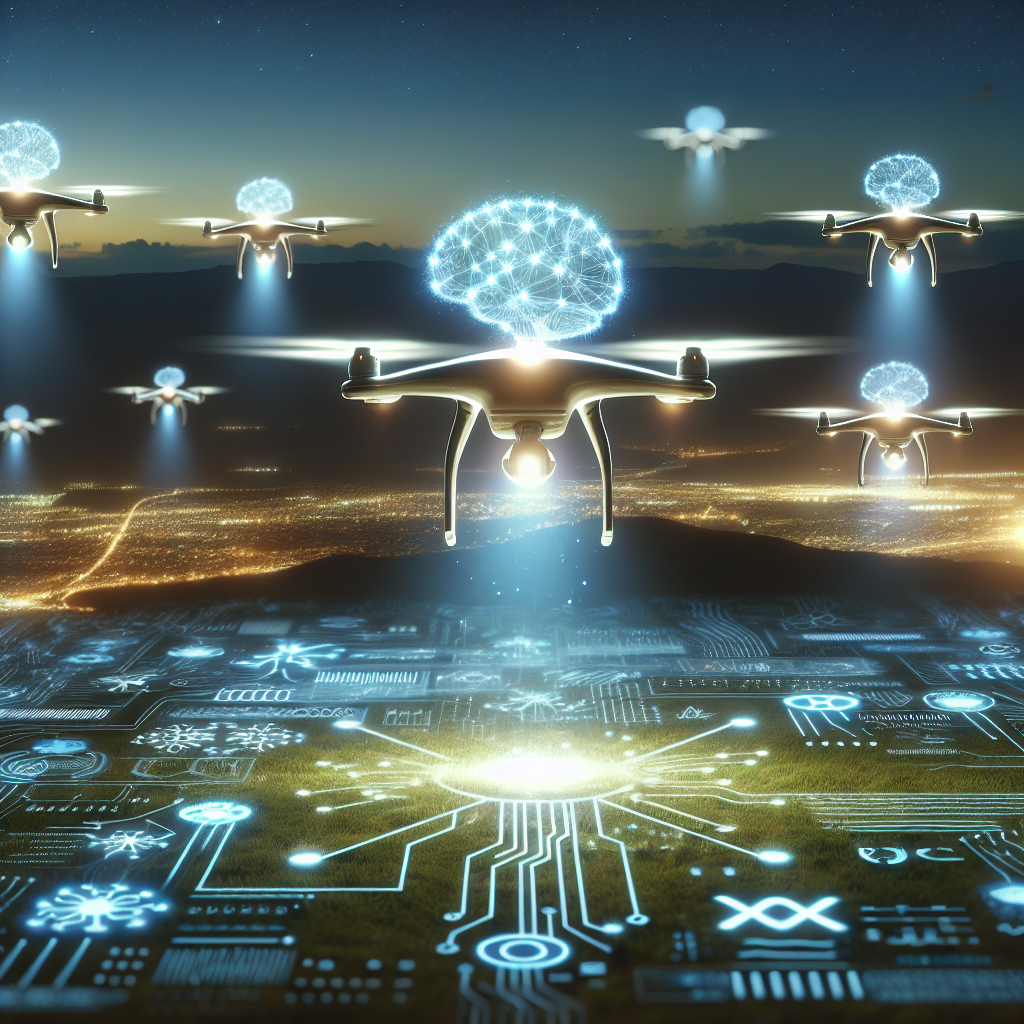
Advancements in technology have revolutionized the way we interact with the world around us. One such innovation that has gained significant attention in recent years is autonomous drones. These unmanned aerial vehicles (UAVs) have the ability to operate without direct human intervention, performing a wide range of tasks from surveillance and reconnaissance to delivery and agriculture.
One key component that has enabled the development of autonomous drones is artificial intelligence (AI). AI tools have greatly enhanced the capabilities of drones, allowing them to navigate complex environments, make decisions in real-time, and even learn from their experiences. In this article, we will explore how AI tools are being used in autonomous drones and the benefits they bring to various industries.
How AI Tools are Used in Autonomous Drones
AI tools are essential for enabling autonomous drones to perform tasks that would be challenging or impossible for human pilots. These tools allow drones to process vast amounts of data in real-time, make decisions based on that data, and adapt to changing conditions. Some of the key AI technologies used in autonomous drones include:
1. Machine Learning: Machine learning algorithms enable drones to learn from their experiences and improve their performance over time. By analyzing data collected during flights, drones can identify patterns, make predictions, and optimize their behavior. This allows drones to adapt to new environments, navigate obstacles, and avoid collisions.
2. Computer Vision: Computer vision algorithms enable drones to interpret visual data from onboard cameras, sensors, and other sources. This technology allows drones to identify objects, detect obstacles, and track targets with a high degree of accuracy. Computer vision also enables drones to perform tasks such as object recognition, image classification, and scene understanding.
3. Sensor Fusion: Sensor fusion techniques combine data from multiple sensors, such as cameras, lidar, radar, and GPS, to create a more comprehensive picture of the drone’s environment. By integrating data from different sources, drones can improve their situational awareness, navigate complex terrain, and avoid collisions. Sensor fusion also enables drones to operate in challenging conditions, such as low visibility or GPS-denied environments.
4. Path Planning: Path planning algorithms enable drones to generate optimal flight paths based on their mission objectives, environmental constraints, and other factors. These algorithms take into account factors such as obstacle avoidance, energy efficiency, and mission priorities to plan safe and efficient routes. Path planning is essential for enabling drones to navigate complex environments, avoid obstacles, and reach their destinations with minimal human intervention.
Benefits of Using AI Tools in Autonomous Drones
The use of AI tools in autonomous drones offers a wide range of benefits to various industries and applications. Some of the key advantages of using AI in autonomous drones include:
1. Improved Efficiency: AI tools enable drones to perform tasks more efficiently and accurately than human pilots. By leveraging machine learning, computer vision, and other AI technologies, drones can automate repetitive tasks, optimize their performance, and operate 24/7 without fatigue or errors. This results in faster response times, reduced operational costs, and increased productivity for businesses and organizations.
2. Enhanced Safety: Autonomous drones equipped with AI tools can operate safely in complex and dynamic environments. By using sensor fusion, path planning, and other AI technologies, drones can detect obstacles, avoid collisions, and respond to emergencies in real-time. This helps to minimize the risk of accidents, injuries, and property damage, making autonomous drones a safer alternative to manned aircraft in many situations.
3. Greater Flexibility: AI tools enable drones to adapt to changing conditions, missions, and environments. By learning from their experiences and analyzing data in real-time, drones can adjust their behavior, optimize their performance, and overcome unexpected challenges. This flexibility allows drones to perform a wide range of tasks, from aerial photography and mapping to search and rescue operations, with a high degree of autonomy and reliability.
4. Cost-Effective Solutions: Autonomous drones equipped with AI tools offer cost-effective solutions for a wide range of applications. By automating tasks that would otherwise require human operators, drones can reduce labor costs, increase operational efficiency, and achieve higher levels of productivity. This makes autonomous drones a cost-effective alternative to traditional manned aircraft, ground vehicles, and manual labor in industries such as agriculture, construction, and surveillance.
FAQs about Using AI Tools for Autonomous Drones
Q: How do AI tools enable drones to navigate complex environments?
A: AI tools such as machine learning, computer vision, and sensor fusion enable drones to process data from multiple sources, make decisions in real-time, and adapt to changing conditions. By analyzing data from onboard sensors, cameras, and other sources, drones can detect obstacles, avoid collisions, and navigate complex terrain with a high degree of accuracy.
Q: What are some of the key challenges in using AI tools for autonomous drones?
A: Some of the key challenges in using AI tools for autonomous drones include ensuring the reliability and robustness of AI algorithms, addressing privacy and security concerns, and complying with regulatory requirements. Additionally, developing AI models that can operate in real-time, handle uncertainty, and adapt to new environments remains a significant challenge for researchers and engineers.
Q: How can businesses and organizations benefit from using AI tools in autonomous drones?
A: Businesses and organizations can benefit from using AI tools in autonomous drones in a wide range of applications, including agriculture, construction, surveillance, and delivery. By leveraging AI technologies, drones can perform tasks more efficiently, safely, and cost-effectively than traditional manned aircraft, ground vehicles, and manual labor. This results in improved productivity, reduced operational costs, and increased competitiveness for businesses and organizations.
Q: What are some of the future trends in using AI tools for autonomous drones?
A: Some of the future trends in using AI tools for autonomous drones include the development of more advanced AI algorithms, the integration of AI with other emerging technologies such as 5G, IoT, and edge computing, and the deployment of autonomous drone swarms for collaborative tasks. Additionally, researchers are exploring new applications for autonomous drones in areas such as healthcare, disaster response, and environmental monitoring, where AI can help drones to perform complex tasks with a high degree of autonomy and efficiency.
In conclusion, AI tools play a crucial role in enabling autonomous drones to perform a wide range of tasks with a high degree of autonomy, efficiency, and safety. By leveraging AI technologies such as machine learning, computer vision, and sensor fusion, drones can navigate complex environments, make decisions in real-time, and adapt to changing conditions. The use of AI in autonomous drones offers numerous benefits to various industries and applications, including improved efficiency, enhanced safety, greater flexibility, and cost-effective solutions. As AI technologies continue to advance, autonomous drones are expected to play an increasingly important role in transforming industries, improving productivity, and addressing complex challenges in the years to come.