
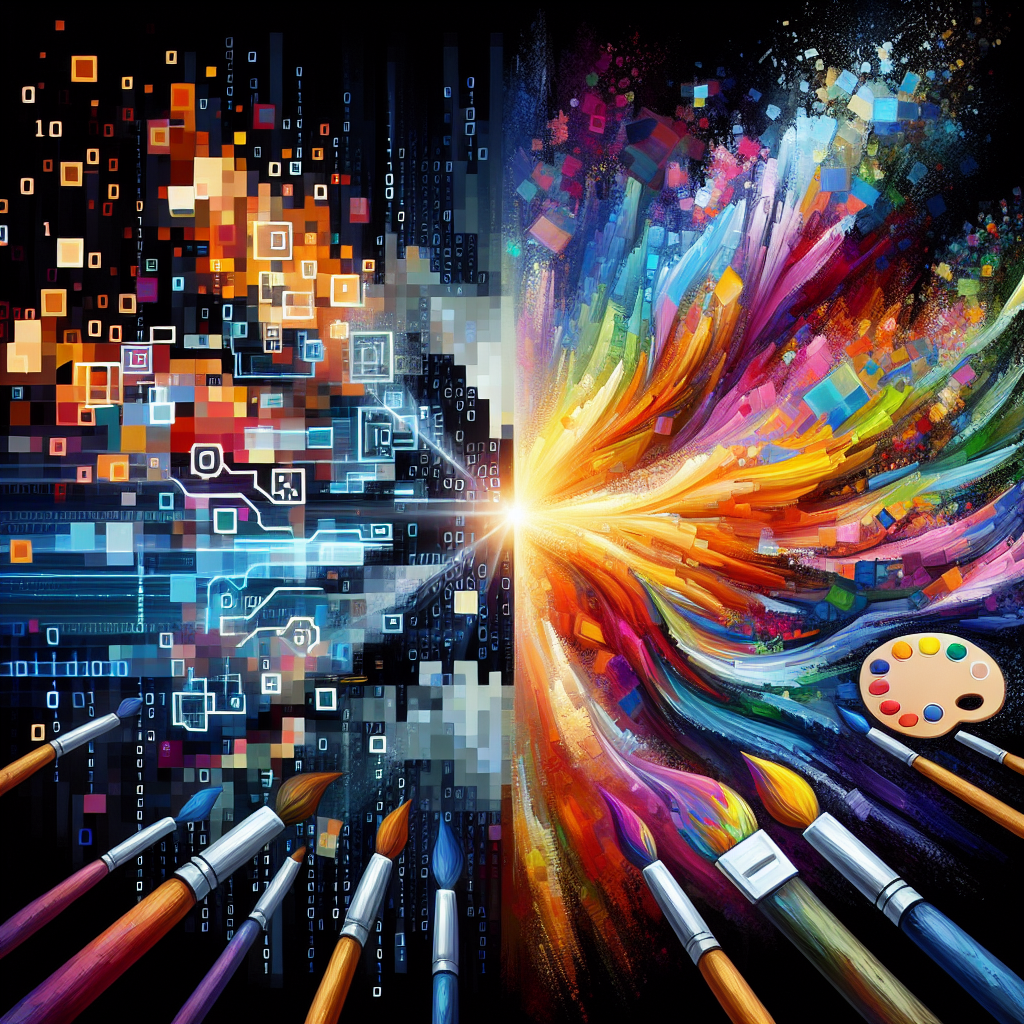
In recent years, artificial intelligence (AI) has been revolutionizing the way we create and consume art. From digital paintings to music compositions, AI technology has opened up new possibilities for creative expression. One such area where AI is making a significant impact is in the transformation of pixels into paint.
The concept of using AI to generate art is not new. In fact, artists have been experimenting with AI for decades, using computer algorithms to create art in various forms. However, recent advances in deep learning and neural networks have enabled AI to produce more realistic and sophisticated artwork than ever before.
One of the most popular applications of AI in art is in the creation of digital paintings. AI algorithms can analyze thousands of images and learn the patterns and styles of different artists. By feeding these algorithms with a set of parameters, such as color palette, brush strokes, and composition, AI can generate original artwork that mimics the style of famous painters like Van Gogh or Picasso.
One of the key advantages of using AI for digital paintings is the speed and efficiency with which it can produce artwork. Traditional artists may take days or even weeks to complete a painting, while AI can generate a new piece of art in a matter of minutes. This has opened up new possibilities for artists to experiment with different styles and techniques, without the time constraints of traditional painting methods.
In addition to digital paintings, AI is also being used to create new forms of art that were previously impossible with traditional methods. For example, AI can generate 3D sculptures, animated videos, and even interactive installations that respond to the viewer’s movements. This has allowed artists to push the boundaries of creativity and explore new ways of engaging with their audience.
One of the key challenges of using AI in art is the question of authorship. Who owns the rights to artwork created by AI? Is it the original artist who created the algorithm, or the AI itself? This issue has sparked a debate within the art community, with some arguing that AI-generated art should be considered a collaboration between human and machine, while others believe that the AI itself should be recognized as the artist.
Despite these challenges, the impact of AI on creative expression is undeniable. AI has democratized the art-making process, making it more accessible to a wider range of artists and enthusiasts. It has also opened up new opportunities for collaboration between artists and technologists, leading to the creation of innovative and groundbreaking artwork.
As AI continues to evolve and improve, we can expect to see even more exciting developments in the field of creative expression. From virtual reality experiences to generative music compositions, the possibilities are endless. AI is not only transforming pixels into paint, but also reshaping the way we think about art and creativity.
FAQs:
Q: Can AI really create art?
A: Yes, AI can create art in various forms, including digital paintings, music compositions, and even sculptures. While some may argue that AI lacks the emotional depth and intuition of human artists, it has proven to be a powerful tool for generating original and innovative artwork.
Q: How does AI generate art?
A: AI uses algorithms and neural networks to analyze patterns and styles in existing artwork. By learning from a large dataset of images, AI can generate new artwork based on specific parameters, such as color palette, brush strokes, and composition.
Q: Who owns the rights to AI-generated art?
A: The question of authorship in AI-generated art is still a subject of debate. Some argue that the original artist who created the algorithm should be considered the author, while others believe that the AI itself should be recognized as the artist. As the field of AI art continues to evolve, it is likely that new guidelines and regulations will be established to address this issue.