
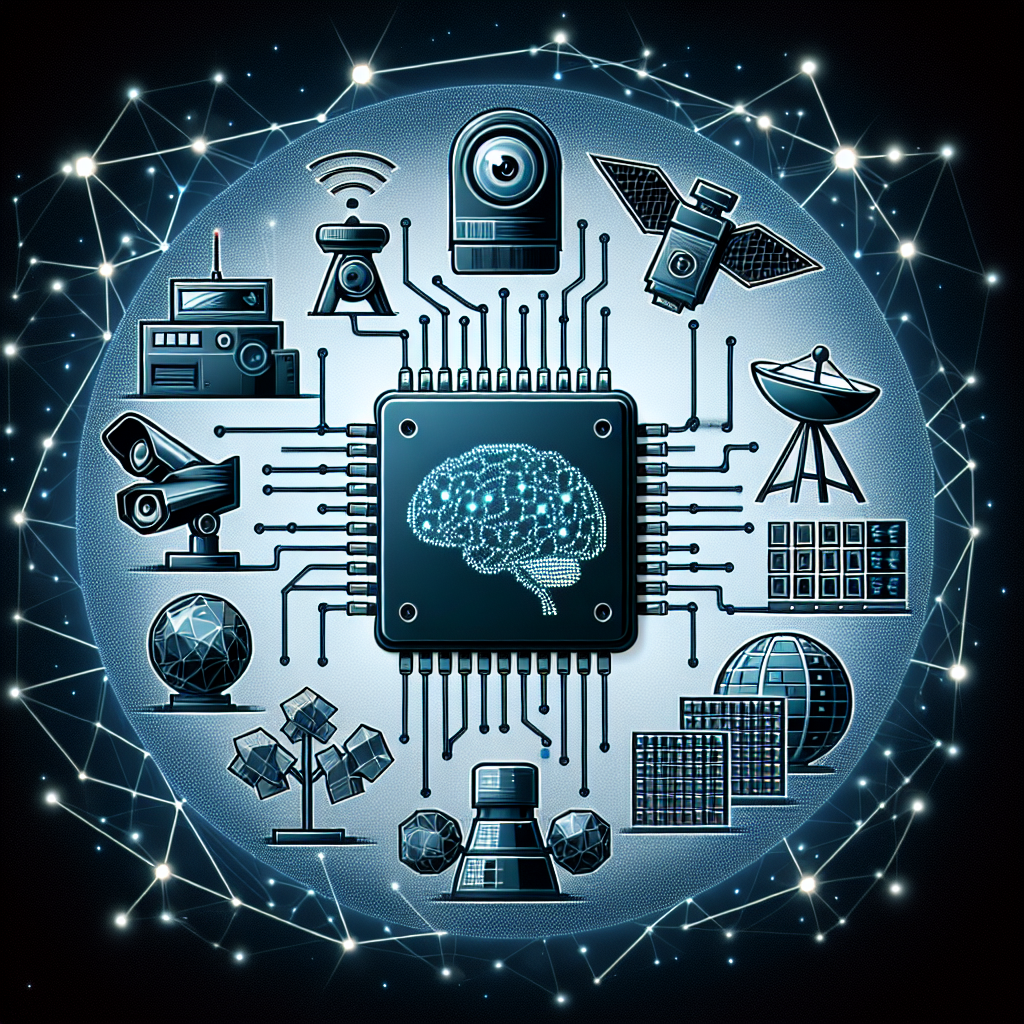
Government surveillance programs have been a topic of debate for decades, with concerns about privacy and civil liberties being at the forefront of the discussion. With advancements in artificial intelligence (AI) technology, these concerns have only been amplified. AI has the potential to revolutionize government surveillance programs, both in terms of efficiency and capabilities. However, this also raises serious ethical and legal questions that need to be addressed.
The Impact of AI on Government Surveillance Programs
AI has the capability to significantly enhance government surveillance programs in a number of ways. One of the key advantages of AI is its ability to process vast amounts of data quickly and efficiently. This means that governments can analyze large volumes of information, such as video footage, social media posts, and communication records, in a fraction of the time it would take a human to do so. This can help law enforcement agencies to identify potential threats and criminal activity more effectively.
AI can also enable governments to implement more sophisticated surveillance techniques, such as facial recognition technology. This technology can be used to track individuals in real-time, identify suspects, and monitor crowds for suspicious behavior. While this can be a powerful tool for law enforcement, it also raises concerns about the potential for mass surveillance and violations of privacy rights.
Furthermore, AI can be used to predict and prevent criminal activity before it occurs. By analyzing patterns in data, such as crime rates, weather conditions, and social media activity, AI algorithms can identify potential hotspots for criminal activity and enable law enforcement agencies to deploy resources accordingly. This predictive policing can help to reduce crime rates and improve public safety, but it also raises questions about bias and discrimination in the criminal justice system.
Overall, AI has the potential to revolutionize government surveillance programs by making them more efficient, effective, and proactive. However, this also raises serious concerns about the impact on privacy, civil liberties, and human rights.
Ethical and Legal Implications of AI in Government Surveillance Programs
The use of AI in government surveillance programs raises a number of ethical and legal questions that need to be addressed. One of the key concerns is the potential for abuse and misuse of AI technology by government agencies. There is a risk that AI algorithms could be biased or inaccurate, leading to wrongful arrests and violations of due process rights. Furthermore, the use of facial recognition technology raises concerns about mass surveillance and the erosion of privacy rights.
Another ethical concern is the lack of transparency and accountability in government surveillance programs. AI algorithms are often proprietary and opaque, making it difficult for individuals to understand how their data is being used and for what purposes. This lack of transparency can undermine public trust in government institutions and lead to a backlash against surveillance programs.
From a legal perspective, the use of AI in government surveillance programs raises questions about compliance with human rights standards and constitutional protections. There is a risk that AI technology could be used to infringe on rights such as freedom of expression, association, and privacy. Governments must ensure that their surveillance programs are conducted in a manner that is consistent with the rule of law and respect for fundamental rights.
FAQs
Q: How is AI being used in government surveillance programs?
A: AI is being used in government surveillance programs to analyze large volumes of data, such as video footage, social media posts, and communication records. AI algorithms can help law enforcement agencies to identify potential threats and criminal activity more effectively, as well as predict and prevent crime before it occurs.
Q: What are the ethical concerns surrounding the use of AI in government surveillance programs?
A: The ethical concerns surrounding the use of AI in government surveillance programs include the potential for abuse and misuse of AI technology, bias and discrimination in algorithmic decision-making, lack of transparency and accountability, and violations of privacy and human rights.
Q: What are the legal implications of AI in government surveillance programs?
A: The legal implications of AI in government surveillance programs include compliance with human rights standards and constitutional protections, such as the right to privacy, freedom of expression, and due process. Governments must ensure that their surveillance programs are conducted in a manner that is consistent with the rule of law and respect for fundamental rights.
In conclusion, the impact of AI on government surveillance programs is significant, with the potential to revolutionize the way in which governments monitor and track individuals. While AI technology can enhance the efficiency and effectiveness of surveillance programs, it also raises serious ethical and legal concerns that need to be addressed. Governments must ensure that their use of AI in surveillance is conducted in a manner that respects human rights, privacy, and the rule of law.