
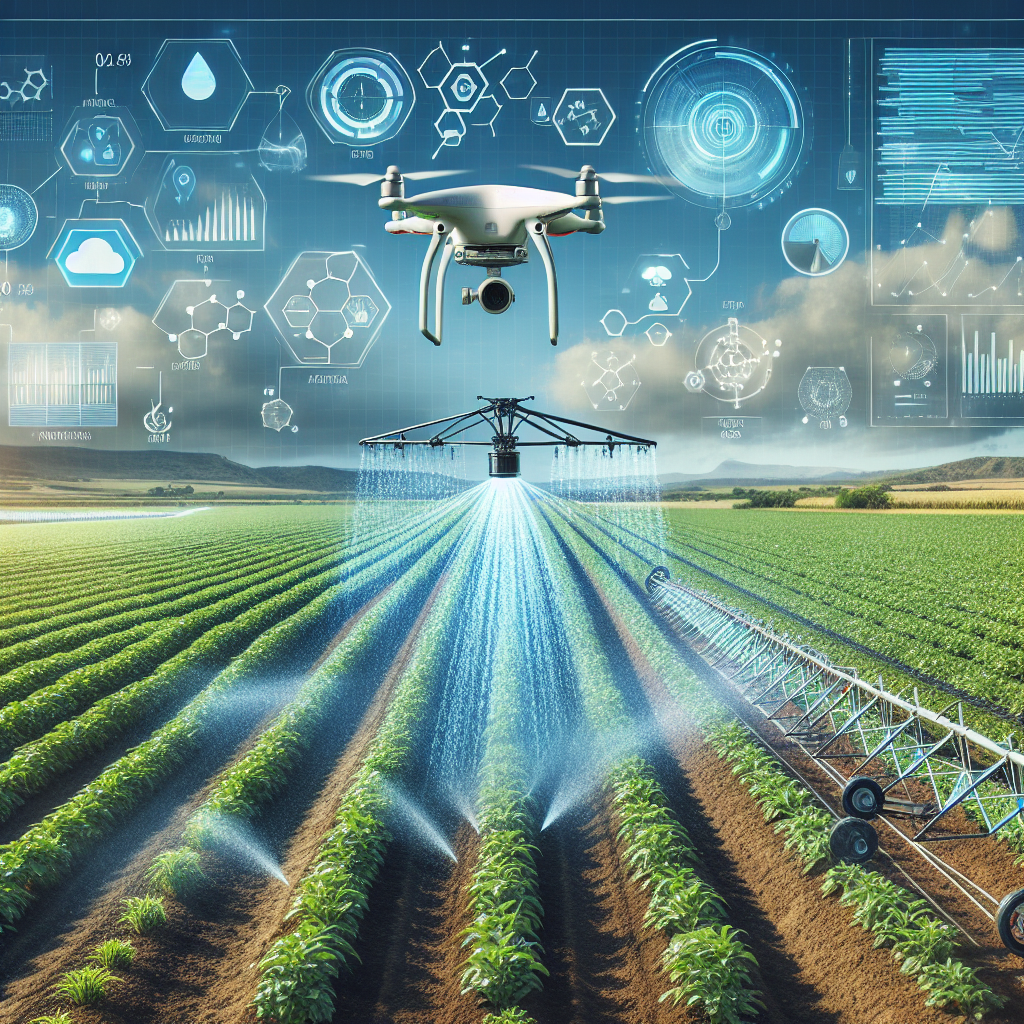
Water management in agriculture is a critical aspect of farming that directly impacts crop yield, quality, and overall sustainability. With the increasing challenges of climate change, water scarcity, and growing global population, it has become more important than ever for farmers to efficiently manage their water resources. In recent years, the adoption of artificial intelligence (AI) technology has shown great promise in optimizing water management practices in agriculture. By leveraging AI tools and techniques, farmers can make more informed decisions about when, where, and how much water to apply to their crops, leading to improved water use efficiency and increased productivity.
One of the key advantages of using AI in water management is its ability to process large amounts of data in real-time and provide actionable insights to farmers. AI algorithms can analyze various sources of data such as weather patterns, soil moisture levels, crop health indicators, and historical irrigation practices to recommend optimal irrigation schedules and amounts. By continuously monitoring and adjusting irrigation practices based on changing environmental conditions, AI can help farmers avoid under or over-watering their crops, which can lead to water waste, decreased crop yields, and increased production costs.
AI can also help farmers identify areas of their fields that are more or less water-efficient, allowing them to fine-tune their irrigation practices and improve overall water use efficiency. For example, AI-powered drones equipped with sensors can collect high-resolution data on crop health and soil moisture levels, enabling farmers to make targeted irrigation decisions at a field level. This precision agriculture approach can not only save water but also improve crop quality and reduce the environmental impact of farming practices.
Furthermore, AI can assist farmers in predicting future water availability and demand, helping them to better plan for water usage during different stages of the growing season. By analyzing historical data and trends, AI algorithms can forecast water requirements for specific crops and regions, allowing farmers to make proactive decisions about irrigation scheduling, crop selection, and water allocation. This predictive capability is particularly valuable in areas prone to drought or water shortages, where efficient water management is essential for crop survival and farm profitability.
In addition to optimizing irrigation practices, AI can also be used to monitor and manage other aspects of water use in agriculture, such as water quality, drainage, and runoff. By integrating AI with sensor technologies and automation systems, farmers can track water quality parameters in real-time, identify potential contamination sources, and take corrective actions to prevent water pollution. AI-powered systems can also help farmers design and implement efficient drainage and irrigation systems to minimize water runoff and soil erosion, thus preserving water resources and protecting the environment.
Overall, the potential benefits of using AI to optimize water management in agriculture are significant, ranging from increased crop yields and profitability to reduced water waste and environmental impact. By harnessing the power of AI technologies, farmers can make smarter, data-driven decisions about water use, leading to more sustainable and resilient farming practices in the face of changing climate and water challenges.
FAQs:
Q: How does AI help farmers optimize irrigation practices in agriculture?
A: AI algorithms can analyze various data sources such as weather patterns, soil moisture levels, crop health indicators, and historical irrigation practices to recommend optimal irrigation schedules and amounts. By continuously monitoring and adjusting irrigation practices based on changing environmental conditions, AI can help farmers avoid under or over-watering their crops, leading to improved water use efficiency and increased productivity.
Q: What are the advantages of using AI in water management in agriculture?
A: AI can process large amounts of data in real-time and provide actionable insights to farmers, helping them make more informed decisions about when, where, and how much water to apply to their crops. AI can also help farmers identify areas of their fields that are more or less water-efficient, enabling them to fine-tune their irrigation practices and improve overall water use efficiency.
Q: How can AI help farmers predict future water availability and demand?
A: By analyzing historical data and trends, AI algorithms can forecast water requirements for specific crops and regions, allowing farmers to make proactive decisions about irrigation scheduling, crop selection, and water allocation. This predictive capability is particularly valuable in areas prone to drought or water shortages, where efficient water management is essential for crop survival and farm profitability.
Q: In what other ways can AI be used to optimize water management in agriculture?
A: AI can also be used to monitor and manage other aspects of water use in agriculture, such as water quality, drainage, and runoff. By integrating AI with sensor technologies and automation systems, farmers can track water quality parameters in real-time, identify potential contamination sources, and take corrective actions to prevent water pollution. AI-powered systems can also help farmers design and implement efficient drainage and irrigation systems to minimize water runoff and soil erosion, thus preserving water resources and protecting the environment.