
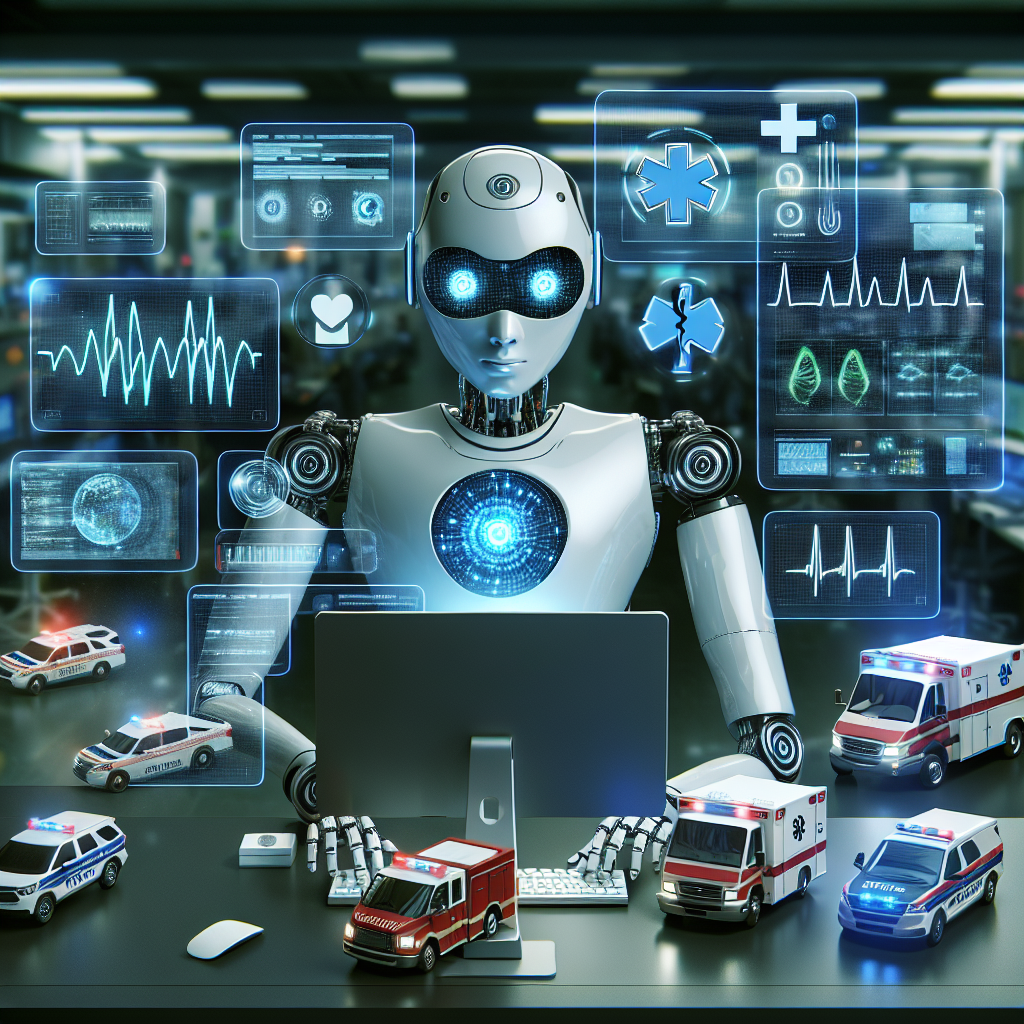
Artificial Intelligence (AI) has the potential to revolutionize emergency management by improving response times and saving lives. With the ability to process vast amounts of data in real-time, AI can help emergency responders make faster and more informed decisions during crises. From predicting natural disasters to coordinating response efforts, AI is transforming the way we prepare for and respond to emergencies.
One of the key ways AI is being used in emergency management is through predictive analytics. By analyzing historical data and current conditions, AI algorithms can forecast the likelihood and severity of natural disasters such as hurricanes, floods, and wildfires. This information can help emergency responders better prepare for and respond to these events, potentially saving lives and reducing damage to property.
In addition to predicting disasters, AI can also help emergency responders during the actual response phase. For example, AI-powered drones can be deployed to survey affected areas and assess damage, allowing rescue teams to prioritize their efforts and allocate resources more effectively. AI can also help coordinate response efforts by analyzing incoming data from multiple sources, such as social media, news reports, and sensor networks, to identify areas in need of assistance and dispatch resources accordingly.
Furthermore, AI can be used to improve communication during emergencies. Chatbots powered by AI can provide real-time updates and information to the public, helping to alleviate panic and confusion. AI can also be used to analyze social media posts and news reports to identify trends and sentiment, allowing emergency responders to tailor their communication strategies accordingly.
Overall, AI has the potential to greatly improve emergency management by enhancing response times, increasing situational awareness, and enabling more efficient resource allocation. By harnessing the power of AI, emergency responders can better prepare for and respond to disasters, ultimately saving lives and reducing the impact of emergencies on communities.
FAQs:
Q: How does AI help predict natural disasters?
A: AI algorithms analyze historical data and current conditions to forecast the likelihood and severity of natural disasters such as hurricanes, floods, and wildfires. This information can help emergency responders better prepare for and respond to these events.
Q: How can AI improve communication during emergencies?
A: AI-powered chatbots can provide real-time updates and information to the public, helping to alleviate panic and confusion. AI can also analyze social media posts and news reports to identify trends and sentiment, allowing emergency responders to tailor their communication strategies accordingly.
Q: What are some examples of AI applications in emergency management?
A: AI-powered drones can be deployed to survey affected areas and assess damage, AI algorithms can analyze incoming data to identify areas in need of assistance, and chatbots can provide real-time updates and information to the public.
Q: How can AI help coordinate response efforts during emergencies?
A: AI algorithms can analyze incoming data from multiple sources to identify areas in need of assistance and dispatch resources accordingly. This helps emergency responders prioritize their efforts and allocate resources more effectively.