
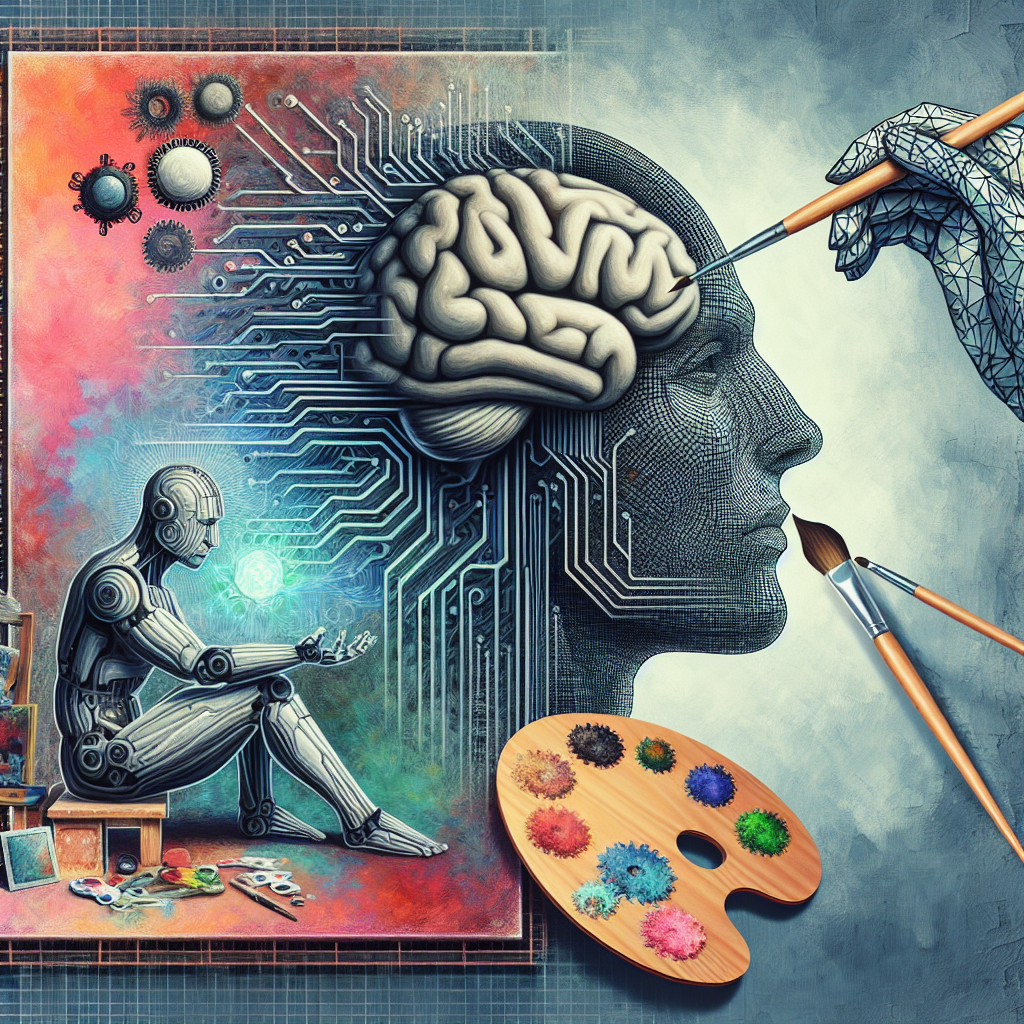
Art and creativity have long been considered uniquely human traits, but with the rise of artificial intelligence (AI), the boundaries of what is possible in the realm of creativity are being redefined. AI is revolutionizing the way we create and experience art, challenging traditional notions of authorship, originality, and the very nature of creativity itself. From generating music and poetry to designing visual art and even writing screenplays, AI is opening up new possibilities for artists and creators across disciplines.
AI and Creativity: A Brief Overview
Artificial intelligence refers to the simulation of human intelligence processes by machines, particularly computer systems. Machine learning, a subset of AI, enables computers to learn from data and improve their performance over time without being explicitly programmed. This ability to learn and adapt has led to significant advancements in various fields, including art and creativity.
AI has been used in the arts for several decades, with early experiments dating back to the 1960s. However, recent advancements in machine learning and deep learning algorithms have ushered in a new era of AI-powered creativity. Today, AI can generate music, poetry, visual art, and even entire works of fiction that rival those created by human artists.
One of the most well-known examples of AI-generated art is the painting “Portrait of Edmond de Belamy” created by the French art collective Obvious using a generative adversarial network (GAN) algorithm. The painting sold for over $400,000 at auction, sparking a debate about the role of AI in the art world and the nature of creativity.
AI has also been used to compose music, with algorithms generating melodies and harmonies that are indistinguishable from those created by human composers. In 2018, the first AI-generated music album, “Hello World,” was released by the music group Taryn Southern, featuring songs composed with the help of AI.
In the world of literature, AI has been used to write stories, poems, and even screenplays. OpenAI’s GPT-3 (Generative Pre-trained Transformer 3) language model can generate text that is coherent and contextually relevant, leading to the creation of AI-authored articles, essays, and even entire books.
The Impact of AI on Creativity
The rise of AI in the creative industries has sparked both excitement and concern. On the one hand, AI has the potential to democratize art and make creativity more accessible to a wider audience. AI tools can help artists and creators overcome creative blocks, explore new ideas, and push the boundaries of their craft.
AI can also help artists collaborate with machines, blending human creativity with machine intelligence to create new forms of art. Artists like Mario Klingemann and Refik Anadol have embraced AI as a creative partner, using algorithms to generate visuals and animations that would be impossible to create by hand.
However, the use of AI in art also raises questions about the nature of creativity and originality. Can AI truly be creative, or is it simply mimicking human creativity based on patterns and data? Does AI-generated art have the same value and authenticity as art created by human hands? These questions challenge our traditional notions of art and creativity, forcing us to reconsider what it means to be an artist in the age of AI.
AI and Creativity: Redefining the Boundaries of Art
AI is redefining the boundaries of art in several ways, challenging traditional notions of authorship, originality, and the creative process. Here are some of the ways in which AI is reshaping the art world:
1. Blurring the Lines Between Human and Machine Creativity
AI blurs the lines between human and machine creativity, challenging our assumptions about the role of the artist in the creative process. With AI tools capable of generating music, poetry, and visual art that are indistinguishable from human creations, the distinction between human and machine-made art becomes increasingly blurred. This raises questions about the nature of creativity and the role of the artist in the age of AI.
2. Democratizing Art and Creativity
AI has the potential to democratize art and make creativity more accessible to a wider audience. AI tools can help artists and creators overcome creative blocks, explore new ideas, and push the boundaries of their craft. By providing new tools and technologies for creative expression, AI empowers artists to experiment and innovate in ways that were previously unimaginable.
3. Fostering Collaboration Between Humans and Machines
AI enables artists to collaborate with machines, blending human creativity with machine intelligence to create new forms of art. Artists like Mario Klingemann and Refik Anadol have embraced AI as a creative partner, using algorithms to generate visuals and animations that would be impossible to create by hand. This collaborative approach to art challenges our traditional notions of authorship and opens up new possibilities for creative expression.
FAQs:
Q: Can AI truly be creative?
A: The question of whether AI can truly be creative is a subject of ongoing debate. While AI algorithms can generate music, poetry, and visual art that mimic human creativity, some argue that true creativity requires conscious intention, emotion, and originality. Others believe that AI can exhibit creativity in its ability to generate novel ideas and solutions based on patterns and data. Ultimately, the definition of creativity may need to be expanded to encompass the unique capabilities of AI.
Q: Does AI-generated art have the same value as human-made art?
A: The value of AI-generated art is a matter of perspective. While some may argue that AI-generated art lacks the emotional depth and intentionality of human-made art, others see value in the unique perspectives and possibilities that AI brings to the creative process. AI-generated art challenges traditional notions of authorship and originality, forcing us to reconsider what it means to be an artist in the age of AI. Ultimately, the value of art is subjective and depends on the individual viewer’s interpretation.
Q: How can artists and creators incorporate AI into their work?
A: Artists and creators can incorporate AI into their work in a variety of ways, depending on their goals and creative vision. AI tools can be used to generate ideas, explore new techniques, and push the boundaries of traditional art forms. Artists can also collaborate with AI algorithms to create new forms of art that blend human and machine creativity. By embracing AI as a creative partner, artists can unlock new possibilities for artistic expression and innovation.
In conclusion, AI is redefining the boundaries of art and creativity, challenging traditional notions of authorship, originality, and the very nature of creativity itself. From generating music and poetry to designing visual art and even writing screenplays, AI is opening up new possibilities for artists and creators across disciplines. While the impact of AI on creativity raises questions about the nature of art and the role of the artist, it also presents exciting opportunities for collaboration, experimentation, and innovation in the creative industries. As AI continues to evolve and advance, the future of art and creativity promises to be both fascinating and transformative.