
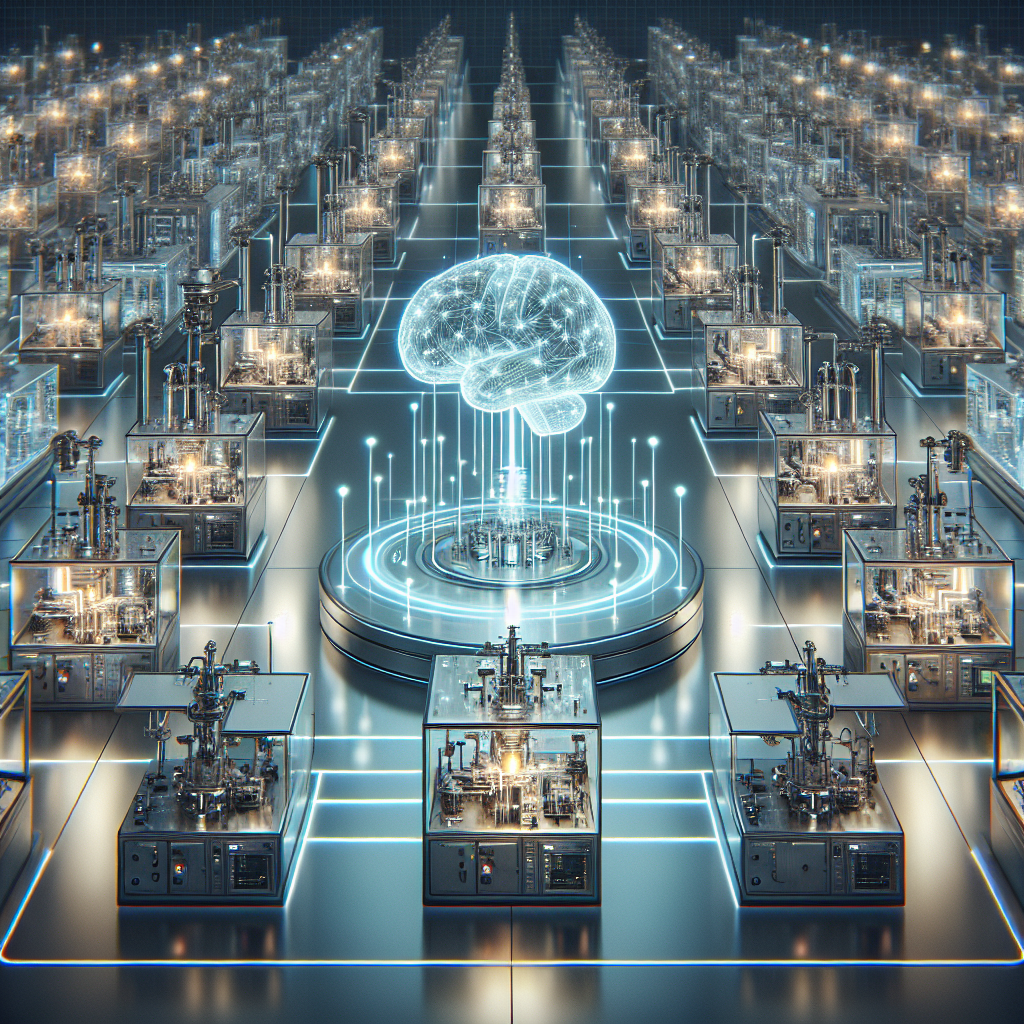
In the pharmaceutical industry, ensuring the reliability and efficiency of manufacturing equipment is crucial to maintaining high standards of quality and safety. Equipment breakdowns and failures can lead to costly production delays, waste of valuable resources, and even compromise the integrity of pharmaceutical products. That is why pharmaceutical companies are increasingly turning to AI-powered predictive maintenance to proactively monitor and manage their manufacturing equipment.
AI-powered predictive maintenance uses advanced machine learning algorithms to analyze data from sensors and other sources to predict when equipment is likely to fail. By identifying potential issues before they occur, pharmaceutical companies can schedule maintenance and repairs at the most convenient times, minimizing disruptions to production and reducing the risk of costly breakdowns.
The benefits of AI-powered predictive maintenance for pharmaceutical manufacturing equipment are numerous. By implementing this technology, companies can:
1. Increase equipment uptime: By proactively identifying and addressing potential issues, AI-powered predictive maintenance helps to minimize unplanned downtime, ensuring that manufacturing equipment is operating at peak efficiency.
2. Reduce maintenance costs: Predictive maintenance can help pharmaceutical companies avoid unnecessary maintenance tasks and reduce the risk of over-maintaining equipment. This can lead to significant cost savings over time.
3. Improve product quality: Reliable manufacturing equipment is essential for producing high-quality pharmaceutical products. By preventing equipment failures, predictive maintenance helps to ensure that products meet the required standards.
4. Enhance safety: Equipment failures can pose safety risks to workers and compromise the integrity of pharmaceutical products. Predictive maintenance helps to identify and address potential safety hazards before they become serious issues.
5. Optimize production processes: By providing real-time insights into equipment performance, predictive maintenance can help pharmaceutical companies optimize their production processes and improve overall operational efficiency.
Implementing AI-powered predictive maintenance for pharmaceutical manufacturing equipment involves several key steps. First, companies must install sensors and other monitoring devices on their equipment to collect data on factors such as temperature, pressure, and vibration. This data is then fed into AI algorithms that analyze it to identify patterns and trends that could indicate potential equipment failures.
Once potential issues are identified, companies can use this information to schedule maintenance and repairs at the most opportune times, such as during scheduled downtime or maintenance windows. This proactive approach to maintenance helps to prevent equipment failures and minimize disruptions to production.
In addition to monitoring equipment performance, AI-powered predictive maintenance can also help pharmaceutical companies optimize their maintenance schedules and procedures. By analyzing historical data and equipment performance trends, companies can identify areas where maintenance can be streamlined or improved, leading to greater efficiency and cost savings.
AI-powered predictive maintenance is not without its challenges, however. One of the main challenges is ensuring the accuracy and reliability of the data being collected. Inaccurate or incomplete data can lead to incorrect predictions and unnecessary maintenance tasks. Companies must invest in high-quality sensors and monitoring devices to ensure that the data being collected is accurate and reliable.
Another challenge is integrating predictive maintenance technology with existing equipment and systems. Pharmaceutical companies may need to upgrade their equipment or invest in new technology to support AI-powered predictive maintenance. Additionally, companies must train their staff to use and interpret the data generated by predictive maintenance systems effectively.
Despite these challenges, the benefits of AI-powered predictive maintenance for pharmaceutical manufacturing equipment are clear. By proactively monitoring and managing equipment, companies can increase uptime, reduce maintenance costs, improve product quality, enhance safety, and optimize production processes. With the right technology and expertise, pharmaceutical companies can harness the power of AI to revolutionize their maintenance practices and ensure the reliability and efficiency of their manufacturing equipment.
FAQs:
Q: How does AI-powered predictive maintenance differ from traditional maintenance practices?
A: Traditional maintenance practices are often reactive, meaning that maintenance tasks are performed in response to equipment failures or breakdowns. In contrast, AI-powered predictive maintenance is proactive, using data analysis and machine learning algorithms to predict when equipment is likely to fail and schedule maintenance tasks accordingly.
Q: What types of equipment can benefit from AI-powered predictive maintenance in the pharmaceutical industry?
A: AI-powered predictive maintenance can be applied to a wide range of manufacturing equipment in the pharmaceutical industry, including pumps, compressors, mixers, and packaging machines. By monitoring and analyzing data from sensors and other sources, companies can proactively manage the maintenance of this equipment to ensure reliability and efficiency.
Q: How can pharmaceutical companies implement AI-powered predictive maintenance?
A: To implement AI-powered predictive maintenance, pharmaceutical companies must first install sensors and monitoring devices on their equipment to collect data on factors such as temperature, pressure, and vibration. This data is then fed into AI algorithms that analyze it to predict when equipment is likely to fail. Companies can use this information to schedule maintenance and repairs proactively, minimizing disruptions to production.
Q: What are the benefits of AI-powered predictive maintenance for pharmaceutical manufacturing equipment?
A: The benefits of AI-powered predictive maintenance for pharmaceutical manufacturing equipment include increased equipment uptime, reduced maintenance costs, improved product quality, enhanced safety, and optimized production processes. By proactively monitoring and managing equipment, companies can ensure the reliability and efficiency of their manufacturing operations.