
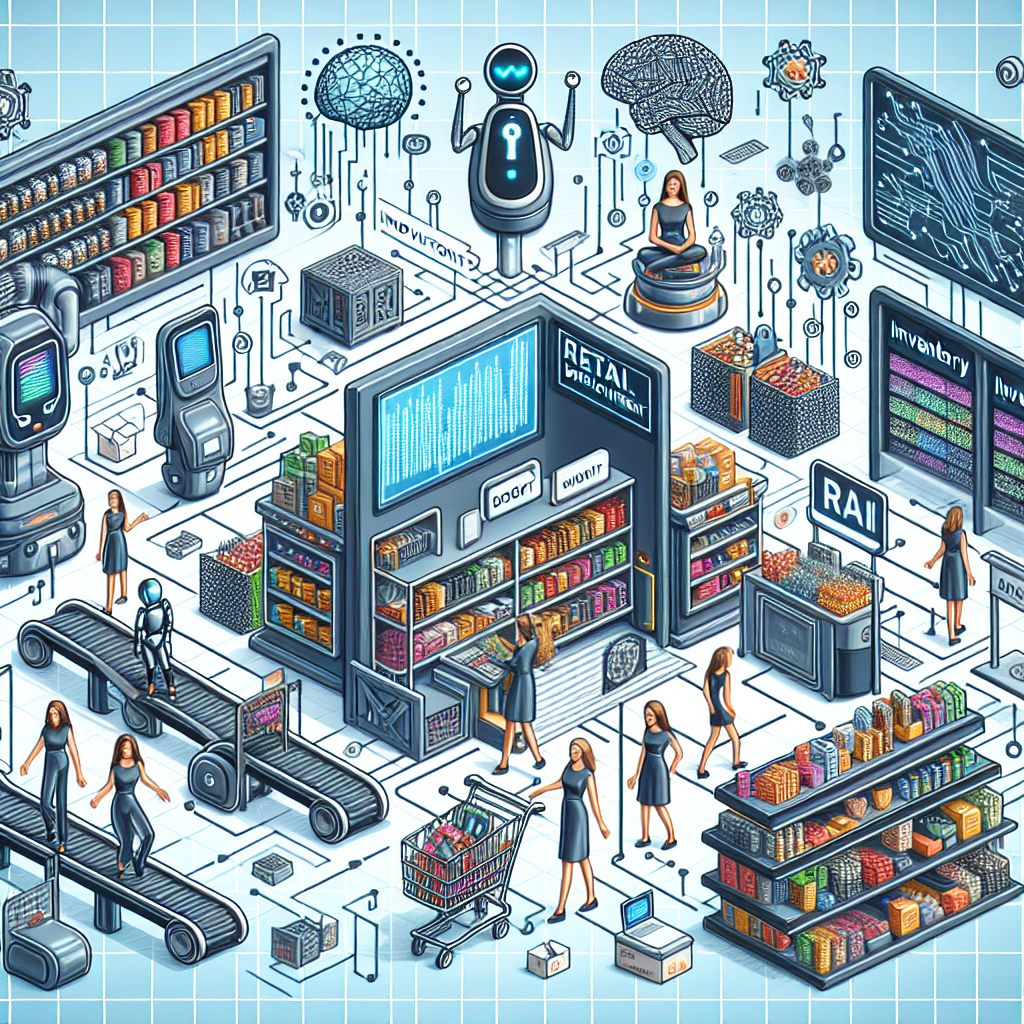
AI Deployment in Retail: Enhancing Customer Experience and Inventory Management
In recent years, Artificial Intelligence (AI) has become a game-changer in the retail industry, revolutionizing the way retailers interact with customers, manage inventory, and optimize their operations. AI technologies such as machine learning, natural language processing, and computer vision have enabled retailers to personalize the shopping experience, streamline inventory management, and improve overall operational efficiency.
Enhancing Customer Experience
One of the key areas where AI is making a significant impact in retail is in enhancing customer experience. By analyzing customer data, AI-powered systems can provide personalized recommendations, promotions, and content tailored to each individual shopper. This level of personalization not only increases customer satisfaction but also boosts sales and customer loyalty.
AI-powered chatbots are another example of how retailers are using AI to enhance customer experience. These virtual assistants can provide real-time customer service, answer questions, and assist customers with their purchases. By leveraging natural language processing and machine learning, these chatbots can understand and respond to customer inquiries with human-like accuracy, improving the overall shopping experience.
Additionally, AI technologies such as computer vision are being used to enhance the in-store shopping experience. Retailers can use computer vision to track customer behavior, analyze foot traffic patterns, and optimize store layouts to improve the overall shopping experience. By understanding how customers move through the store, retailers can make data-driven decisions to enhance the layout, product placement, and overall customer experience.
Inventory Management
AI is also transforming inventory management in the retail industry. By analyzing historical sales data, customer demand patterns, and external factors such as weather and economic conditions, AI-powered systems can predict future demand and optimize inventory levels. This enables retailers to reduce stockouts, minimize overstock, and improve overall inventory management efficiency.
AI-powered demand forecasting systems can also help retailers optimize their supply chain operations. By accurately predicting demand, retailers can ensure that they have the right products in the right place at the right time, reducing excess inventory and improving overall operational efficiency.
Moreover, AI technologies such as predictive maintenance can help retailers proactively identify and address issues with their equipment and infrastructure. By analyzing data from sensors and other sources, AI-powered systems can predict when equipment is likely to fail and schedule maintenance before issues occur, reducing downtime and improving operational efficiency.
FAQs
Q: How can retailers implement AI technologies in their operations?
A: Retailers can implement AI technologies in their operations by partnering with AI vendors, hiring AI talent, or developing in-house AI capabilities. They can start by identifying areas where AI can have the most impact, such as customer experience, inventory management, or supply chain operations, and then develop a plan to implement AI solutions in those areas.
Q: What are some examples of AI applications in retail?
A: Some examples of AI applications in retail include personalized recommendations, chatbots, computer vision for in-store analytics, demand forecasting, and predictive maintenance. These AI technologies can help retailers enhance customer experience, improve inventory management, optimize supply chain operations, and increase operational efficiency.
Q: What are the benefits of AI deployment in retail?
A: The benefits of AI deployment in retail include enhanced customer experience, improved inventory management, optimized supply chain operations, increased operational efficiency, and higher sales and customer loyalty. By leveraging AI technologies, retailers can gain a competitive edge in the market and drive business growth.
Q: What are the challenges of implementing AI in retail?
A: Some of the challenges of implementing AI in retail include data privacy and security concerns, integration with existing systems, lack of AI talent, and resistance to change from employees. Retailers need to address these challenges by investing in data security measures, training employees on AI technologies, and developing a clear implementation strategy.
In conclusion, AI deployment in retail is revolutionizing the way retailers interact with customers, manage inventory, and optimize their operations. By leveraging AI technologies such as machine learning, natural language processing, and computer vision, retailers can enhance customer experience, improve inventory management, and increase operational efficiency. By embracing AI, retailers can gain a competitive edge in the market and drive business growth in the digital age.