
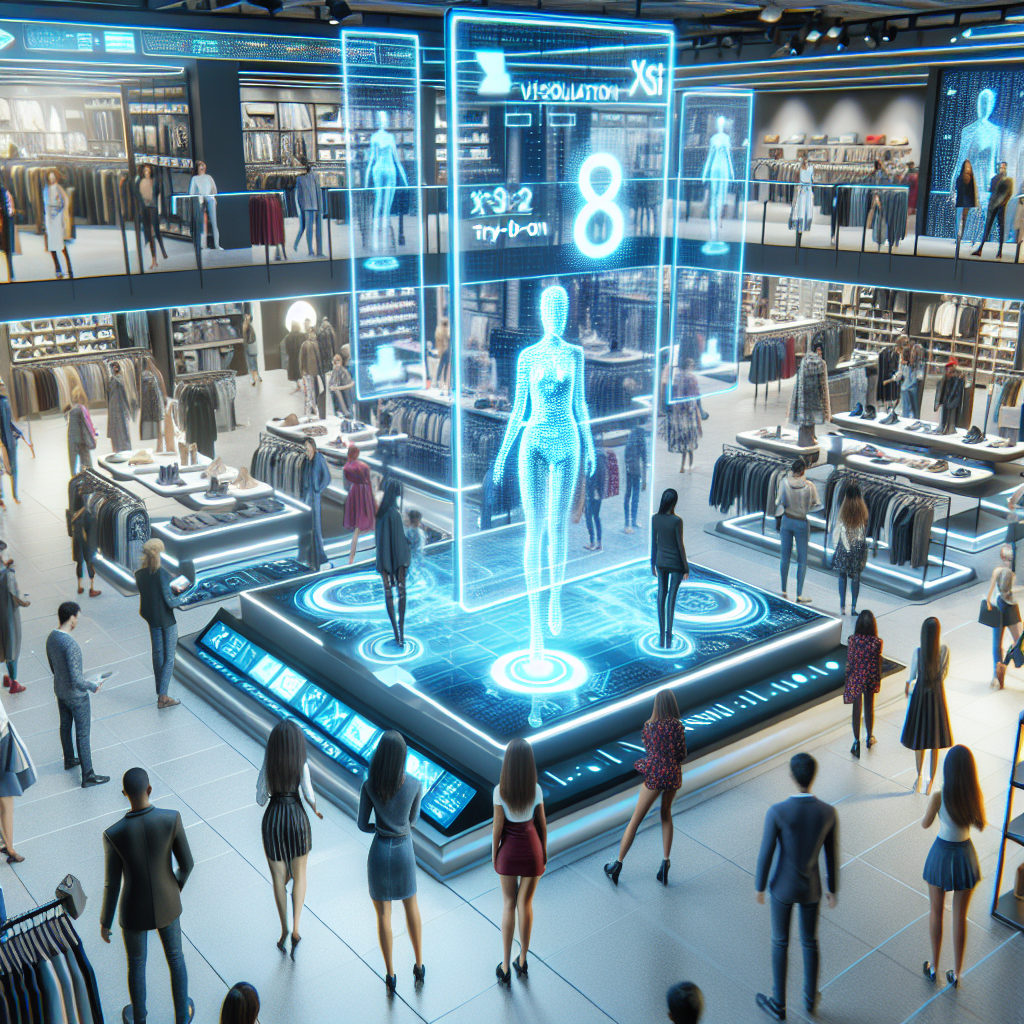
In recent years, the retail industry has been revolutionized by advancements in artificial intelligence (AI) technology. One of the most exciting developments in this field is the emergence of AI-powered virtual try-on technology, which is changing the way consumers shop for clothing, cosmetics, and accessories. Virtual try-on allows shoppers to see how a product will look on them before making a purchase, eliminating the need for physical fitting rooms and reducing the risk of returns.
What is AI-Powered Virtual Try-On?
AI-powered virtual try-on is a technology that uses artificial intelligence algorithms to analyze a shopper’s body shape, size, and features, and then superimposes a digital image of a product onto their image in real-time. This allows the shopper to see how a product will look on them without actually trying it on. Virtual try-on technology can be used for a wide range of products, including clothing, eyeglasses, jewelry, and even makeup.
How Does AI-Powered Virtual Try-On Work?
AI-powered virtual try-on technology works by using computer vision algorithms to analyze a shopper’s body shape and features. The shopper typically uploads a photo or video of themselves to the virtual try-on platform, which then uses this image to create a 3D model of the shopper’s body. The platform then superimposes digital images of the products onto the shopper’s 3D model, allowing them to see how the products will look on them from different angles.
The AI algorithms used in virtual try-on technology are trained on vast amounts of data, including images of different body shapes and sizes, as well as information on how different products fit and look on different types of bodies. This training data allows the algorithms to accurately predict how a product will look on a shopper based on their body shape and features.
Benefits of AI-Powered Virtual Try-On
AI-powered virtual try-on technology offers a number of benefits for both consumers and retailers. For consumers, virtual try-on makes the shopping experience more convenient and personalized. Shoppers can try on products from the comfort of their own homes, without the need to visit physical stores or deal with crowded fitting rooms. Virtual try-on also reduces the risk of purchasing products that don’t fit or look good, as shoppers can see how a product will look on them before making a purchase.
For retailers, virtual try-on technology can help increase sales and reduce returns. By offering virtual try-on options on their websites or mobile apps, retailers can provide a more engaging and interactive shopping experience for their customers, leading to higher conversion rates and increased customer satisfaction. Virtual try-on also reduces the number of returns and exchanges, as shoppers can make more informed purchasing decisions based on how a product will look on them.
The Future of Shopping with AI-Powered Virtual Try-On
As AI technology continues to advance, the future of shopping with virtual try-on looks increasingly bright. Virtual try-on technology is already being used by a number of major retailers and fashion brands, and is likely to become a standard feature on many e-commerce platforms in the coming years. In the future, we can expect to see even more advanced virtual try-on technology that offers even greater levels of customization and personalization.
One exciting development in the field of virtual try-on is the use of augmented reality (AR) technology. AR allows shoppers to see how products will look on them in real-world settings, such as their own living room or bedroom. This can help shoppers get a better sense of how a product will fit into their everyday lives, and make more confident purchasing decisions.
Another trend in virtual try-on technology is the use of AI-powered recommendations. By analyzing a shopper’s body shape, size, and features, as well as their past purchases and browsing history, AI algorithms can recommend products that are likely to fit and look good on the shopper. This personalized recommendation engine can help shoppers discover new products and styles that they might not have considered otherwise.
FAQs about AI-Powered Virtual Try-On
Q: Is virtual try-on technology accurate?
A: Virtual try-on technology is constantly improving, and many platforms are able to provide accurate predictions of how a product will look on a shopper based on their body shape and features. However, there may still be some limitations in terms of color accuracy and texture representation.
Q: Can virtual try-on technology be used for all types of products?
A: Virtual try-on technology can be used for a wide range of products, including clothing, eyeglasses, jewelry, and makeup. However, some products may be more challenging to accurately simulate in a virtual try-on environment, such as shoes and accessories.
Q: How secure is virtual try-on technology?
A: Virtual try-on platforms typically use advanced encryption and security measures to protect shoppers’ personal data and images. However, shoppers should always be cautious when sharing sensitive information online and should only use reputable virtual try-on platforms.
Q: Are there any privacy concerns with virtual try-on technology?
A: Virtual try-on technology may raise privacy concerns for some shoppers, as it involves sharing personal data and images with third-party platforms. Retailers and virtual try-on providers should be transparent about how they use shoppers’ data and images, and provide clear opt-out options for those who are concerned about their privacy.
In conclusion, AI-powered virtual try-on technology is revolutionizing the way consumers shop for clothing, cosmetics, and accessories. By using advanced AI algorithms to analyze shoppers’ body shapes and features, virtual try-on platforms allow shoppers to see how products will look on them before making a purchase. This technology offers a number of benefits for both consumers and retailers, including increased convenience, personalized recommendations, and reduced returns. As virtual try-on technology continues to advance, we can expect to see even more exciting developments in the future, including the use of AR technology and AI-powered recommendations.