
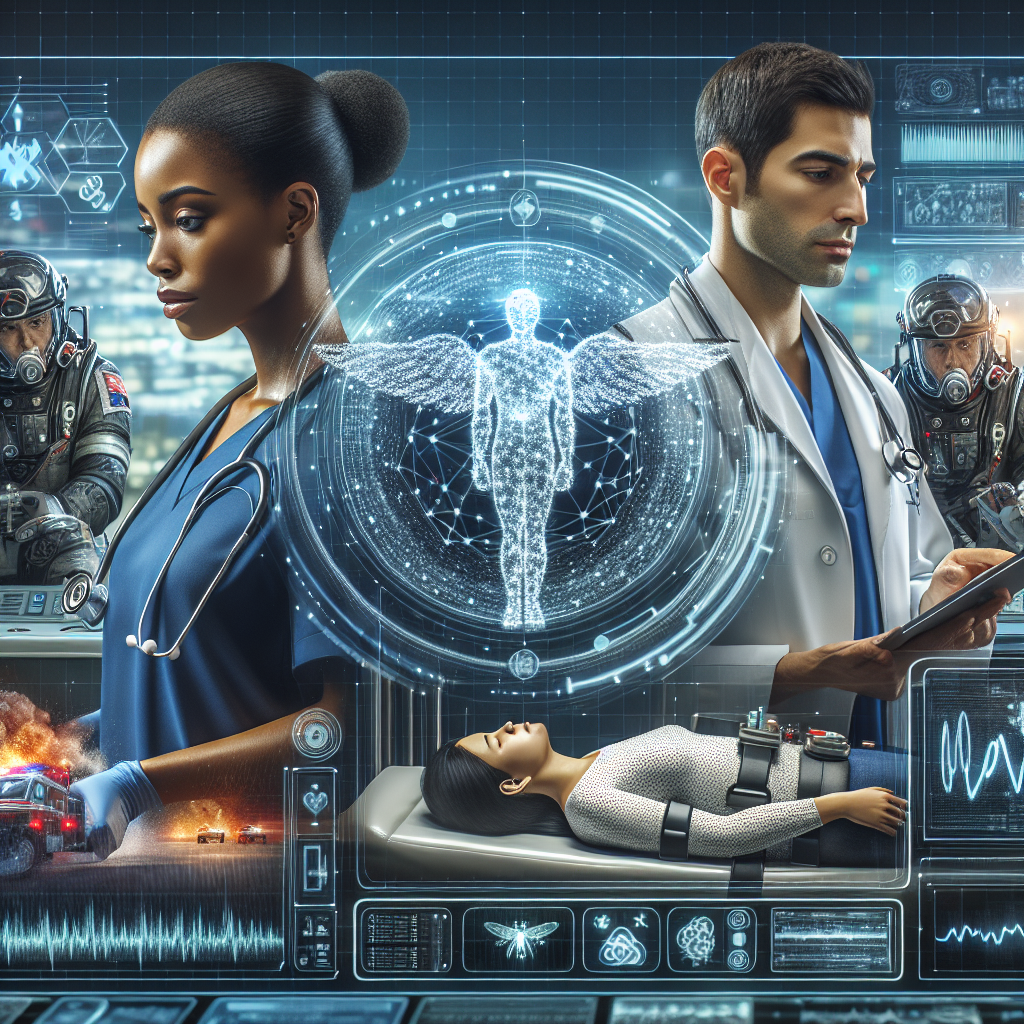
The Role of AI in Disaster Response and Emergency Preparedness in Healthcare
In recent years, the use of artificial intelligence (AI) in disaster response and emergency preparedness in healthcare has become increasingly widespread. AI technology has the potential to revolutionize the way we respond to natural disasters, pandemics, and other emergencies by providing real-time data analysis, predictive modeling, and decision-making support. In this article, we will explore the various ways in which AI is being used to enhance disaster response and emergency preparedness in healthcare.
1. Early Warning Systems
One of the key roles of AI in disaster response is the development of early warning systems that can predict and detect potential disasters before they occur. For example, AI algorithms can analyze data from various sources such as weather patterns, seismic activity, and social media to identify potential threats and issue warnings to the relevant authorities. This early detection can help to minimize the impact of disasters and save lives.
2. Predictive Modeling
AI technology is also being used to develop predictive models that can forecast the spread of diseases, the impact of natural disasters, and the effectiveness of various response strategies. By analyzing historical data and real-time information, AI algorithms can generate accurate predictions that can help healthcare providers and emergency responders to better prepare for and respond to emergencies.
3. Resource Allocation
During a disaster or emergency, it is crucial to efficiently allocate resources such as medical supplies, personnel, and equipment to where they are most needed. AI can help to optimize resource allocation by analyzing data on patient needs, population density, and transportation routes to identify the most effective distribution strategies. This ensures that resources are used efficiently and effectively to save lives and reduce the impact of disasters.
4. Remote Monitoring and Telemedicine
In the aftermath of a disaster, access to healthcare services may be limited due to damaged infrastructure or overwhelmed healthcare facilities. AI-powered remote monitoring and telemedicine technologies can help to bridge this gap by enabling healthcare providers to deliver care to patients in remote or disaster-affected areas. These technologies can also help to triage patients, monitor their vital signs, and provide medical advice and support, thereby improving the quality of care and saving lives.
5. Emergency Response Coordination
AI can also play a key role in coordinating emergency response efforts by analyzing data from multiple sources, such as emergency calls, social media, and satellite imagery, to identify areas of need and prioritize response efforts. By providing real-time situational awareness and decision-making support, AI can help emergency responders to coordinate their efforts more effectively and efficiently, leading to faster and more coordinated disaster response.
FAQs:
Q: How can AI help to improve disaster response and emergency preparedness in healthcare?
A: AI can help to improve disaster response and emergency preparedness in healthcare by providing early warning systems, predictive modeling, resource allocation optimization, remote monitoring and telemedicine, and emergency response coordination.
Q: What are some examples of AI-powered technologies used in disaster response?
A: Some examples of AI-powered technologies used in disaster response include early warning systems, predictive modeling algorithms, remote monitoring devices, and emergency response coordination platforms.
Q: How can healthcare providers and emergency responders benefit from using AI in disaster response?
A: Healthcare providers and emergency responders can benefit from using AI in disaster response by improving their ability to predict and detect disasters, optimize resource allocation, deliver care to remote or disaster-affected areas, and coordinate their response efforts more effectively.
In conclusion, the role of AI in disaster response and emergency preparedness in healthcare is rapidly expanding, with AI technology being used to enhance early warning systems, predictive modeling, resource allocation, remote monitoring and telemedicine, and emergency response coordination. By leveraging the power of AI, healthcare providers and emergency responders can improve their ability to respond to disasters and emergencies, save lives, and reduce the impact of disasters on communities. As AI continues to evolve and advance, its potential to revolutionize disaster response and emergency preparedness in healthcare will only continue to grow.