
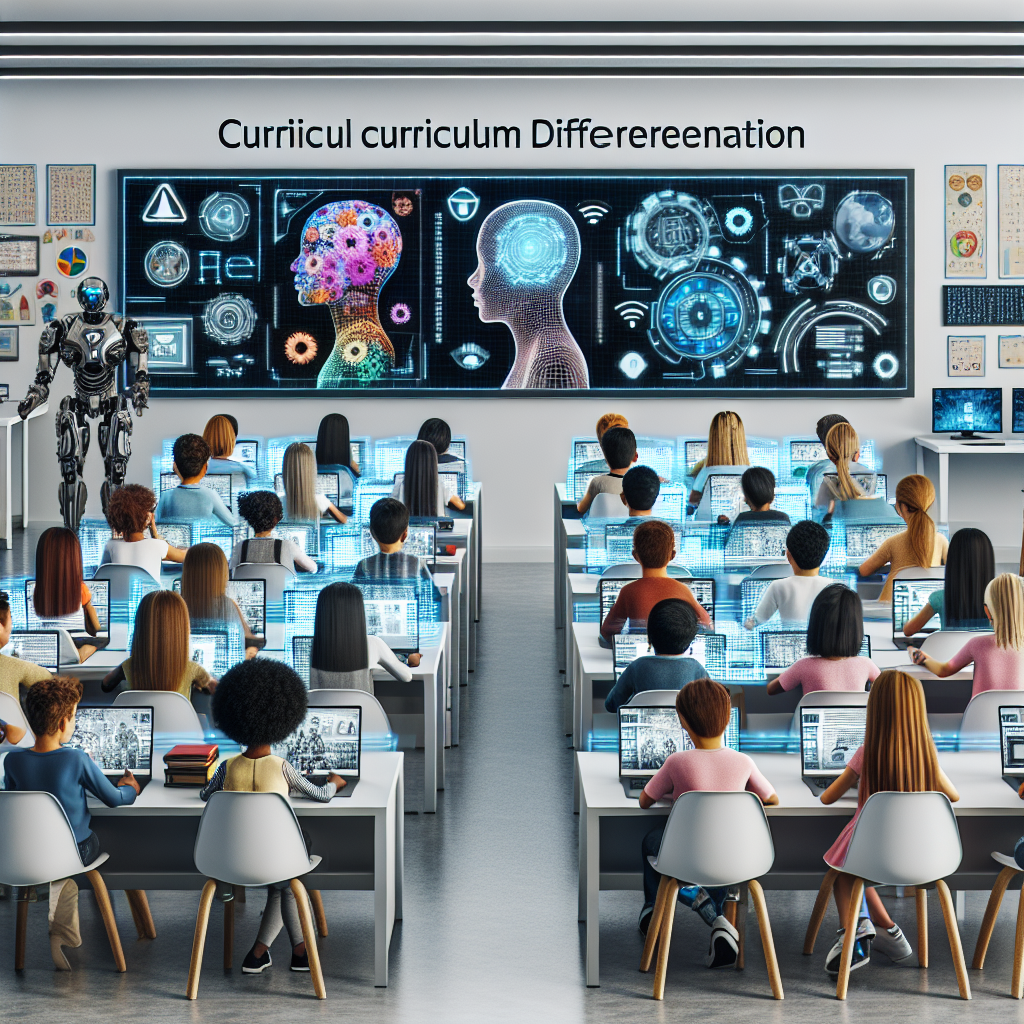
Artificial Intelligence (AI) is revolutionizing the way education is delivered, including curriculum differentiation. Curriculum differentiation is the practice of tailoring instruction to meet the diverse needs of students in a classroom. With AI, educators are able to provide personalized learning experiences that are more effective and engaging for students. This article explores the impact of AI on curriculum differentiation and how it is changing the landscape of education.
AI in Education
AI technology is rapidly advancing and has the potential to transform education in many ways. In the field of curriculum differentiation, AI can analyze data on student performance, learning styles, and preferences to create personalized learning paths for each student. This allows educators to better address the individual needs of each student and ensure that they are challenged at an appropriate level.
One of the key benefits of using AI in curriculum differentiation is its ability to provide real-time feedback to students. AI can track student progress and provide immediate feedback on assignments, quizzes, and tests. This allows students to see where they need to improve and gives them the opportunity to make corrections before moving on to the next lesson.
AI can also help educators identify struggling students early on and provide targeted interventions to help them succeed. By analyzing student data, AI can flag students who are falling behind and suggest ways to support them, such as additional practice exercises, tutoring, or counseling.
Another advantage of using AI in curriculum differentiation is its ability to adapt to each student’s learning pace and style. AI can adjust the difficulty level of assignments and lessons based on individual performance, ensuring that students are challenged but not overwhelmed. This personalized approach to learning helps students stay motivated and engaged, leading to better academic outcomes.
FAQs
1. How does AI personalize learning for students?
AI uses data on student performance, learning styles, and preferences to create personalized learning paths for each student. This allows educators to tailor instruction to meet the individual needs of each student and ensure that they are challenged at an appropriate level.
2. Can AI track student progress and provide feedback in real time?
Yes, AI can track student progress and provide immediate feedback on assignments, quizzes, and tests. This allows students to see where they need to improve and gives them the opportunity to make corrections before moving on to the next lesson.
3. How does AI help identify struggling students?
AI analyzes student data to flag students who are falling behind and suggest ways to support them, such as additional practice exercises, tutoring, or counseling. This targeted intervention helps struggling students succeed.
4. How does AI adapt to each student’s learning pace and style?
AI adjusts the difficulty level of assignments and lessons based on individual performance, ensuring that students are challenged but not overwhelmed. This personalized approach to learning helps students stay motivated and engaged.
5. What are the benefits of using AI in curriculum differentiation?
Some benefits of using AI in curriculum differentiation include providing personalized learning experiences, real-time feedback, targeted interventions for struggling students, and adapting to each student’s learning pace and style.
In conclusion, AI is transforming curriculum differentiation in education by providing personalized learning experiences, real-time feedback, targeted interventions, and adapting to each student’s learning pace and style. As AI technology continues to advance, educators can expect to see even more innovative ways to enhance the learning experience for students of all abilities.