
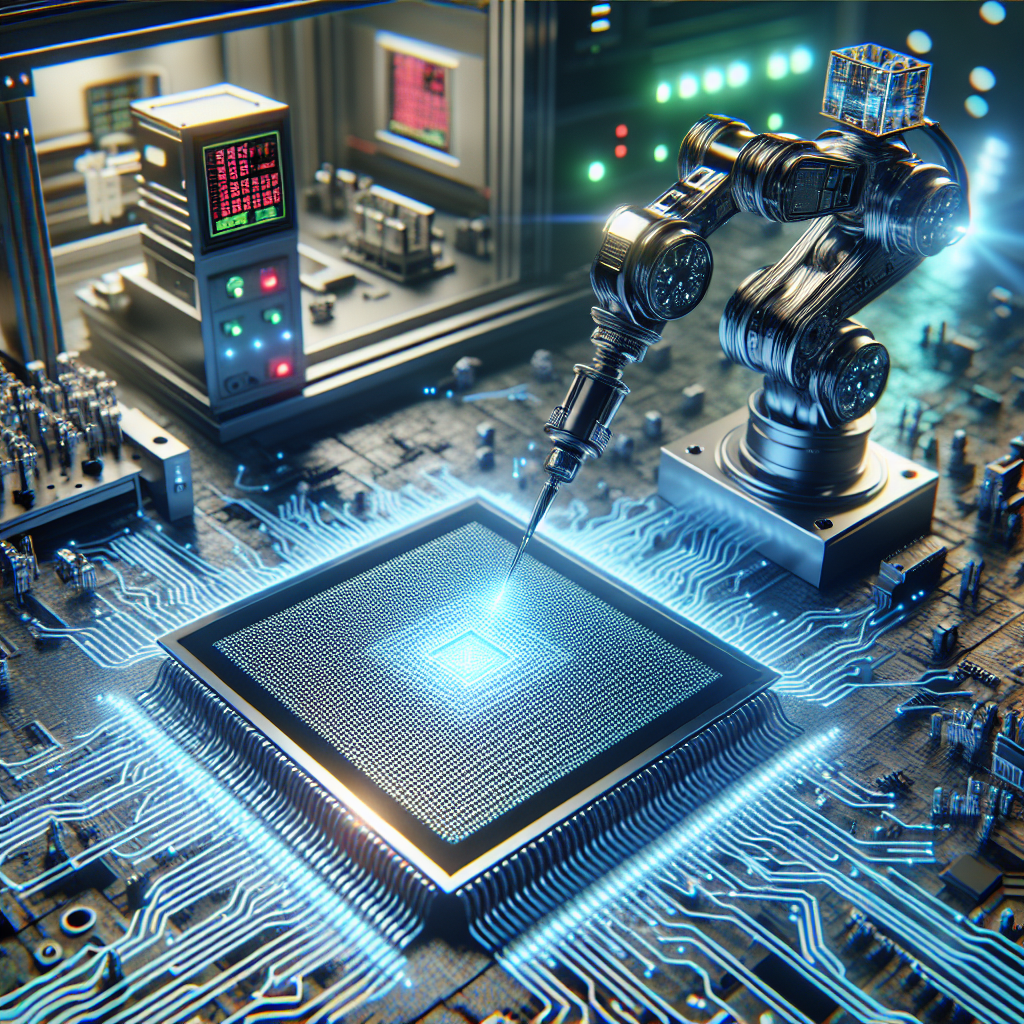
AI in Semiconductor Manufacturing: Innovations and Applications
The semiconductor industry plays a crucial role in the development of modern technology. From smartphones to self-driving cars, semiconductors are essential components in virtually every electronic device we use today. As technology advances, the demand for faster, smaller, and more efficient semiconductors continues to grow. To meet this demand, semiconductor manufacturers are turning to artificial intelligence (AI) to revolutionize the way they design and produce semiconductors.
In recent years, AI has made significant strides in the field of semiconductor manufacturing. By leveraging machine learning algorithms and big data analytics, AI technologies have the potential to optimize processes, improve product quality, and reduce manufacturing costs. In this article, we will explore some of the innovations and applications of AI in semiconductor manufacturing.
Innovations in AI for Semiconductor Manufacturing
1. Predictive Maintenance: One of the key challenges in semiconductor manufacturing is equipment maintenance. Downtime due to unexpected equipment failures can be costly and disrupt production schedules. AI-powered predictive maintenance systems can help semiconductor manufacturers anticipate equipment failures before they occur by analyzing historical data, sensor readings, and other relevant parameters. By monitoring equipment performance in real-time, AI algorithms can predict when maintenance is needed and schedule repairs proactively, reducing downtime and increasing overall equipment efficiency.
2. Process Optimization: Semiconductor manufacturing involves a series of complex processes that require precise control and optimization. AI technologies can analyze vast amounts of data to identify patterns, optimize process parameters, and improve yield rates. By using machine learning algorithms, semiconductor manufacturers can fine-tune their production processes to achieve higher efficiency, lower costs, and better product quality.
3. Defect Detection: Detecting defects in semiconductor wafers is a critical step in the manufacturing process. Traditional methods of defect detection rely on manual inspection, which can be time-consuming and prone to human error. AI-powered image recognition systems can automate the process of defect detection by analyzing images of semiconductor wafers and identifying anomalies with high accuracy. By using deep learning algorithms, AI systems can classify defects, prioritize inspection tasks, and improve overall yield rates.
4. Supply Chain Management: Semiconductor manufacturing involves complex supply chains with multiple vendors, suppliers, and partners. AI technologies can help semiconductor manufacturers optimize their supply chain operations by analyzing demand forecasts, inventory levels, and production schedules. By using predictive analytics and optimization algorithms, AI systems can streamline supply chain processes, reduce lead times, and minimize inventory costs.
Applications of AI in Semiconductor Manufacturing
1. Design Automation: AI technologies are revolutionizing the way semiconductor chips are designed. Design automation tools powered by machine learning algorithms can help engineers generate optimized chip designs faster and more efficiently. By analyzing design constraints, performance requirements, and other parameters, AI systems can suggest design improvements, reduce design cycle times, and accelerate time-to-market for new semiconductor products.
2. Process Control: AI technologies are being used to improve process control in semiconductor manufacturing. By monitoring process parameters in real-time and adjusting settings dynamically, AI systems can ensure that production processes are running at peak efficiency. By using predictive analytics and feedback control loops, AI technologies can optimize process parameters, reduce variability, and improve yield rates.
3. Quality Assurance: AI-powered quality assurance systems are helping semiconductor manufacturers ensure the quality of their products. By analyzing data from sensors, cameras, and other sources, AI systems can detect defects, anomalies, and deviations in real-time. By using anomaly detection algorithms and pattern recognition techniques, AI technologies can identify quality issues early in the manufacturing process, prevent defects from propagating, and improve overall product quality.
4. Yield Improvement: AI technologies are being used to improve yield rates in semiconductor manufacturing. By analyzing data from manufacturing processes, equipment performance, and product quality, AI systems can identify factors that contribute to yield loss and recommend corrective actions. By using root cause analysis, statistical modeling, and optimization algorithms, AI technologies can help semiconductor manufacturers increase yield rates, reduce scrap rates, and improve profitability.
FAQs
Q: How is AI being used in semiconductor manufacturing?
A: AI technologies are being used in semiconductor manufacturing for a variety of applications, including predictive maintenance, process optimization, defect detection, supply chain management, design automation, process control, quality assurance, and yield improvement.
Q: What are some of the benefits of using AI in semiconductor manufacturing?
A: Some of the benefits of using AI in semiconductor manufacturing include improved equipment efficiency, reduced downtime, higher product quality, lower manufacturing costs, faster time-to-market, optimized supply chain operations, and increased yield rates.
Q: What are some of the challenges of implementing AI in semiconductor manufacturing?
A: Some of the challenges of implementing AI in semiconductor manufacturing include data quality issues, data privacy concerns, integration with existing systems, lack of AI expertise, scalability issues, and cultural resistance to change.
Q: How can semiconductor manufacturers get started with AI?
A: Semiconductor manufacturers can get started with AI by identifying specific use cases that can benefit from AI technologies, building a business case for AI adoption, developing a data strategy, acquiring AI tools and technologies, training employees on AI, and collaborating with AI vendors and partners.
In conclusion, AI technologies are transforming the semiconductor manufacturing industry by enabling manufacturers to optimize processes, improve product quality, and reduce costs. By harnessing the power of machine learning, big data analytics, and automation, semiconductor manufacturers can stay competitive in a rapidly evolving market. As AI continues to advance, we can expect to see even more innovations and applications of AI in semiconductor manufacturing in the years to come.