
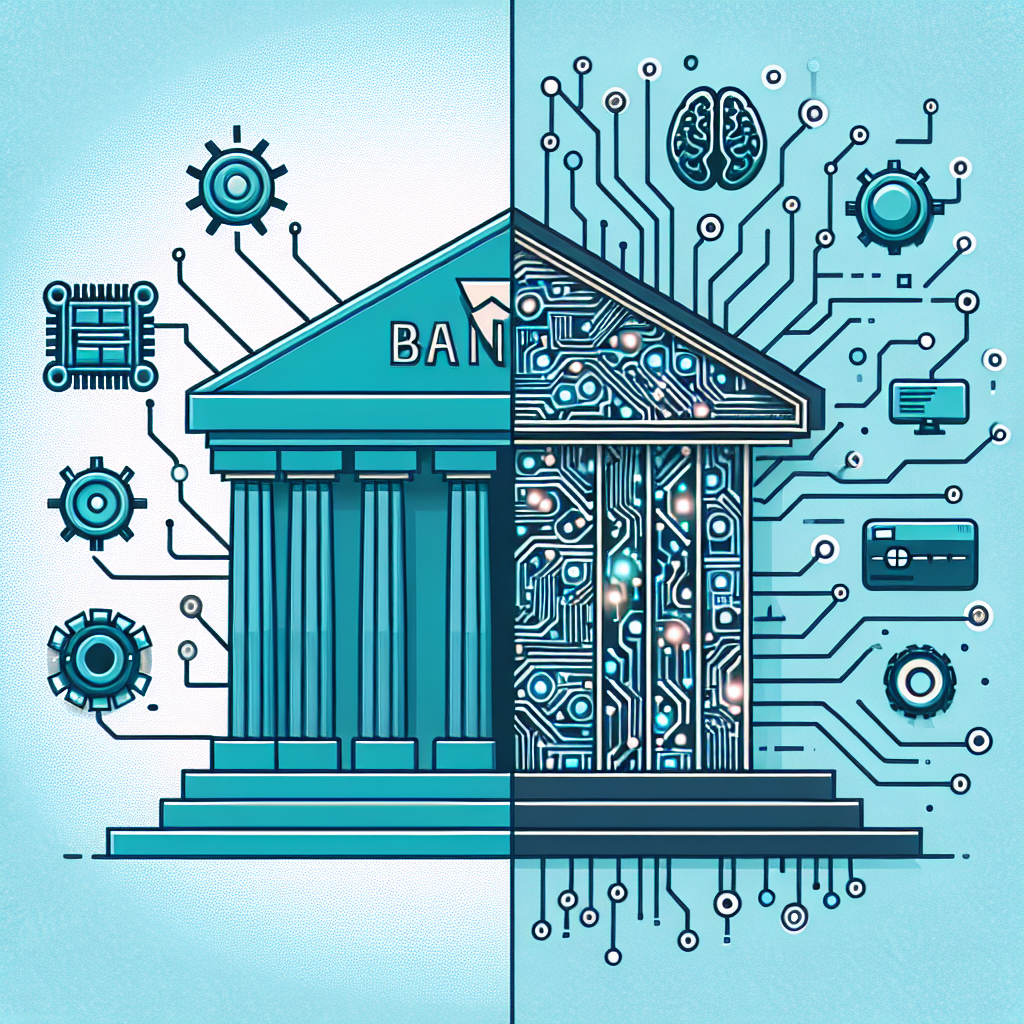
Artificial Intelligence (AI) is transforming the way we interact with banking services, including branch banking. With the rise of digital banking, many customers are now turning to online and mobile platforms for their banking needs. However, branch banking still plays a crucial role in providing personalized services and building customer relationships. AI has the potential to revolutionize branch banking by enhancing customer experiences, improving operational efficiency, and driving growth.
One of the key impacts of AI on branch banking services is the ability to provide personalized and proactive customer service. AI-powered chatbots can assist customers with basic inquiries, such as account balances, transaction history, and branch locations, in real-time. These chatbots are available 24/7, allowing customers to get immediate assistance without having to wait in line or speak to a human agent. This not only improves customer satisfaction but also frees up branch staff to focus on more complex and high-value tasks.
AI can also help banks better understand their customers’ needs and preferences. By analyzing customer data, AI algorithms can identify patterns and trends to predict future behaviors and recommend personalized products and services. For example, if a customer frequently visits the branch to deposit checks, the bank can proactively offer them a mobile check deposit feature to save time and hassle. This level of personalized service helps build trust and loyalty with customers, leading to increased retention rates and higher lifetime value.
In addition to enhancing customer service, AI can also improve operational efficiency within branch banking. By automating routine tasks, such as data entry, form processing, and document verification, AI can streamline processes and reduce human error. This allows branch staff to focus on more strategic activities, such as cross-selling products, resolving complex issues, and building relationships with customers. AI can also optimize branch performance by analyzing foot traffic, customer demographics, and transaction volumes to determine the most efficient staffing levels and branch layouts.
Furthermore, AI can help banks identify and prevent fraudulent activities in real-time. By analyzing transaction data and customer behavior, AI algorithms can detect suspicious patterns and flag potentially fraudulent transactions for further investigation. This not only protects customers from financial losses but also safeguards the bank’s reputation and regulatory compliance. AI-powered fraud detection systems can adapt and learn from new threats, making them more effective than traditional rule-based approaches.
Despite the numerous benefits of AI in branch banking, there are also challenges and concerns that need to be addressed. One of the main concerns is data privacy and security. Banks must ensure that customer data is protected and compliant with regulations, such as the General Data Protection Regulation (GDPR) and the California Consumer Privacy Act (CCPA). AI algorithms must be transparent and explainable to build trust with customers and regulators.
Another challenge is the potential displacement of human workers by AI-powered automation. While AI can improve efficiency and reduce costs, it may also lead to job losses for branch staff who perform routine tasks. Banks must invest in retraining and upskilling their workforce to adapt to the changing landscape of branch banking and embrace new technologies. By combining human expertise with AI capabilities, banks can create a more collaborative and productive work environment.
In conclusion, AI is reshaping branch banking services by enhancing customer experiences, improving operational efficiency, and driving growth. By leveraging AI-powered tools and technologies, banks can provide personalized and proactive customer service, optimize branch performance, prevent fraudulent activities, and comply with data privacy regulations. While there are challenges and concerns to overcome, the benefits of AI in branch banking far outweigh the risks. With the right strategy and investment, banks can stay ahead of the curve and deliver innovative and competitive services to their customers.
FAQs:
Q: How can AI improve customer service in branch banking?
A: AI-powered chatbots can assist customers with basic inquiries in real-time, freeing up branch staff to focus on more complex tasks. AI algorithms can also analyze customer data to predict future behaviors and recommend personalized products and services.
Q: What are the benefits of AI in branch banking?
A: AI can enhance customer experiences, improve operational efficiency, drive growth, prevent fraudulent activities, and comply with data privacy regulations.
Q: What are the challenges of implementing AI in branch banking?
A: Challenges include data privacy and security concerns, potential job displacement of human workers, and the need for retraining and upskilling the workforce.
Q: How can banks address the concerns of data privacy and security with AI?
A: Banks must ensure that customer data is protected and compliant with regulations, such as GDPR and CCPA. AI algorithms must be transparent and explainable to build trust with customers and regulators.