
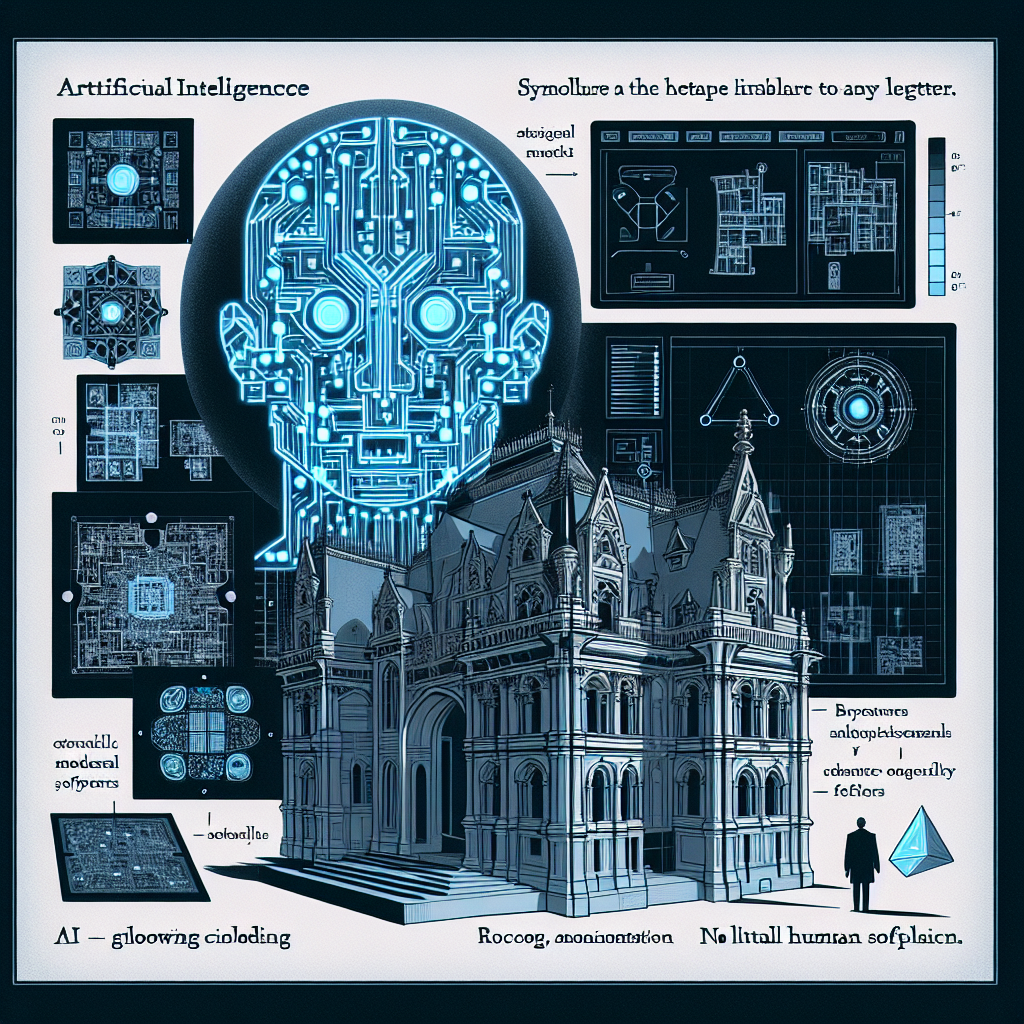
Artificial intelligence (AI) is revolutionizing many industries, and architecture is no exception. One of the ways in which AI is transforming the field of architecture is through the evolution of architectural detailing. In the past, architectural detailing was a time-consuming and labor-intensive process that required a great deal of skill and expertise. However, with the advent of AI technology, architects now have access to powerful tools that can streamline the detailing process and produce more complex and intricate designs than ever before.
AI algorithms can analyze vast amounts of data and generate detailed designs based on specific parameters set by the architect. This allows architects to explore a wider range of design options and experiment with different materials, textures, and structural elements. AI can also help architects optimize their designs for energy efficiency, sustainability, and cost-effectiveness, leading to more environmentally friendly and economically viable buildings.
One of the key benefits of AI in architectural detailing is its ability to automate repetitive tasks and reduce the likelihood of human error. By using AI to generate detailed designs, architects can save time and resources that would otherwise be spent on manual drafting and calculations. This frees up architects to focus on more creative and innovative aspects of their work, leading to more original and inspiring designs.
Another advantage of AI in architectural detailing is its capacity to analyze complex data sets and identify patterns and trends that may not be apparent to the human eye. This can help architects make informed decisions about design elements such as material selection, structural integrity, and lighting design. By harnessing the power of AI, architects can create buildings that are not only aesthetically pleasing but also functional, durable, and sustainable.
AI technology is also enabling architects to push the boundaries of traditional architectural detailing and explore new possibilities for design. With AI tools, architects can create intricate and elaborate patterns, textures, and shapes that would be impossible to achieve through manual methods alone. This has led to a renaissance in architectural detailing, with architects experimenting with innovative materials, forms, and construction techniques that were previously unattainable.
In addition to enhancing the design process, AI is also revolutionizing the way buildings are constructed and maintained. AI-powered robots and drones can now be used to survey construction sites, monitor progress, and perform tasks that are too dangerous or difficult for human workers. This has the potential to make construction projects more efficient, cost-effective, and safe, leading to faster completion times and higher-quality results.
Overall, the evolution of architectural detailing through AI technology is transforming the field of architecture in profound ways. Architects now have access to a wealth of tools and resources that can help them create more complex, innovative, and sustainable designs than ever before. By harnessing the power of AI, architects can push the boundaries of traditional architectural detailing and create buildings that are both visually stunning and functionally superior.
FAQs:
Q: How does AI impact the role of architects in the design process?
A: AI technology is changing the way architects approach the design process by providing powerful tools that can automate repetitive tasks, analyze complex data sets, and generate detailed designs. This allows architects to focus on more creative and innovative aspects of their work, leading to more original and inspiring designs.
Q: What are the key benefits of using AI in architectural detailing?
A: Some of the key benefits of using AI in architectural detailing include automation of repetitive tasks, reduction of human error, analysis of complex data sets, exploration of new design possibilities, and optimization for energy efficiency and sustainability.
Q: How does AI technology impact construction processes?
A: AI technology is transforming construction processes by enabling the use of robots and drones to survey construction sites, monitor progress, and perform tasks that are too dangerous or difficult for human workers. This has the potential to make construction projects more efficient, cost-effective, and safe.
Q: What are some examples of innovative architectural detailing made possible by AI?
A: Examples of innovative architectural detailing made possible by AI include intricate patterns, textures, and shapes that would be impossible to achieve through manual methods alone. Architects are experimenting with new materials, forms, and construction techniques that were previously unattainable.
Q: How can architects leverage AI technology to create sustainable buildings?
A: Architects can leverage AI technology to analyze data on energy consumption, environmental impact, and material usage to optimize their designs for sustainability. AI tools can help architects make informed decisions about material selection, structural integrity, and lighting design to create buildings that are environmentally friendly and economically viable.