
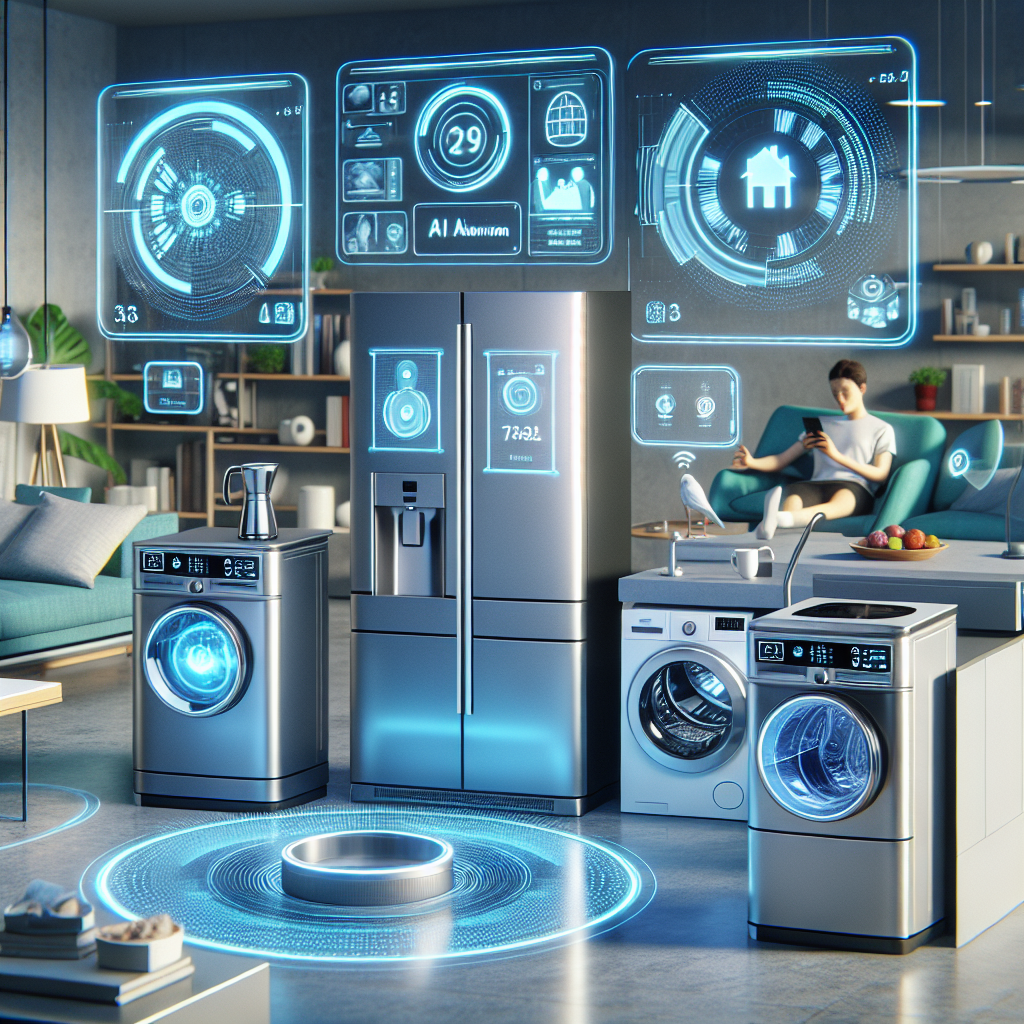
AI Automation and the Future of Home Appliances
In recent years, artificial intelligence (AI) has made significant advancements in various industries, including the home appliance sector. AI automation is revolutionizing the way we interact with our appliances, making our lives more convenient and efficient. In this article, we will explore the impact of AI automation on home appliances and discuss the future of smart homes.
The Rise of AI Automation in Home Appliances
AI automation refers to the use of artificial intelligence technology to automate tasks that were previously performed by humans. In the home appliance sector, AI automation has enabled appliances to become smarter and more intuitive, allowing them to learn and adapt to the preferences and habits of their users.
One of the key benefits of AI automation in home appliances is the ability to save time and energy. For example, smart refrigerators can automatically adjust their temperature settings based on the contents inside, ensuring that food stays fresh for longer. Similarly, smart ovens can preheat themselves to the optimal temperature for a specific recipe, saving users the hassle of having to manually set the temperature.
Another advantage of AI automation in home appliances is the ability to remotely control and monitor them through connected devices such as smartphones and tablets. This means that users can check the status of their appliances, receive notifications when a task is completed, and even control them from anywhere in the world. For example, a user can start the washing machine while they are at work, ensuring that their laundry is ready by the time they get home.
The Future of Smart Homes
As AI automation continues to evolve, the future of smart homes is becoming increasingly exciting. In the coming years, we can expect to see even more advanced and intelligent home appliances that are seamlessly integrated into our daily lives.
One of the key trends in the future of smart homes is the integration of voice assistants such as Amazon Alexa and Google Assistant into home appliances. This means that users will be able to control their appliances using voice commands, making it even easier to interact with them. For example, a user can ask their smart refrigerator to add an item to their shopping list, or instruct their smart oven to preheat to a specific temperature.
Another trend in the future of smart homes is the development of interconnected ecosystems of appliances that work together to optimize energy efficiency and user experience. For example, a smart thermostat can communicate with a smart refrigerator to adjust its temperature settings based on the energy usage of the home, ensuring that energy is used more efficiently.
FAQs
Q: What are some examples of AI automation in home appliances?
A: Some examples of AI automation in home appliances include smart refrigerators that adjust their temperature settings based on the contents inside, smart ovens that preheat themselves to the optimal temperature for a specific recipe, and smart washing machines that can be controlled remotely.
Q: How can AI automation save time and energy in the home?
A: AI automation can save time and energy in the home by automating tasks that were previously performed manually. For example, smart appliances can adjust their settings based on user preferences, ensuring that tasks are completed more efficiently.
Q: What are some future trends in smart homes?
A: Some future trends in smart homes include the integration of voice assistants into home appliances, the development of interconnected ecosystems of appliances, and the use of AI to optimize energy efficiency and user experience.
In conclusion, AI automation is transforming the home appliance sector, making our lives more convenient and efficient. As the technology continues to evolve, we can expect to see even more advanced and intelligent home appliances that are seamlessly integrated into our daily lives. The future of smart homes is bright, and we can look forward to a more connected and automated living experience.