
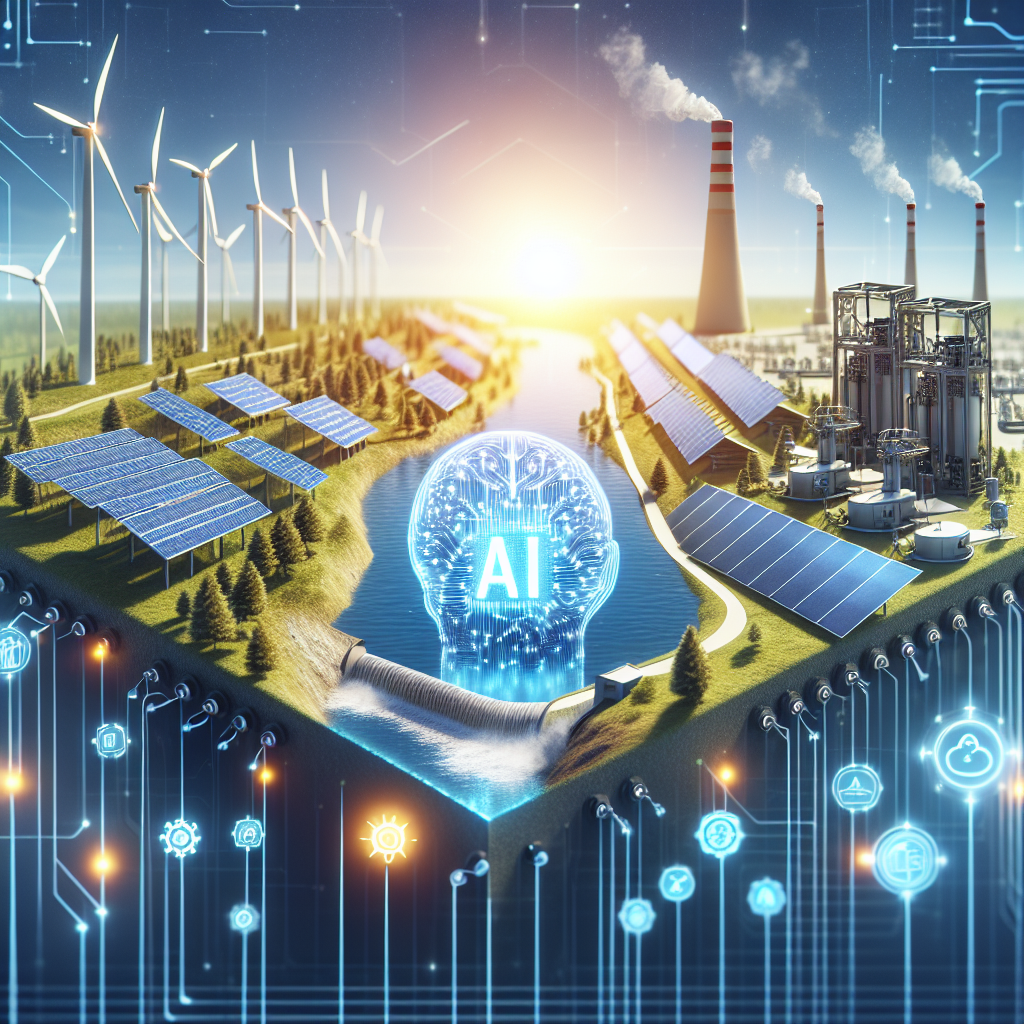
In recent years, the rise of renewable energy sources such as solar and wind power has led to a growing need for accurate energy forecasting to optimize energy production and distribution. Traditional forecasting methods have limitations when it comes to handling the intermittent nature of renewable energy sources. This is where artificial intelligence (AI) comes in.
AI-driven energy forecasting for renewable power plants is a cutting-edge technology that leverages machine learning algorithms to predict energy production with higher accuracy and efficiency. By analyzing historical data, weather patterns, and other relevant factors, AI can provide more reliable forecasts that help power plant operators make informed decisions about energy production and distribution.
One of the key benefits of AI-driven energy forecasting is its ability to adapt to changing conditions in real-time. Traditional forecasting methods rely on static models that may not be able to account for sudden changes in weather patterns or other variables. AI, on the other hand, can continuously learn and improve its predictions based on new data, ensuring that forecasts remain accurate and up-to-date.
Another advantage of AI-driven energy forecasting is its ability to handle large amounts of data quickly and efficiently. With the increasing complexity of renewable energy systems, traditional forecasting methods may struggle to process the vast amounts of data required for accurate predictions. AI algorithms can analyze massive datasets in a fraction of the time, making it possible to generate forecasts in a more timely manner.
AI-driven energy forecasting also offers the potential for cost savings and increased efficiency. By providing more accurate predictions, power plant operators can optimize energy production and distribution, reducing waste and maximizing revenue. Additionally, AI can help identify potential issues or anomalies in energy production, allowing operators to take preventive action before problems arise.
Overall, AI-driven energy forecasting holds great promise for the renewable energy industry, offering a more reliable and efficient way to predict energy production and optimize operations. As the technology continues to evolve, we can expect to see even greater improvements in energy forecasting accuracy and efficiency.
FAQs:
Q: How does AI-driven energy forecasting differ from traditional forecasting methods?
A: AI-driven energy forecasting uses machine learning algorithms to analyze large amounts of data and predict energy production with higher accuracy and efficiency. Traditional methods rely on static models that may struggle to adapt to changing conditions and handle large datasets.
Q: What are the benefits of AI-driven energy forecasting for renewable power plants?
A: AI-driven energy forecasting offers more reliable predictions, real-time adaptation to changing conditions, efficient processing of large datasets, cost savings, and increased operational efficiency for renewable power plants.
Q: How can AI help optimize energy production and distribution in renewable power plants?
A: AI can analyze historical data, weather patterns, and other relevant factors to provide accurate forecasts that help operators make informed decisions about energy production and distribution. By optimizing energy production, AI can reduce waste and maximize revenue for renewable power plants.
Q: What are some challenges associated with AI-driven energy forecasting?
A: Some challenges include the need for high-quality data, the complexity of AI algorithms, and the potential for bias in predictions. However, with proper data management and algorithm design, these challenges can be overcome to ensure accurate and reliable energy forecasting for renewable power plants.