
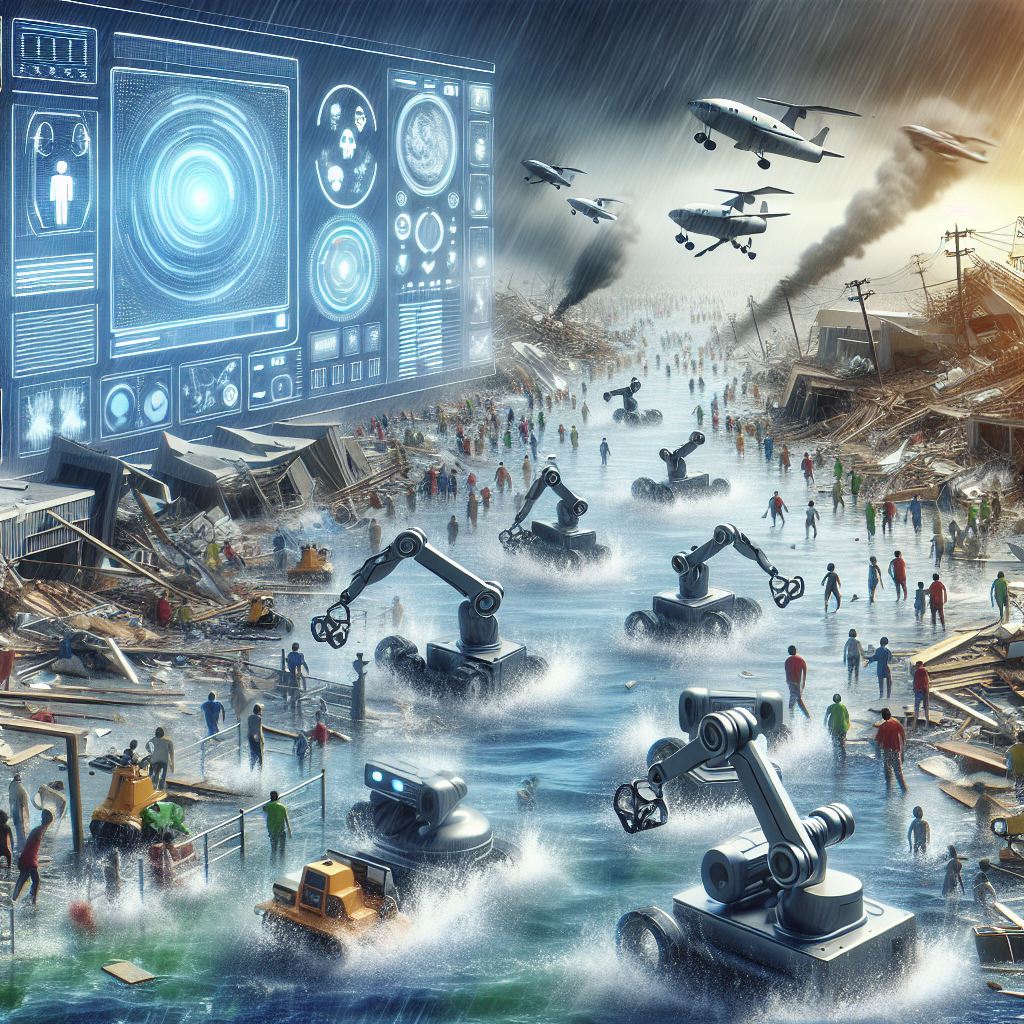
In recent years, natural disasters have become increasingly frequent and severe, posing significant challenges to disaster response and recovery efforts. From hurricanes and wildfires to earthquakes and pandemics, the need for efficient and effective disaster response solutions has never been greater.
Artificial intelligence (AI) has emerged as a powerful tool for improving disaster response and recovery efforts. By leveraging AI-driven solutions, organizations and governments can better predict, prepare for, and respond to disasters, ultimately saving lives and reducing the impact of these catastrophic events. In this article, we will explore how AI is being used in disaster response and recovery, the benefits it offers, and some of the challenges that organizations may face when implementing AI-driven solutions.
AI in Disaster Response
One of the key ways in which AI is being used in disaster response is through predictive analytics. By analyzing data from various sources, such as satellite imagery, weather forecasts, and social media, AI algorithms can help predict when and where disasters are likely to occur. This early warning system can give authorities and organizations valuable time to prepare and mobilize resources before a disaster strikes.
For example, in the case of hurricanes, AI can analyze historical data on storm patterns and ocean temperatures to predict the intensity and trajectory of a storm. This information can help authorities evacuate at-risk communities, set up shelters, and deploy emergency responders in advance of the storm’s landfall.
AI is also being used to improve the efficiency of disaster response operations. For instance, AI-powered drones can be deployed to survey disaster-affected areas, assess damage, and identify areas where help is needed. This information can be used to prioritize resources and allocate them more effectively, reducing response times and saving lives.
Another important application of AI in disaster response is in search and rescue operations. AI algorithms can analyze satellite imagery and other data to identify survivors in collapsed buildings or other hazardous environments. This can help rescue teams locate and extract survivors more quickly, increasing the chances of survival.
AI in Disaster Recovery
In addition to its role in disaster response, AI is also being used to support disaster recovery efforts. By analyzing data on infrastructure damage, population displacement, and other factors, AI algorithms can help organizations and governments prioritize recovery efforts and allocate resources more efficiently.
For example, AI can be used to assess the structural integrity of buildings after a disaster and prioritize which buildings need to be repaired or rebuilt first. This can help communities recover more quickly and reduce the economic impact of the disaster.
AI can also help governments and organizations better understand the needs of disaster-affected communities. By analyzing social media data, AI algorithms can identify trends and patterns in the types of assistance that are needed, such as food, water, shelter, or medical supplies. This information can help organizations tailor their response efforts to meet the specific needs of each community.
Benefits of AI-driven Solutions for Disaster Response and Recovery
There are several key benefits to using AI-driven solutions in disaster response and recovery efforts:
1. Improved prediction and early warning: AI algorithms can analyze vast amounts of data to predict when and where disasters are likely to occur, giving authorities valuable time to prepare and mobilize resources.
2. Faster and more efficient response: AI-powered drones and other technologies can help organizations assess damage, identify survivors, and prioritize response efforts, reducing response times and saving lives.
3. Better resource allocation: By analyzing data on infrastructure damage, population displacement, and other factors, AI algorithms can help organizations allocate resources more efficiently and prioritize recovery efforts.
4. Tailored assistance: AI can help organizations better understand the needs of disaster-affected communities and tailor their response efforts to meet those needs more effectively.
Challenges of Implementing AI-driven Solutions
While AI offers many benefits for disaster response and recovery efforts, there are also several challenges that organizations may face when implementing AI-driven solutions:
1. Data quality and availability: AI algorithms rely on high-quality data to make accurate predictions and recommendations. In some cases, data on disasters may be incomplete or unavailable, making it difficult for AI algorithms to provide reliable insights.
2. Ethical considerations: AI algorithms may inadvertently perpetuate biases or discriminate against certain groups, particularly in vulnerable communities. Organizations must carefully consider the ethical implications of using AI in disaster response and recovery efforts.
3. Technical expertise: Implementing AI-driven solutions requires specialized technical expertise, which may be lacking in some organizations. Training staff or hiring outside experts can be costly and time-consuming.
4. Integration with existing systems: Integrating AI-driven solutions with existing disaster response and recovery systems can be complex and challenging. Organizations may need to invest in new infrastructure or modify existing systems to accommodate AI technology.
FAQs
Q: How can AI help predict natural disasters?
A: AI algorithms can analyze data from various sources, such as satellite imagery, weather forecasts, and social media, to predict when and where disasters are likely to occur. This early warning system can give authorities valuable time to prepare and mobilize resources before a disaster strikes.
Q: How can AI improve search and rescue operations?
A: AI algorithms can analyze satellite imagery and other data to identify survivors in collapsed buildings or other hazardous environments. This can help rescue teams locate and extract survivors more quickly, increasing the chances of survival.
Q: What are some of the challenges of implementing AI-driven solutions in disaster response and recovery?
A: Some of the challenges organizations may face when implementing AI-driven solutions include data quality and availability, ethical considerations, technical expertise, and integration with existing systems.
In conclusion, AI-driven solutions have the potential to revolutionize disaster response and recovery efforts by improving prediction, early warning, response efficiency, resource allocation, and tailored assistance. While there are challenges to implementing AI technology in disaster response and recovery, the benefits far outweigh the risks. By harnessing the power of AI, organizations and governments can better prepare for and respond to disasters, ultimately saving lives and reducing the impact of these catastrophic events.