
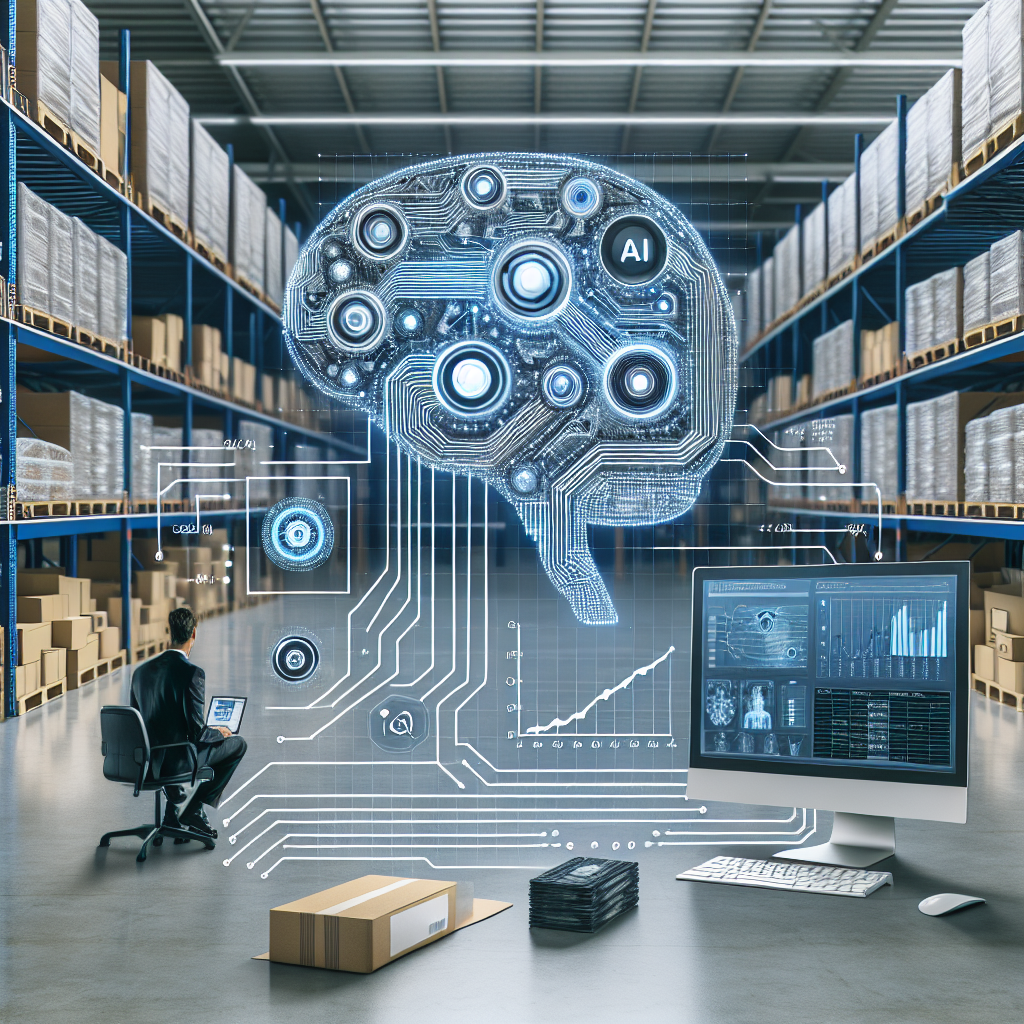
In today’s fast-paced business environment, inventory management plays a crucial role in the success of any organization. Properly managing inventory levels can help businesses reduce costs, improve efficiency, and enhance customer satisfaction. However, predicting demand accurately and efficiently is a challenging task, especially for companies with large and diverse product portfolios.
This is where AI-enabled predictive analytics comes into play. By harnessing the power of artificial intelligence and machine learning, businesses can now leverage advanced algorithms to predict future demand with a high degree of accuracy. This allows companies to optimize their inventory levels, reduce stockouts, and minimize excess inventory, ultimately leading to improved profitability and customer satisfaction.
What is AI-Enabled Predictive Analytics for Inventory Management?
AI-enabled predictive analytics for inventory management is a technology that uses historical data, statistical algorithms, and machine learning techniques to forecast future demand for products. By analyzing past sales data, market trends, seasonality, and other factors, predictive analytics algorithms can identify patterns and trends that can help businesses make more informed decisions about their inventory levels.
These algorithms can be trained to predict demand at different levels of granularity, from individual products to entire product categories. This allows businesses to optimize their inventory levels based on the specific needs and demands of their customers, leading to improved efficiency and profitability.
How Does AI-Enabled Predictive Analytics Work?
AI-enabled predictive analytics works by analyzing historical data and identifying patterns and trends that can be used to predict future demand. The process typically involves the following steps:
Data Collection: The first step in predictive analytics is to collect relevant data, such as historical sales data, inventory levels, market trends, and other factors that may impact demand.
Data Preprocessing: Once the data is collected, it needs to be cleaned, transformed, and prepared for analysis. This may involve removing outliers, filling missing values, and normalizing the data to ensure accuracy and consistency.
Model Building: In this step, predictive analytics algorithms are trained using the preprocessed data to identify patterns and relationships between different variables. The most commonly used algorithms for predictive analytics include linear regression, decision trees, neural networks, and time series analysis.
Model Evaluation: After the model is trained, it is evaluated using test data to assess its accuracy and performance. This step helps to ensure that the model can make reliable predictions and provide valuable insights for inventory management.
Deployment: Once the model is validated, it is deployed in a production environment where it can be used to forecast demand and optimize inventory levels in real-time.
Benefits of AI-Enabled Predictive Analytics for Inventory Management
There are several benefits to using AI-enabled predictive analytics for inventory management, including:
Improved Forecast Accuracy: By leveraging advanced algorithms and machine learning techniques, businesses can achieve higher levels of forecast accuracy, leading to better inventory management decisions and reduced stockouts.
Optimized Inventory Levels: Predictive analytics can help businesses optimize their inventory levels based on demand patterns and trends, reducing excess inventory and carrying costs while ensuring product availability.
Enhanced Efficiency: AI-enabled predictive analytics can automate the forecasting process, saving time and resources that would otherwise be spent on manual forecasting methods.
Increased Profitability: By optimizing inventory levels and reducing stockouts, businesses can improve their profitability and overall financial performance.
FAQs
Q: How accurate are predictive analytics algorithms in forecasting demand?
A: The accuracy of predictive analytics algorithms depends on the quality of the data, the complexity of the model, and the expertise of the data scientists involved. In general, predictive analytics algorithms can achieve high levels of accuracy when trained and validated properly.
Q: Can predictive analytics algorithms be used for all types of products?
A: Predictive analytics algorithms can be used for a wide range of products, from fast-moving consumer goods to high-end luxury items. However, the accuracy of the predictions may vary depending on the demand patterns and market dynamics of each product category.
Q: How can businesses implement AI-enabled predictive analytics for inventory management?
A: Businesses can implement AI-enabled predictive analytics for inventory management by partnering with technology providers that offer predictive analytics solutions or by building their own in-house analytics capabilities. It is important to have a clear understanding of the business requirements and objectives before implementing predictive analytics to ensure success.
Q: What are the key challenges in implementing AI-enabled predictive analytics for inventory management?
A: Some of the key challenges in implementing AI-enabled predictive analytics for inventory management include data quality issues, lack of domain expertise, and resistance to change within the organization. Overcoming these challenges requires a collaborative approach involving data scientists, business analysts, and IT professionals.
In conclusion, AI-enabled predictive analytics offers businesses a powerful tool for optimizing their inventory management processes and improving overall operational efficiency. By leveraging advanced algorithms and machine learning techniques, businesses can forecast demand more accurately, reduce stockouts, and minimize excess inventory, ultimately leading to improved profitability and customer satisfaction. By understanding the benefits and challenges of implementing predictive analytics for inventory management, businesses can make informed decisions about how to leverage this technology to drive business success.