
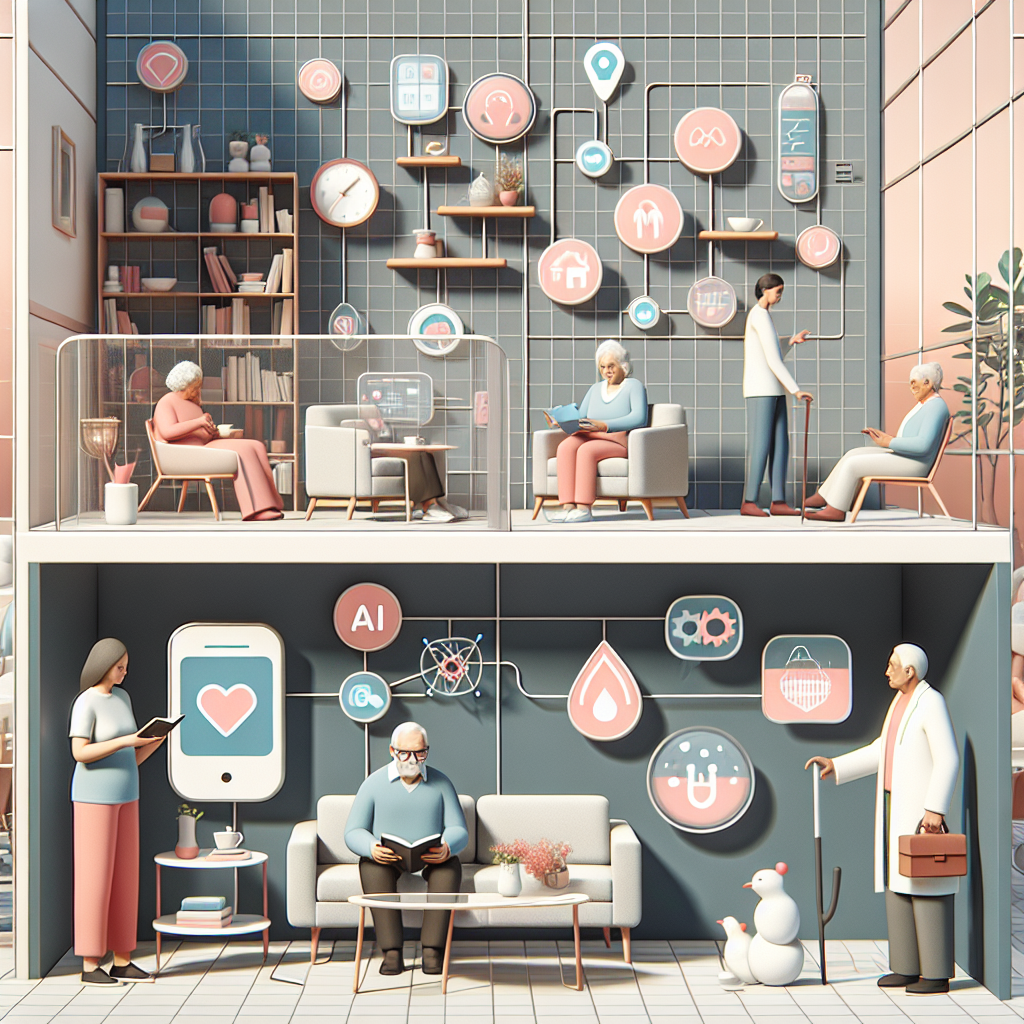
Artificial Intelligence (AI) has revolutionized many industries, including healthcare. One area where AI is having a significant impact is in the development of health monitoring systems for elderly care. These systems utilize AI algorithms to continuously monitor the health of elderly individuals and provide real-time insights to caregivers and healthcare professionals. In this article, we will explore the benefits of AI-powered health monitoring systems for elderly care and how they are transforming the way we provide care for our aging population.
Benefits of AI-powered Health Monitoring Systems for Elderly Care:
1. Early Detection of Health Issues: One of the key benefits of AI-powered health monitoring systems is their ability to detect health issues at an early stage. These systems can analyze data from various sensors and devices to identify patterns and anomalies that may indicate a potential health problem. By detecting issues early, caregivers can intervene quickly and prevent serious health complications.
2. Continuous Monitoring: Traditional health monitoring methods often involve periodic check-ups that may miss important changes in a person’s health. AI-powered systems, on the other hand, provide continuous monitoring of vital signs such as heart rate, blood pressure, and oxygen levels. This continuous monitoring allows caregivers to track changes in a person’s health over time and respond proactively to any issues that arise.
3. Personalized Care: AI-powered health monitoring systems can analyze a person’s health data and provide personalized recommendations for their care. For example, the system may recommend specific exercises or dietary changes based on the individual’s health status and goals. This personalized approach to care can help elderly individuals maintain their health and independence for longer.
4. Remote Monitoring: AI-powered health monitoring systems enable caregivers to monitor the health of elderly individuals remotely. This is especially valuable for individuals who live alone or in rural areas where access to healthcare services may be limited. Caregivers can receive real-time alerts and updates on a person’s health status, allowing them to provide timely assistance when needed.
5. Improved Outcomes: By providing early detection of health issues, continuous monitoring, personalized care, and remote monitoring, AI-powered health monitoring systems can lead to improved health outcomes for elderly individuals. These systems can help prevent hospitalizations, reduce healthcare costs, and improve the overall quality of life for seniors.
How AI-powered Health Monitoring Systems Work:
AI-powered health monitoring systems utilize a combination of sensors, devices, and AI algorithms to collect and analyze data on a person’s health. These systems can monitor vital signs such as heart rate, blood pressure, oxygen levels, and activity levels. The data collected is then analyzed by AI algorithms that can detect patterns, trends, and anomalies that may indicate a health issue.
The AI algorithms used in these systems are trained on large datasets of health data to learn how to interpret the data and make accurate predictions about a person’s health. These algorithms can detect subtle changes in a person’s health that may not be apparent to the naked eye, allowing for early intervention and treatment.
AI-powered health monitoring systems can also incorporate other technologies such as wearable devices, smartphones, and smart home devices to collect data on a person’s health. For example, a wearable device may track a person’s activity levels and sleep patterns, while a smart home device may monitor environmental factors such as air quality and temperature.
FAQs about AI-powered Health Monitoring Systems for Elderly Care:
1. Are AI-powered health monitoring systems secure and private?
Yes, AI-powered health monitoring systems are designed with security and privacy in mind. These systems adhere to strict data protection regulations and use encryption and other security measures to protect the data collected from elderly individuals. Caregivers and healthcare professionals can access the data only with the individual’s consent and in compliance with privacy laws.
2. How accurate are AI algorithms in detecting health issues?
AI algorithms used in health monitoring systems have been shown to be highly accurate in detecting health issues. These algorithms are trained on large datasets of health data to learn how to interpret the data and make accurate predictions. Studies have shown that AI algorithms can outperform traditional methods of health monitoring in terms of accuracy and speed.
3. Can AI-powered health monitoring systems replace human caregivers?
AI-powered health monitoring systems are designed to support human caregivers, not replace them. These systems provide valuable insights and real-time data to caregivers and healthcare professionals, allowing them to make informed decisions about a person’s care. Human caregivers play a crucial role in providing emotional support, companionship, and hands-on care that cannot be replaced by technology.
4. How affordable are AI-powered health monitoring systems?
The cost of AI-powered health monitoring systems can vary depending on the features and capabilities of the system. Some systems may be more affordable than others, depending on the level of customization and support required. In general, the cost of these systems is becoming more affordable as the technology becomes more widespread and accessible.
5. How easy is it to set up and use an AI-powered health monitoring system?
AI-powered health monitoring systems are designed to be user-friendly and easy to set up and use. Caregivers and healthcare professionals can typically set up the system in a few simple steps and receive training on how to interpret the data collected. Many systems also provide support and guidance to help users get the most out of the system.
In conclusion, AI-powered health monitoring systems are revolutionizing the way we provide care for elderly individuals. These systems offer early detection of health issues, continuous monitoring, personalized care, remote monitoring, and improved outcomes. By harnessing the power of AI algorithms and advanced technologies, we can provide better care for our aging population and help them live healthier, more independent lives.